Buying a Used Car? How to Check Underneath for Rust Before You Pay
The average car on UK roads is now 9.7 years old, and a record 45.7% of cars have been in service for more than a decade. Whatever you are looking at on a forecourt or a driveway this weekend, the odds are it has been through at least ten winters of salted roads.
Almost nobody thinks to check a used car for rust underneath before they buy. This guide explains exactly where to look, what the tester looks for in the same places, and which findings are a bargaining chip rather than a reason to walk away. Written by the coded welders at Star Welding Mansfield in Mansfield Woodhouse, Nottinghamshire.
Published: 5 November 2026 | Updated: 5 November 2026 | Author: Star Welding Mansfield Team
How to check a used car for rust before buying
Read the MOT history first for corrosion advisories, then look underneath in daylight with a torch. Press the sills, jacking points, floor pan edges, wheel arch lips and suspension mounting areas with firm finger and thumb pressure. Soft metal, holes, flaking layers or freshly applied underseal on an older car all need a proper look on a ramp.
Start before you travel: the MOT history is free
You can check any vehicle’s MOT history from 2005 onwards on GOV.UK, including whether it passed or failed, the recorded mileage and the reasons for failure. It takes the registration and about a minute, and it tells you things the advert never will.
What you are reading for is not a single bad year. It is a pattern:
- Corrosion advisories that appear once and then vanish without a related failure — sometimes a repair, sometimes a different tester with a different torch.
- The same advisory repeating across two or three tests. That is rust nobody has dealt with, and it has had years to spread.
- Advisories worded around sills, subframes, suspension mountings, brake pipes or the underbody generally.
- A long gap in testing, then a pass. Worth asking what was done in between.
A clean history is not proof of a clean underside — a tester works to specific criteria and is not inspecting the whole car for you. But a history full of corrosion notes is a good reason to bring a torch, or to not bother going at all.
Where the rules say to look, and why that helps you
DVSA does not treat all corrosion equally, and neither should you. Its inspection manual defines “prescribed areas”: the load-bearing parts to which tested items such as brakes, steering, suspension and seat belts are mounted, plus any load-bearing or supporting structure within 30cm of that mounting point.
That 30cm radius is the single most useful thing a buyer can borrow from the manual. Find where something important bolts on, then look at a hand-span of metal in every direction around it. A seat belt mounting on an inner sill drags the outer sill, the sill reinforcement, the door pillar and the floor panel into the assessment with it.
The failure criteria are just as usable. Corrosion in a prescribed area is rejected where it has holed the metal, where the area does not feel firm under finger and thumb pressure, or where a finger, thumb or the tester’s corrosion tool makes a hole. You can do the first two of those yourself, gently, with the seller watching.
Outside those areas the bar is higher: corrosion is only rejected where braking or steering is affected by structural misalignment, or where the strength or continuity of the overall structure is significantly reduced. A crusty exhaust heat shield is not the same category of problem as a soft spring mount.
The eight places to actually check
Take a torch, an old pair of gloves and something to kneel on. Do it in daylight, on dry ground, and ask permission before you touch anything.
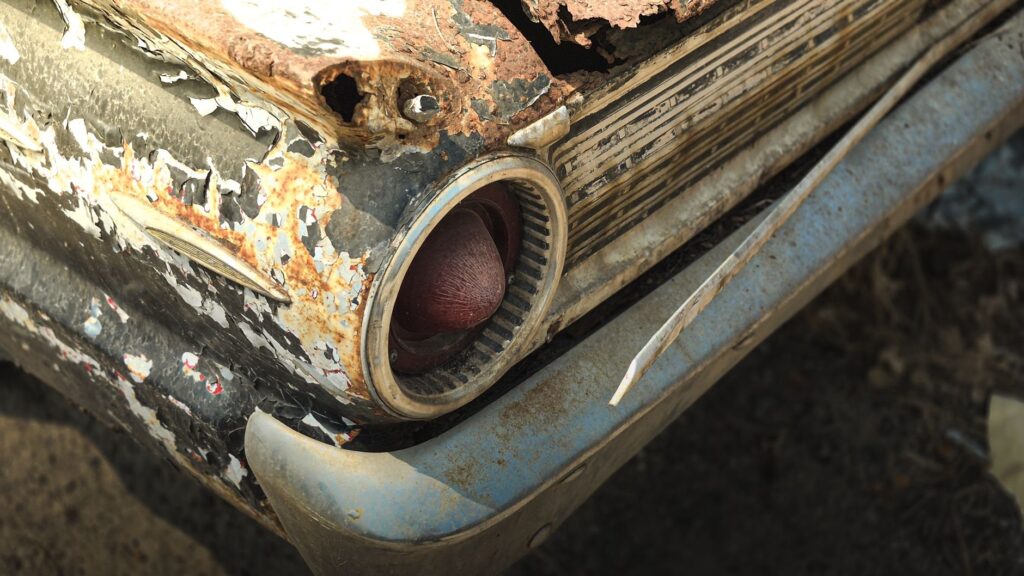
- Outer and inner sills. Run a hand along the full length both sides. Bubbling paint at the bottom edge is rust pushing outward from inside. Soft spots near the jacking points matter more than surface scabs at the ends.
- Jacking points. Look for crushed, flattened or flaking metal where a trolley jack has been put in the wrong place over the years. They sit in a load-bearing area and they are a common failure.
- Wheel arch lips and the metal behind them. Turn the wheels on full lock and shine the torch into the arch. The inner lip and the closing panel behind the liner hold road salt for months.
- Floor pan and seat belt mountings. Lift the mats and the boot floor. Damp carpet, surface rust from the inside and any lifting of the floor near a belt anchorage all need looking at from below.
- Suspension and spring mounting areas. Spring seats, turrets and rear spring hangers are thin pressings that corrode locally and severely, often out of easy sight.
- Subframe and its mounting points. Look at the metal the subframe bolts into as well as the subframe itself — the mounting area is prescribed, the bracket may not be.
- Boot floor and spare wheel well. Water gets in through light seals and drain holes and sits there. Lift the spare, not just the cover board.
- Chassis rails, on anything body-on-frame. On 4x4s, pickups and older commercials the frame is the structure. Outriggers and crossmembers are where it goes first.
If any of that feels soft, flakes into layers, or sounds dull rather than sharp when tapped lightly, stop and get a proper look at it. Our guide to how rust spreads on cars explains why what you can see is usually the smaller half of the problem.
Signs somebody has covered it up
Hidden repairs are more common on cheap cars than outright lies about mileage, because they are easy and they work on a quick viewing. The signals are consistent:
- Fresh, thick underseal on an older car, especially in one area rather than throughout. Ask when and why it was done.
- Seam sealer applied over the top of a seam that has never been cleaned back, or smeared well beyond the joint.
- Filler in a structural area. A magnet holds on steel and not on filler. Body filler is not an accepted repair method on a load-bearing member.
- Plates riveted or bonded over corrosion. On structure these are not acceptable repairs, and they trap moisture behind them.
- New paint or stone-chip on one sill only, or a panel that is a slightly different texture to its opposite number.
One caution worth knowing: where a repair has been painted or undersealed and the method cannot be identified, the manual tells the tester to pass and advise. A pass certificate is not a verdict on a repair nobody could see.

Deal-breaker, or bargaining chip?
Here is the view from the workshop, which is not the view you will get from an enthusiast forum. Surface rust on non-structural panels is cosmetic and mostly irrelevant to whether the car is safe or saleable. Localised corrosion at a sill end or a jacking point is a known, bounded repair — it is a negotiating position, not a reason to walk.
What changes the picture is corrosion at mounting points and corrosion that has clearly been hidden. Both mean the extent is unknown until somebody cuts into it, and unknown extent is the thing that turns a modest repair into a large one. A soft spring mount on a car you have not bought yet is somebody else’s problem, and it should stay that way unless the price reflects it.
The honest middle ground: if you like the car and the rust is in one of the areas above, have it assessed before you commit. A short look on a ramp with the underseal scraped back in one or two places answers the question that a driveway inspection cannot. Comparable work such as sill rust repair and jacking point repair is entirely routine once the extent is actually known.
Frequently asked questions
How much rust is too much on a used car?
The useful line is not an amount, it is a location. Corrosion in a prescribed area — where brakes, steering, suspension or seat belts mount, and the structure within 30cm of that mounting — is a failure once it has holed the metal or the area no longer feels firm. The same depth of rust on a wing or a door skin is a cosmetic matter.
Does an MOT check for rust everywhere on the car?
No. The inspection concentrates on load-bearing structure, prescribed areas and highly stressed components, and the manual is explicit that areas covered by things like body trim do not have to be checked. Plenty of corrosion is neither inspected nor a failure, which is why a recent pass and a sound underside are not the same claim.
Can I check underneath without a ramp?
You can do a great deal with a torch, dry ground and a look along the sills, arches, jacking points and visible floor edges — enough to find the obvious problems and the obvious cover-ups. What you cannot do is judge extent. Never get under a car supported only by a jack.
Is fresh underseal a bad sign?
Not by itself — plenty of careful owners treat the underside of a car they intend to keep. It becomes a question when it has gone on recently, in one area, on a car that is about to be sold. Ask what was underneath it and whether there is an invoice.
Can corroded structure be repaired properly, or is the car finished?
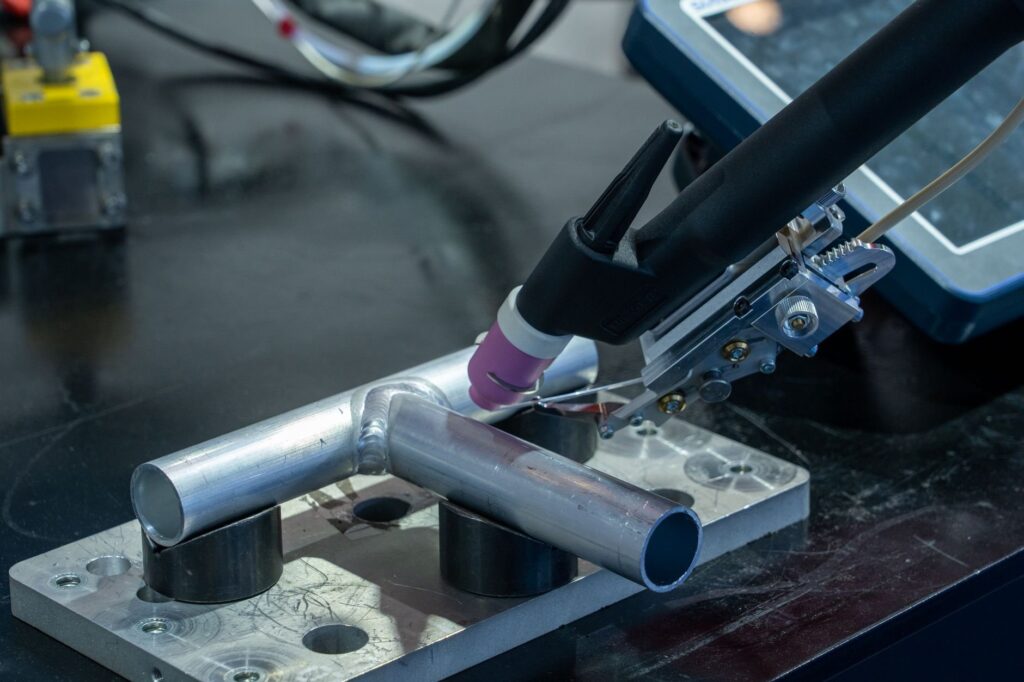
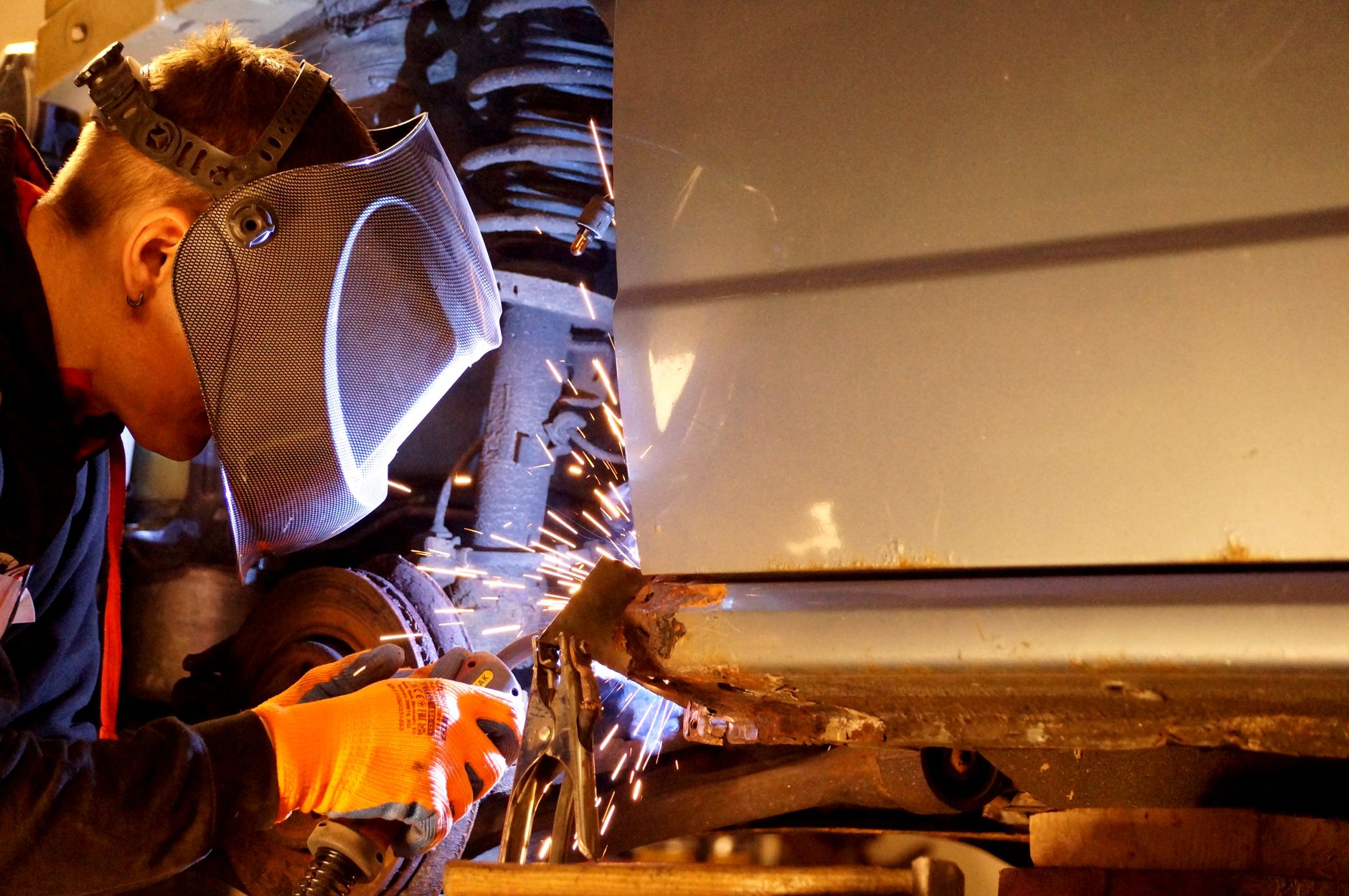
Most of it can be repaired. Corrosion is cut back to sound metal, a repair section is fabricated to the shape of the original pressing, welded in and the area sealed and protected. Whether that is a small job or a large one depends entirely on how far the rust travelled while it was hidden — which is the reason to look before you buy rather than after.
Thinking of Buying? Get It On a Ramp First
A pre-purchase look at the underside is a small job that answers a large question. The coded welders at Star Welding Mansfield carry out MOT welding and rust repair at the workshop in Mansfield Woodhouse, Nottinghamshire, serving Mansfield, Sutton-in-Ashfield, Kirkby-in-Ashfield, Worksop, Retford and the wider Nottinghamshire area.
Assessments are done at the workshop with the vehicle raised, because the extent of corrosion cannot be judged from a driveway. If you are weighing up a car and want to know what you would be taking on, bring it in before the money changes hands.