MIG or TIG? Which Welding Process Your Car Repair Actually Needs
The MOT inspection manual never once mentions MIG or TIG. What it does say is that a patch repair to a load-bearing member must be continuously seam welded in all circumstances other than where the original panel was spot welded and has been removed. The process is a means to that end, not the point of it.
That is worth knowing before you ring round asking whether somebody TIG welds, because the honest answer for most car repairs is that MIG is the right tool and TIG is the specialist one. This guide explains what each process is, which metals and jobs each suits, and why the choice matters far less than the person holding the torch. Written by the coded welders at Star Welding Mansfield in Mansfield Woodhouse, Nottinghamshire.
Published: 3 November 2026 | Updated: 3 November 2026 | Author: Star Welding Mansfield Team
MIG or TIG for car repairs: the short answer
For structural steel repairs on a car or van — sills, floor pans, chassis rails, mounting points — MIG is the process used in almost every workshop, because it lays a controlled seam quickly on thin steel and copes with the imperfect fit-up real corrosion leaves behind. TIG is chosen for aluminium, stainless and fine, visible work where heat and appearance have to be controlled precisely.
What the two processes actually are
Both use an electric arc under a shielding gas, and that is where the similarity ends. In MIG and MAG welding — the family name is gas metal arc welding — a consumable wire feeds continuously through the torch and becomes the filler as it melts. The welder controls the arc by moving the torch; the machine keeps feeding.
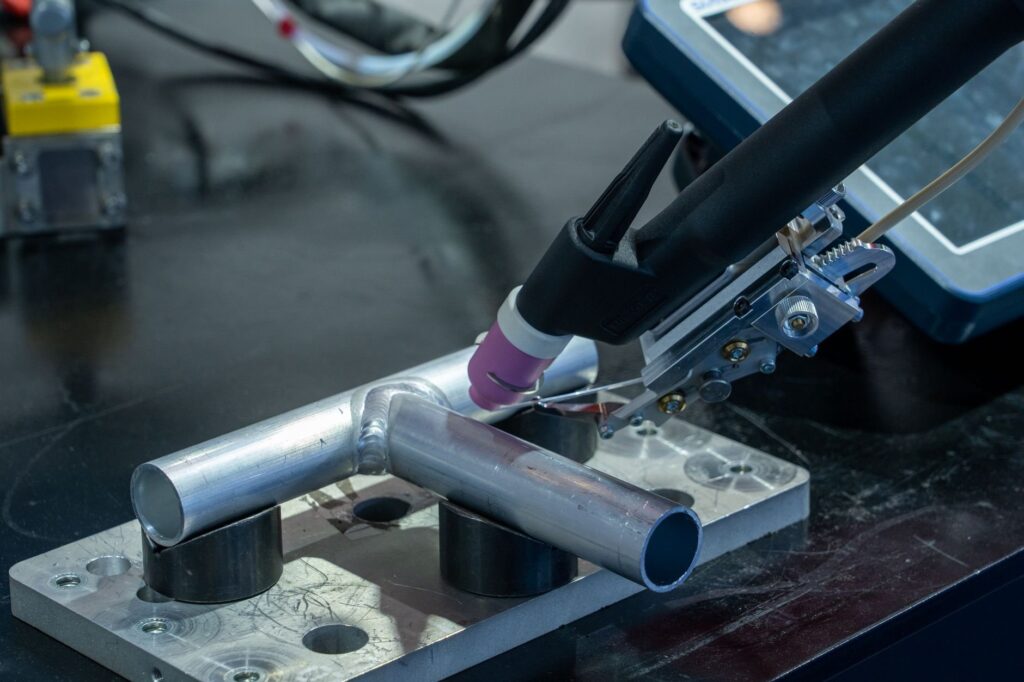
TIG works the other way round. As TWI explains, TIG uses a non-consumable tungsten electrode with a separate, optional filler rod, which is why it suits thin materials and gives the welder direct control over how much metal goes in and how much heat goes with it. One hand holds the torch, the other feeds the rod.
That single difference drives everything else. MIG is fast and forgiving. TIG is slow, precise and far more demanding of the operator and of the metal in front of them.
Why MIG does most of the work on cars and vans
A modern car body is thin mild steel, and by the time it needs welding it is rarely a clean, square joint. Corrosion eats the edge of a panel, so the repair section has to be let in to whatever sound metal is left.
MIG handles that better than anything else available. The continuous wire bridges small gaps, the deposit builds quickly, and short bursts keep the heat localised so the surrounding panel does not distort or burn through. On a sill or a floor pan, that combination is the whole job.
Speed also matters more than it sounds. Every second of arc time is heat going into a panel that is already thin. A process that fills the joint quickly puts less total energy into the metal than one that takes four times as long to travel the same distance, which is one of the reasons a slower, “better” process is not automatically the better choice on bodywork.
MIG is also what a workshop can realistically do on a vehicle in position. Structural repairs happen on a ramp, upside down, in awkward corners where the welder cannot always see both hands. A one-handed process wins there every time.
Where TIG earns its place
TIG comes out when the metal or the finish demands it. The clear cases are aluminium and stainless steel, where control of heat input and a clean, inert shield are not optional. Aluminium in particular conducts heat away fast and gives very little warning before it collapses, so the precise control TIG offers is the point of using it.
The other case is visible work. A bracket, a bespoke mount, a repair that will be seen rather than sealed and undersealed — TIG lays a neater, more controlled bead, and on small fabricated parts that is worth the extra time. If you are having something made rather than repaired, ask about it.
There is a third, quieter case: very thin or badly pitted edges where MIG would simply blow through. A skilled welder will sometimes switch processes for one short run rather than fight the material, which is a judgement call made at the panel, not on the phone.
What the metal decides for you
Most of the time the vehicle picks the process, not the customer. A rough guide to what turns up in a vehicle workshop:
- Mild steel body and structure — sills, arches, floor pans, chassis rails, mounting points. MIG, essentially always.
- Coated and galvanised panels — still MIG, but the coating has to be taken back from the joint or the weld picks up porosity, and the fume is worse.
- Stainless — TIG where the finish or the corrosion resistance of the joint matters, and a different filler from the mild steel spool.
- Aluminium — TIG, or pulsed MIG with the right set-up. Not a job to improvise, and on some vehicles the manufacturer specifies bonding and riveting rather than welding.
- Cast iron — a different discipline again, with preheat, filler choice and cooling rate doing most of the work.
The practical upshot is that a workshop equipped for one process only will either refuse certain jobs or do them the wrong way. Asking what a shop can weld is a more useful question than asking which machine they prefer.
What DVSA actually cares about
For anything structural, the test is not the process but the result. The inspection manual requires that repairs to structural components are properly carried out, appear as strong as the original structure, use suitable materials, and that any plating or welding extends to a sound part of a load-bearing member.
On top of that comes the seam rule. Spot welded repairs can only be passed where the original panel was spot welded and that original section has been removed, with stitch or plug welding accepted in place of spot welding. Everywhere else, patch repairs must be continuously seam welded.
Manufacturer methods are the exception that proves the rule. Where a maker specifies MIG brazing, or adhesive bonding combined with riveting, or a combination of those with other joining methods, that repair is acceptable unless it is clearly inadequate. It is acceptable because the manufacturer designed it for that vehicle — not because bonding is generally fine on structure, which it is not.
None of that mentions a machine. A poor MIG weld and a poor TIG weld fail for the same reason: the repair does not extend into sound metal, or it is not as strong as what it replaced. If you want the detail of how that is judged on a specific car, our guide to the chassis inspection and repair process walks through what happens on the ramp.
Why this is workshop work, not driveway work
There is a health argument that has changed how welding is done indoors, and it applies to mild steel as much as to exotic alloys. Following new evidence on cancer risk, HSE strengthened its enforcement expectation for all welding fume, making clear that general ventilation does not achieve the necessary control and that engineering controls such as local exhaust ventilation are required for welding indoors, with suitable respiratory protective equipment for any residual fume.
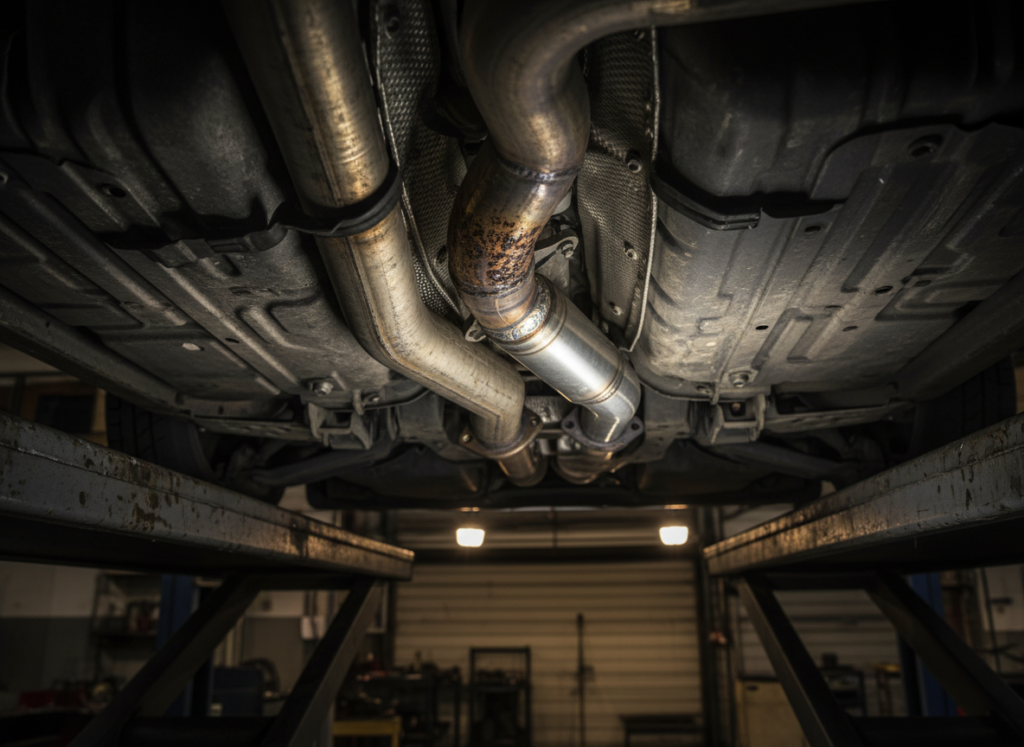
That sits alongside the practical reasons. Structural welding needs the vehicle raised so both sides of the joint can be seen, the corrosion cut back until sound metal appears, fuel lines and wiring protected, and the finished seam sealed and protected before it goes back on the road. None of that is achievable kneeling on a drive with an extension lead.
What most guides get wrong
Search this question and you will find a lot of writing that treats MIG and TIG as a league table, with TIG sitting at the top as the “proper” process. That is a fabrication-shop view imported into vehicle repair, and it misleads people.
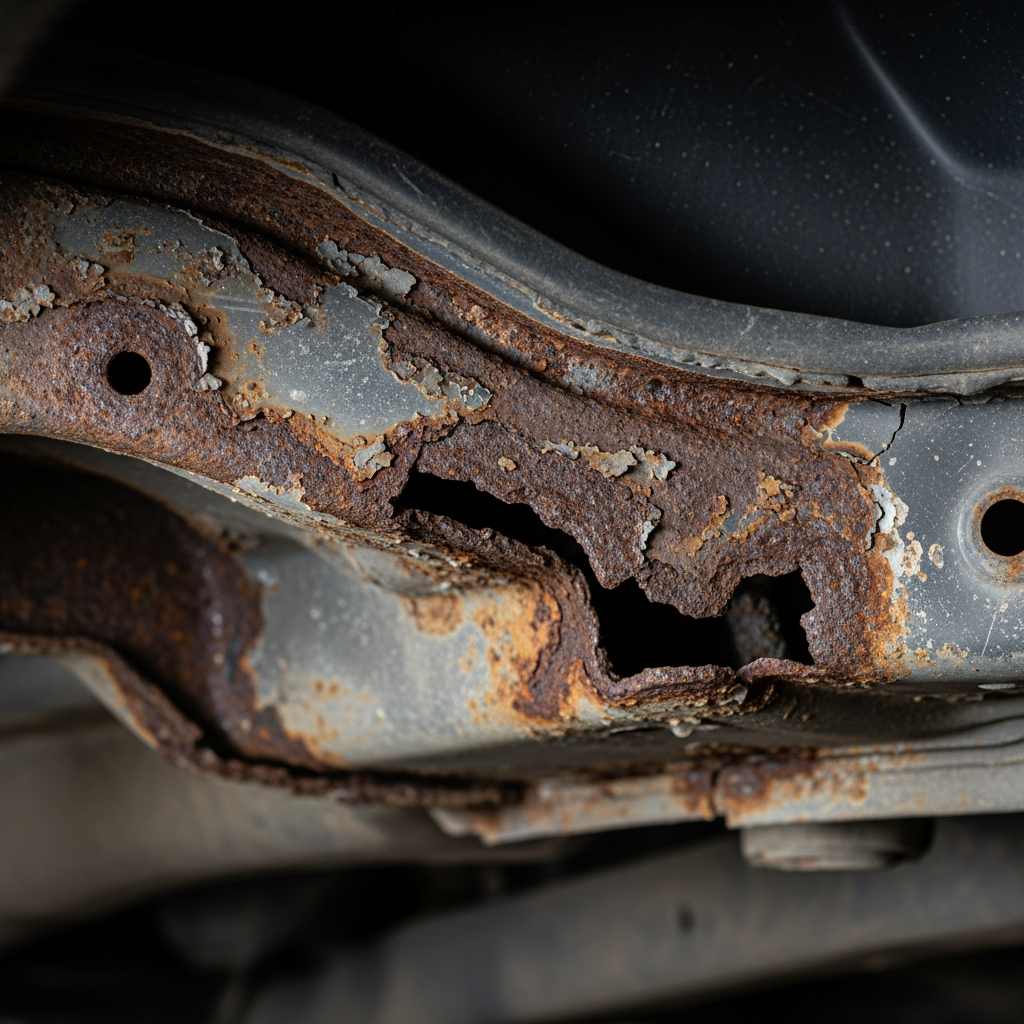
On a corroded car, the hard part is never striking the arc. It is deciding how far the rust has actually travelled, cutting back to metal that will hold a weld, making a repair section that fits the shape of the original pressing, and getting heat into the joint without destroying the panel around it. A welder who is good at those four things will produce a sound repair with MIG. A welder who is not will produce a bad one with either machine.
So the question worth asking a workshop is not which process they use. It is what they found when they took the underseal off, how far they intend to cut back, and how the finished seam will be protected afterwards.
Frequently asked questions
Is TIG welding stronger than MIG?
Not inherently. Strength comes from a sound joint in sound metal with adequate penetration and the right filler, and both processes can deliver that or fail to. TIG gives finer control, which helps on thin or dissimilar materials; MIG gives a faster, more consistent fill on the sort of joints a corroded car body presents. The weld that is properly prepared and properly fused is the stronger one.
Can you TIG weld a car body?
You can, and on restoration work where panels are butt-welded and then dressed back it is sometimes preferred. On an everyday structural repair it is usually the wrong economics: slower, harder to reach into confined areas, and no more acceptable to a tester than a good MIG seam. Where it clearly wins is on aluminium and stainless, and on small fabricated parts that will be on show.
Is MIG welding acceptable for MOT repairs?
Yes. The manual sets out what the repair must achieve rather than which process to use: suitable materials, as strong as the original, extending into a sound part of a load-bearing member, and continuously seam welded for patch repairs outside the spot-welded exception. A correctly executed MIG repair meets all of that.
Can aluminium car panels be welded?
Often, with TIG or a properly set up pulsed MIG, the right filler alloy and equipment kept clear of steel contamination. But on some vehicles the manufacturer’s repair method is bonding and riveting rather than welding, and that designed method is the one to follow. Establish which applies to the specific vehicle before anyone strikes an arc.
Does the welding process affect how long the repair lasts?
Far less than what happens either side of it. How far the corrosion was cut back, whether the new metal was fitted into sound steel, and whether the finished seam was sealed and protected decide how long a repair survives a British winter. A neat weld on rusty metal is still a repair with a short life.
Not Sure What Your Car Needs? Get It Looked At
If you have been quoted for welding and want to understand what is actually being proposed, or you have a repair or a small fabrication job and are not sure it is even weldable, the sensible first step is an assessment with the vehicle on a ramp. The coded welders at Star Welding Mansfield carry out structural welding, MOT rust repairs and bespoke fabrication at the workshop in Mansfield Woodhouse, Nottinghamshire, serving Mansfield, Sutton-in-Ashfield, Kirkby-in-Ashfield, Worksop, Retford and the wider Nottinghamshire area.
All structural work is carried out at the workshop, never on a driveway, because this is not work that can be assessed or controlled properly anywhere else. You can see the full range of chassis and structural welding work we take on, or read about the custom brackets and small fabrications made in-house.