Jacking Points and MOT Failures: What Actually Happens When They Collapse
Few MOT failure reasons catch drivers more off-guard than “structural corrosion at jacking point area.” Most people use their car every day without thinking about jacking points — but to a MOT tester, they sit within one of the most closely scrutinised zones on the entire vehicle. A jacking point that cannot support the weight of the car is a structural failure, and under DVSA rules it will fail an MOT every time.
This guide explains what jacking points are, why they fail an MOT, what an acceptable repair looks like under current DVSA inspection standards, and what the repair typically costs. Written by the specialist coded welders at Star Welding Mansfield in Mansfield Woodhouse, Nottinghamshire.
Published: 3 September 2026 | Author: Star Welding Mansfield Team
Quick Answer: Jacking Points and MOT Failures
Jacking points can fail an MOT when rust has caused a hole or the metal no longer feels firm under manual pressure. Under DVSA rules, they sit within the ‘prescribed area’ of the sill structure — meaning any corrosion that creates a hole, fails the finger-pressure test, or allows the corrosion assessment tool to break through will be recorded as a failure. Repair requires cutting back to solid metal and welding in new steel. Body filler, adhesive bonding, and plates welded over live rust are not acceptable.
What Are Jacking Points and Why Do They Matter?
Jacking points are reinforced areas built into a car’s sill structure, designed to safely take the weight of the vehicle when raised on a scissor jack, trolley jack, or workshop lift. Most cars have four — one under each door — typically marked by a notch or stamped recess in the sill, sometimes with a plastic cover.
The reinforcement is a thick piece of welded steel integrated into the inner sill construction. Because they sit low to the ground and trap moisture, they are among the first areas on older vehicles to develop serious corrosion. Once the steel weakens, the jacking point can collapse under load — which makes the car dangerous to raise and signals wider structural deterioration in the sill area.
Because jacking points are part of the sill reinforcement, they are also structurally significant. A collapsing jacking point rarely signals an isolated failure — it usually means the inner or outer sill around it has also been affected. That is why MOT testers pay particular attention to this area, and why repairs here require proper structural welding rather than surface treatment.
For a full picture of sill and floor pan welding repairs, including what the work involves and when it is needed, the Star Welding service page covers this in detail.
Why Jacking Points Can Fail Your MOT: The DVSA Rules Explained
Under the DVSA MOT Inspection Manual (Appendix A: Structural Integrity and Corrosion), certain areas of the vehicle are classed as ‘prescribed areas’ — zones where corrosion is assessed most strictly because they are close to safety-critical components.
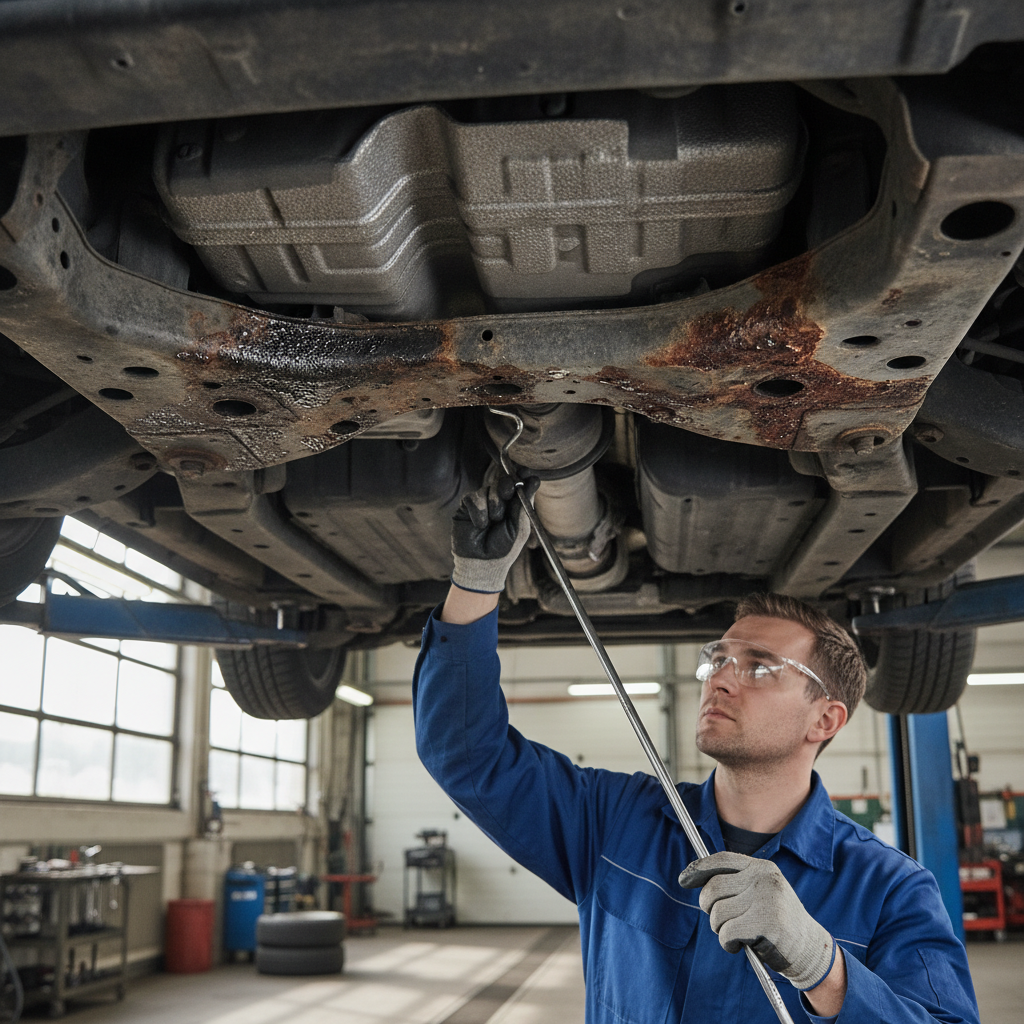
Prescribed areas include load-bearing parts within 30 centimetres of suspension, steering, braking, seat, and seat belt mounting points. Jacking points fall into this zone because they are part of the sill reinforcement, which sits close to suspension mounts, seat runners, and seat belt anchor points. The DVSA inspection manual states that corrosion in a prescribed area must be rejected if it has caused a hole in the metal, if the area does not feel firm when pressed with finger and thumb, or if the corrosion assessment tool creates a hole.
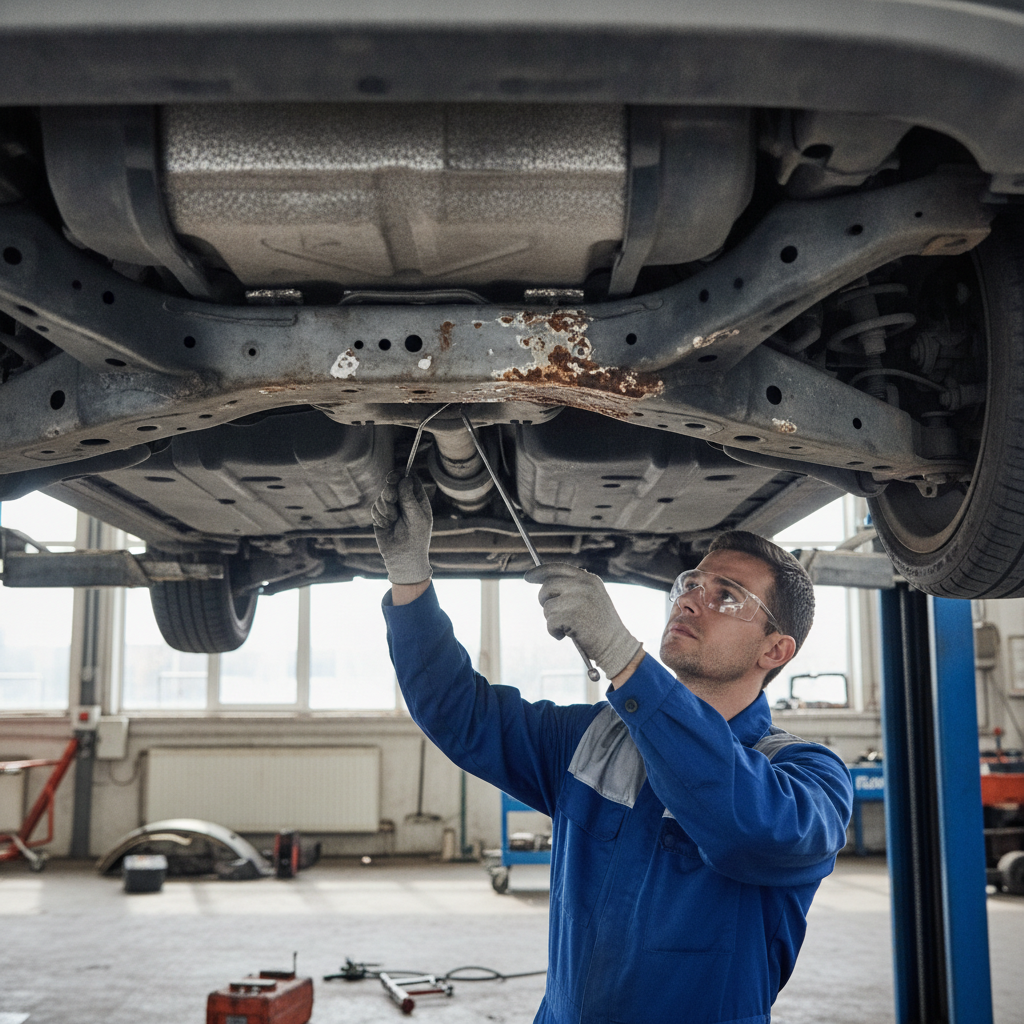
The tester does not simply look at rust. They actively probe the metal. A car with jacking points that are soft, holed, or thin enough to give way under light pressure will fail. Surface rust that is firm and structurally sound may only generate an advisory.
One point that catches some drivers out: you cannot hide corrosion with underseal. The DVSA rules are explicit that underseal applied over rust is not acceptable, and a tester who spots fresh underseal in this area is likely to probe more carefully, not less. Understanding what MOT testers check for welding and rust can help set expectations before the test.
What Does Jacking Point Welding Repair Involve?
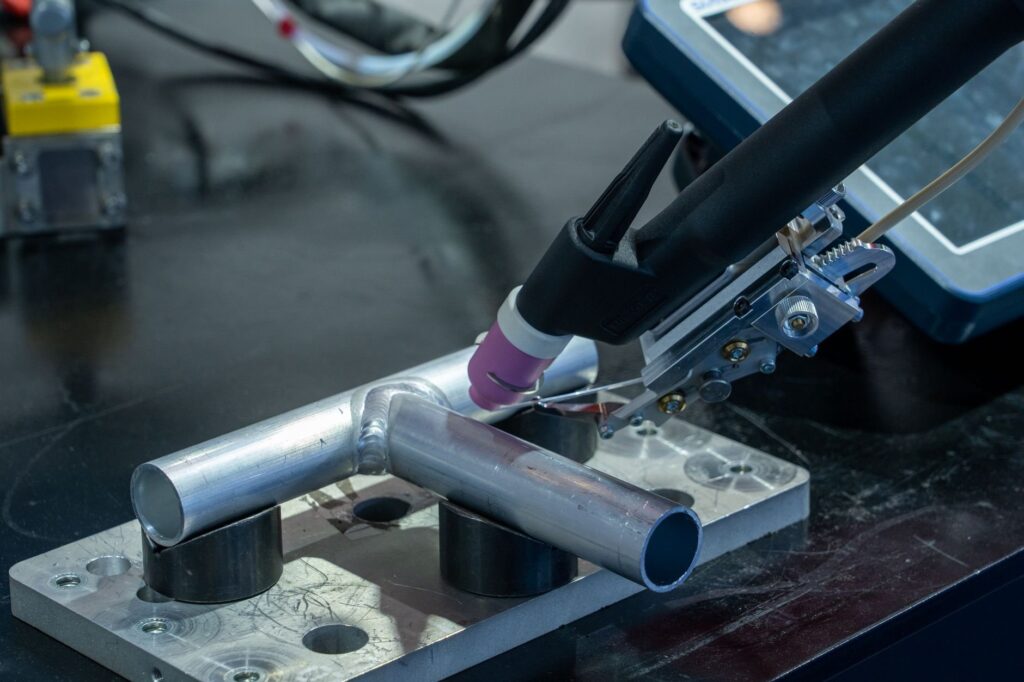
Repairing a corroded jacking point is not a quick patch job. The correct process involves cutting back to sound, clean metal and welding in new steel to restore the structural integrity of the sill area. Here is what the process typically looks like at a specialist welding workshop:
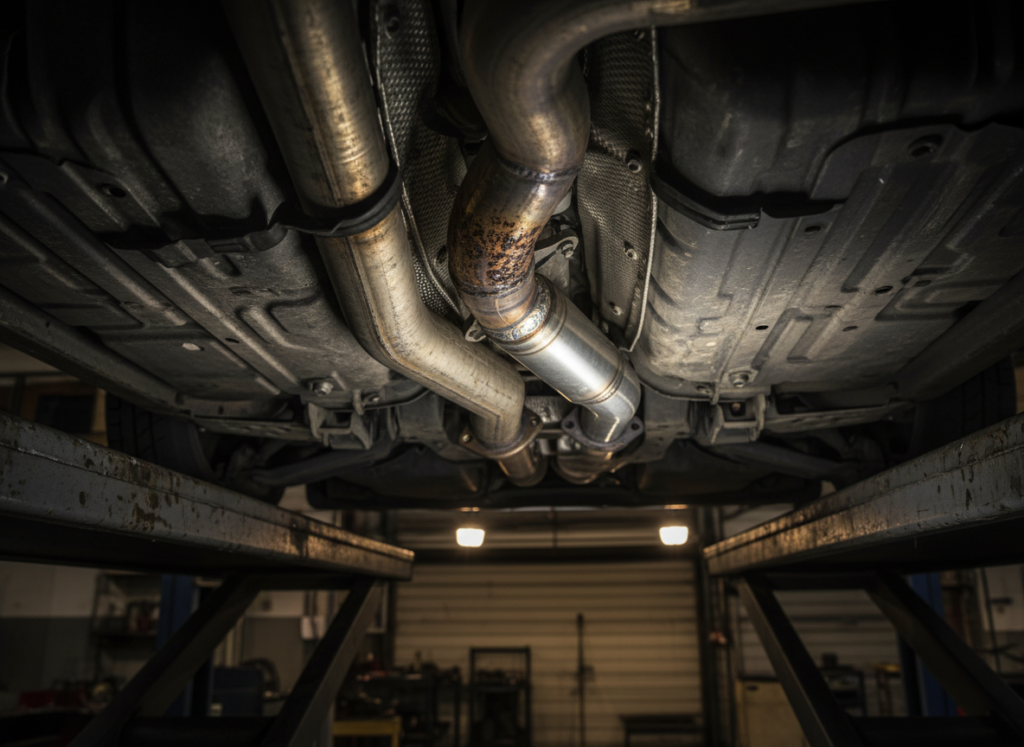
- Initial assessment: The car is raised and the area stripped of underseal and trim. The true extent of the corrosion is assessed — not just what is visible on the outside.
- Cutting back: Corroded and weakened metal is cut away until only solid, structurally sound steel remains. Cutting back properly is what determines whether the repair will last.
- New steel fabricated and fitted: Replacement sections are cut to fit, tacked into position, and alignment is checked before the full weld is committed.
- Continuous seam welding: Under DVSA Appendix A, patch repairs must be continuously seam welded — not a series of spot tacks or intermittent welds. This produces the structural continuity required to pass.
- Rust treatment and protection: Before any underseal or paint is applied, fresh steel is primed and treated to prevent corrosion from taking hold behind the repair.
Gas brazing, soldering, adhesive bonding, fibre reinforcement, and body filler are specifically excluded under DVSA rules as acceptable methods for structural repairs. A repair using these methods may look reasonable on the surface but will not pass an MOT and will not last.
How Much Does Jacking Point Welding Cost?
Jacking point repair costs vary depending on the extent of the corrosion, whether the surrounding sill has also been affected, and the vehicle make and model. A simple repair to one jacking point on a car where the surrounding metal is solid typically costs from £150 to £300. Where the sill reinforcement has also deteriorated, costs rise — usually to the £400–£700 range per corner, and potentially higher if both inner and outer sills require work.
For vehicles where all four jacking points are seriously corroded and the sill structure needs significant work, total repair costs can reach £1,500 to £2,000 or more depending on the vehicle. It is worth noting that jacking point repairs are often found alongside other structural issues during a full underside inspection — the workshop will identify everything before work begins, so there are no surprises mid-job.
Quoting over the phone is difficult for this type of work because the true extent only becomes clear once old metal is removed. A welding assessment at the workshop is always the right starting point. Understanding common MOT welding failures and what triggers them can also help you prepare for the assessment.
When Is It Worth Repairing a Vehicle with Failed Jacking Points?
The answer depends on the vehicle’s overall condition and value. If the jacking points are the only area of concern and the sill, floor pan, and chassis structure is otherwise sound, repair is often practical and worthwhile — particularly on vehicles with low mileage or long-term use value.
Where jacking point corrosion is accompanied by widespread inner sill decay, floor pan damage, or chassis rail problems, the cost of getting everything right can exceed the vehicle’s current value. A welding assessment gives you an honest picture before any money is spent. On older or classic vehicles, many owners choose to have repairs done progressively — starting with the areas that are most critical for safety, then addressing the rest as budget allows.
Frequently Asked Questions: Jacking Point Repairs and MOT
Can a collapsed jacking point actually be welded back?
Yes — collapsed or severely corroded jacking points can be repaired by cutting back to sound metal and welding in a new reinforcement plate or section. As long as the surrounding sill structure is solid enough to support the repair, this is a standard job for a coded welder. The key is getting back to clean, solid steel before the new metal goes in.
Will my car automatically fail its MOT for rust at the jacking points?
Not automatically. The tester applies a physical check using finger pressure and the corrosion assessment tool. If the metal feels firm and there is no hole, rust may be noted as an advisory rather than a failure. If the metal gives way, a hole is present, or the repair method used is not acceptable, it will fail.
Can I get someone to weld a plate over the top?
No. Under DVSA rules, patch repairs must be continuously seam welded, and any plating must extend to sound metal. Welding over rust, using body filler, or bonding a plate over damage without cutting out the bad metal is not acceptable and will not pass a structural inspection.
Is it worth welding jacking points on an older car?
It depends on the overall condition of the vehicle. If the jacking points are the main structural issue and the sills and floor pan are otherwise sound, repair is often practical. Where rust has spread significantly into the sill structure, floor pan, or chassis, a full assessment gives you the clearest picture of what is involved and whether repair makes sense for your vehicle.
Need Your Jacking Points Assessed in Mansfield?
The specialist coded welders at Star Welding Mansfield carry out structural welding repairs including sill reinforcement and jacking point work at their workshop in Mansfield Woodhouse, Nottinghamshire. If your vehicle has been given a jacking point failure on its MOT, or you want an honest assessment of its condition before the test, the best first step is a workshop visit.
Star Welding Mansfield is not a mobile service — all structural repairs are carried out in the workshop where the right equipment is available to do the job properly.