The Earth Clamp Is the Detail Nobody Mentions
Ask most people what the risk is when welding an electric car and they will say the battery catching fire. In practice, the everyday risk is duller and far more common: where the earth clamp goes.
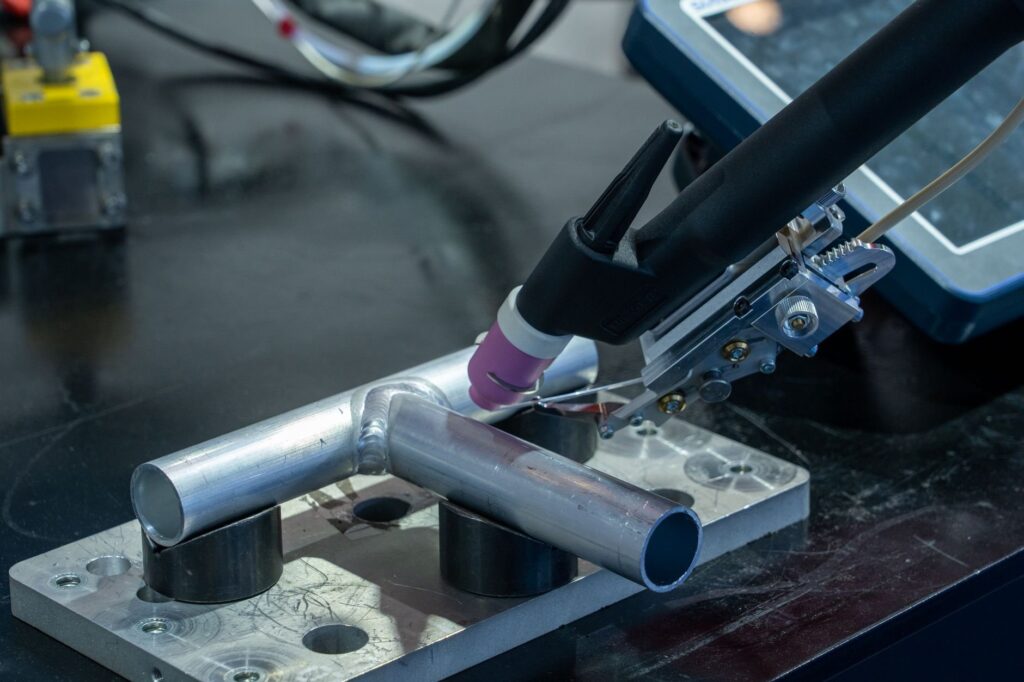
Welding current takes the shortest route back to that clamp. If the clamp is on the opposite end of the car from the weld, the current travels through whatever is in between — seam by seam, bracket by bracket, and potentially through control modules, sensor grounds and battery management wiring.
The rule we work to is simple. The earth clamp goes on clean bare metal as close to the weld as it can physically get, on the same panel wherever possible. It is basic practice on any modern car with electronics; on a hybrid it is not optional.
The same discipline applies to spatter. Welding blankets go over anything we cannot move, because a spark landing on high-voltage insulation is a defect you will not find until much later.
Heat, Battery Packs and Why We Sometimes Say No
Battery packs do not like heat. HSE notes that packs are susceptible to high temperatures and that vehicles are typically labelled with a maximum, which is why paint booth schedules have to be managed around them.
Welding is more localised than a paint booth but far hotter at the point of work. The judgement is therefore about distance and shielding: how close is the repair to the pack, what is between them, and can that heat path be broken with a barrier or by removing a section of trim.
Sometimes the answer is that the pack has to come out before the repair can be done safely. That is a specialist operation, it adds cost and time, and it changes whether a repair makes sense at all.
Here is our point of view, and it is not the one that wins the most work: on a high-mileage hybrid with structural rot immediately under the pack, the right recommendation is often not to weld it. We would rather tell you that than take the job and hope.
Hybrids, MOTs and Corrosion
The MOT does not have a separate rulebook for hybrids. Corrosion within a prescribed area of the structure fails the same way whether the car is electric, hybrid or diesel, and the tester assesses the same sills, mountings and load-bearing panels.
What is different is that hybrids and EVs are heavier, and that weight loads the same suspension and subframe mountings a little harder over the years. If you want to know what an inspector is actually looking at, our breakdown of what MOT testers check for welding and rust sets out the areas that matter.
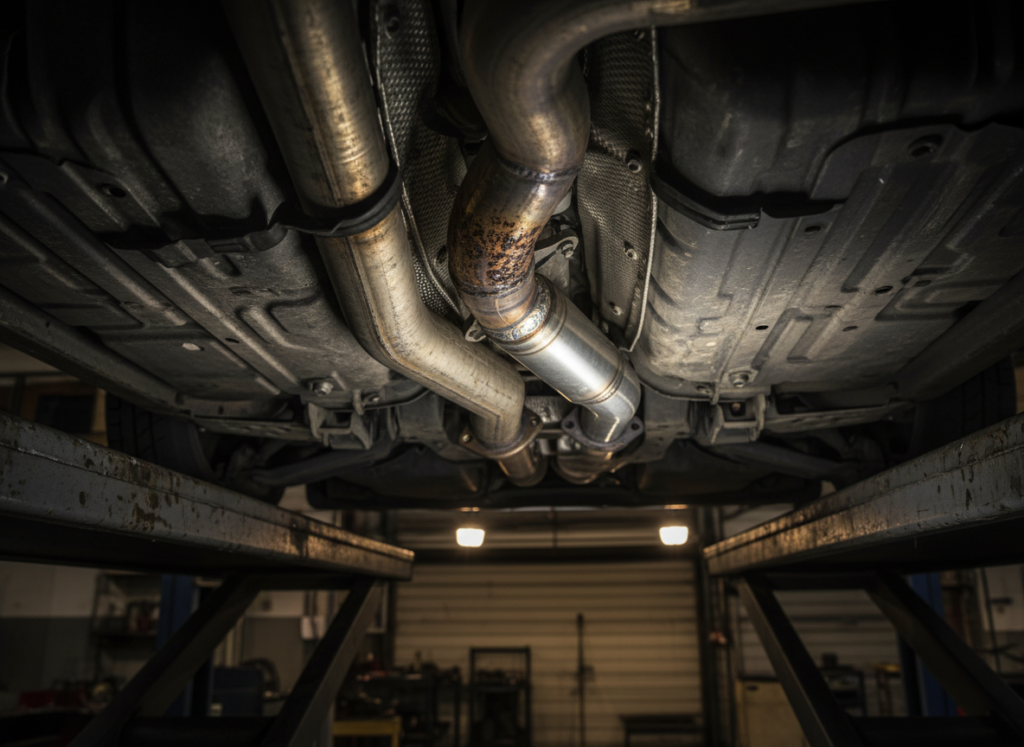
Where the repair itself is a conventional sill or floor section, the work is standard MOT welding and rust repair once the vehicle has been made safe to work on. The complication is always the preparation, never the weld.
What to Expect When You Bring a Hybrid to Us
We will look at where the damage is before we tell you anything else. If the repair area is clear of high-voltage hardware and the vehicle can be safely isolated, it is a normal welding job and we will treat it as one.
If the repair sits over or against the pack or its cabling, we will tell you what needs to happen first, and who needs to do it. Where a vehicle needs an EV-qualified technician to isolate and prove the system dead before we can start, we will say so rather than improvise around it.
That answer is occasionally the reason a job goes elsewhere. We would still rather give it.
Frequently Asked Questions
Can you weld on a hybrid car?
Yes, provided the high-voltage system is isolated to the manufacturer’s procedure and proven dead, the 12-volt battery is disconnected, and the repair area is clear of high-voltage cabling or properly shielded from it.
Do you have to disconnect the battery to weld on a car?
On any modern car, yes — the 12-volt battery comes off to protect the control modules. On a hybrid or EV the high-voltage pack must also be isolated, and that is a separate procedure with a stand-down period before work begins.
Is it dangerous to weld near an EV battery?
It can be. The hazards are electric shock from live components, damage to high-voltage insulation from spatter, and heat reaching a pack that has a specified temperature limit. Managed properly with isolation, shielding and correct earth clamp placement, welding elsewhere on the shell is routine.
Will welding damage the electronics on a hybrid?
It can if the earth clamp is placed badly and welding current is allowed to travel through the vehicle looking for a return path. Clamping onto clean bare metal beside the weld is what prevents it.
Do electric cars rust?
Yes. The shell, sills, floor pan and suspension mountings are ordinary steel and corrode the same way any other car does. The drivetrain is different; the bodywork is not.
Bring It In and We Will Tell You Straight
If your hybrid or electric car has an MOT advisory for corrosion, a rotten sill, or accident damage that needs metalwork, the first useful step is having someone look at where the damage sits relative to the high-voltage hardware.
We are coded welders based in Mansfield Woodhouse, working on cars, vans and commercial vehicles across Nottinghamshire. Contact us to arrange an inspection and we will give you a straight answer on what can be welded, what has to be isolated first, and whether the repair is worth doing at all.