Mobile Welding or Workshop? Where Car Welding Should Actually Be Done
In 2019 the Health and Safety Executive changed its enforcement position on welding fume. All welding fume, including fume from ordinary mild steel, is now treated as a cause of lung cancer — and the HSE is explicit that general ventilation does not achieve adequate control, whatever the job and however short it is.
That single change tells you most of what you need to know about the difference between mobile car welding on your driveway and the same repair done in a workshop. This guide is an honest look at what mobile car welding is genuinely good for, where it stops being appropriate for vehicles, and the questions worth asking before you book either.
Reviewed and signed off by Star Welding Mansfield— coded welders based in Mansfield Woodhouse, Nottinghamshire. Published 29 September 2026. Last updated 29 September 2026.
Should Structural Car Welding Be Done on a Driveway?
No. Structural vehicle welding — sills, floor pans, chassis rails, subframes and jacking points — needs the car raised for full underside access, controlled fume extraction, and protection from wind and rain while the metal is prepared and sealed. A driveway provides none of those. Mobile welding suits accessible, non-structural jobs.
What Mobile Welding Is Genuinely Good For
This is not an argument that mobile welding is a bad trade. It is a real service and it solves real problems, particularly where the item cannot be moved.
Mobile welders do sensible work on gates and railings that are fixed in place, on farm and site machinery that cannot be recovered economically, on static plant, and on straightforward accessible repairs where a vehicle genuinely cannot be driven or towed. If the thing that needs welding will not fit through a workshop door, a mobile welder is the right answer.
The distinction we are drawing is narrower than mobile versus workshop in general. It is about structural welding on a road vehicle, where the finished repair has to carry load, pass an MOT and keep the occupants safe in a collision.
Three Things a Driveway Cannot Provide
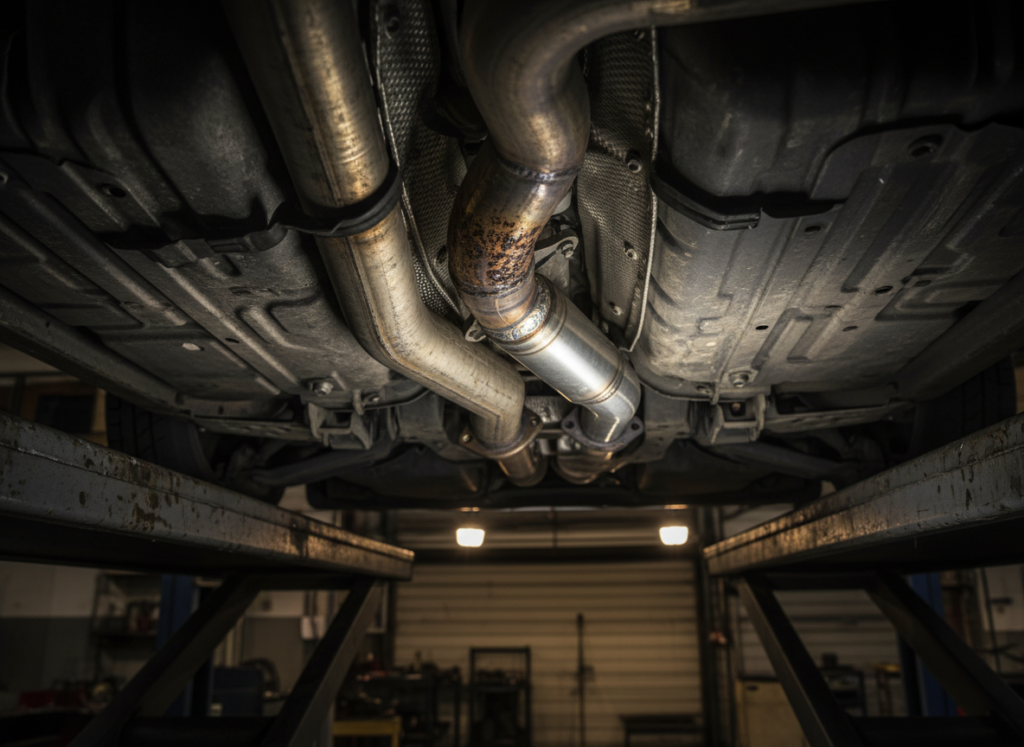
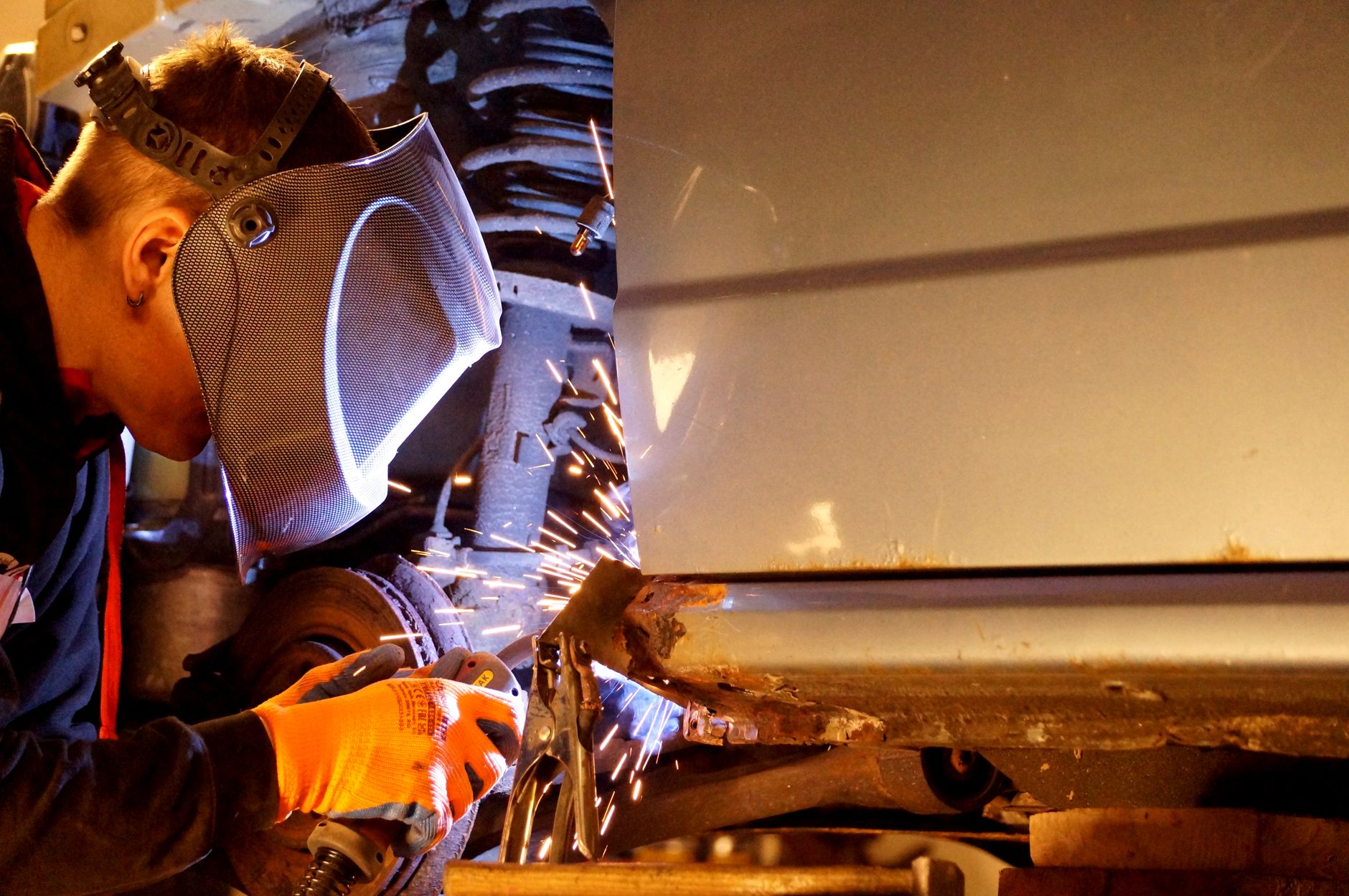
1. Proper access underneath. Sills, floor pans, chassis rails and jacking points are welded from below. On a two-post lift the welder stands upright with the whole underside visible and can work the full length of a repair in one pass. On axle stands on a sloping driveway, access is partial, sight lines are poor, and the awkward positions are exactly where welds are rushed.
Access also determines how much rot gets found. A large part of any rust repair is cutting back until you reach sound metal. If you cannot see or reach the surrounding area, the temptation is to patch what is visible — which is how a repair fails again a year later, just outside the patch.
2. Fume control. The HSE now expects effective engineering controls such as local exhaust ventilation for all indoor welding, including mild steel, because general ventilation is not sufficient to control the risk. Outdoors, control depends on suitable respiratory protection and position. It is a genuine question worth asking any welder, wherever they work.
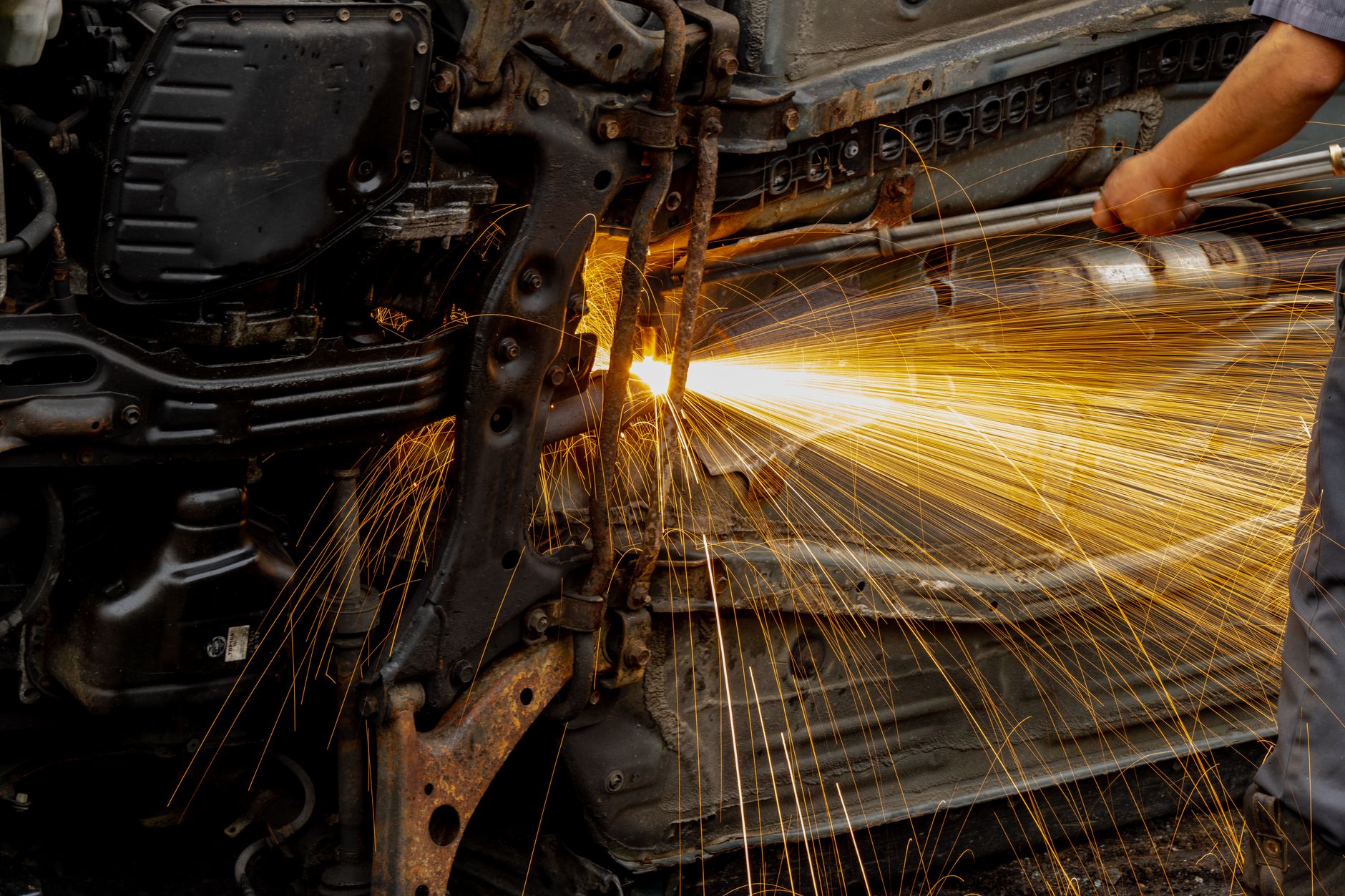
3. Control of fire, weather and contamination. Welding under a car means hot sparks near fuel lines, brake lines, plastic trim, underseal and wiring, all of which need protecting and monitoring. Wind blows shielding gas away from the weld pool, which causes porosity. Damp and cold surfaces cause defects too, and freshly cut steel needs to be sealed and protected before it starts rusting again — which is difficult in the rain.
Why the MOT Draws the Line Here
The DVSA inspection manual does not just check whether a repair exists. It checks the quality of it. A main load-bearing structural member that has been modified or inadequately repaired so that steering or braking is likely to be adversely affected is a Dangerous defect — the most serious category there is.
That matters because a bad structural weld is not neutral. It is worse than the corrosion it replaced, because it looks repaired. Filled, seam-sealed and painted, a poor repair can hide a joint that has not properly fused, and neither you nor the next tester can see inside it.
It also matters in a crash. Sills, floor pans and chassis rails are part of how the shell absorbs and directs impact energy. A patch tacked over rot rather than cut in and seam welded does not carry that load in the way the original structure did.
In practice, “adequately repaired” comes down to a few things a tester can look for. The corroded metal should have been cut out rather than covered, with the repair taken back to bright, sound steel. The new section should be let in and welded continuously along the joint, not held on by a row of tacks. And the finish should not rely on filler or underseal to hide the edge of the repair.
Most of the time on a rust repair is spent on that preparation, not on the welding itself. It is also the part that gets cut short when conditions are poor or the light is going — which is precisely why the setting matters.
This is why our MOT welding and rust repair work is done in the workshop, and why we would rather book a vehicle in than agree to meet it somewhere. If you want the detail on what a tester is actually looking at, our guide to what MOT testers check for rust and welding repairs covers it.
What About a Car That Cannot Be Driven?
This is the practical objection, and it is a fair one. If a car has failed its MOT on structural corrosion, it should not be driven, and owners reasonably assume that means a mobile welder is the only option.
In most cases it is not. Recovery to a workshop is usually cheaper than people expect, and far cheaper than paying twice for a repair that has to be redone.
Where an MOT has simply run out, GOV.UK sets out limited exceptions allowing you to drive to or from somewhere to be repaired, or to a pre-arranged MOT test. That is a narrower allowance than many people assume, and it does not apply if the vehicle has been recorded with a Dangerous defect — in that case it should not be driven at all. If you are unsure which situation you are in, ask before moving the car.
If the vehicle is genuinely immovable, that is worth saying at the point of enquiry rather than at the point the welder arrives. It changes what is realistic.
What to Ask Before You Book Anyone
- Will the repair be cut out and seam welded, or patched over? Plating over rot without removing it is the single most common shortcut, and it is the one that fails.
- How will the vehicle be raised? Full underside access is not optional for structural work.
- What happens to fuel and brake lines nearby? A good answer is specific about protecting or isolating them.
- How will the repair be sealed afterwards? Bare cut steel needs seam sealer and protection, or it starts rusting immediately.
- Can I see the repair before it is covered? Any welder confident in the work will say yes.
These questions are useful whoever you use. A mobile welder with good answers is a better choice than a workshop with vague ones.
Frequently Asked Questions
Can a car be welded on a driveway?
Small, accessible, non-structural jobs sometimes can be. Structural repairs to sills, floor pans, chassis rails or subframes need proper lifting access, fume and fire control, and shelter from wind and rain, which a driveway cannot provide.
Is mobile welding acceptable for MOT repairs?
The MOT does not care where the work was done, only whether the finished repair is adequate. But a Dangerous defect is recorded where a load-bearing member has been inadequately repaired, and conditions on a driveway make an inadequate repair considerably more likely.
Do MOT welding repairs have to be seam welded?
Structural repairs need to be continuous and properly fused rather than tacked or plated over corrosion. Corroded metal must be cut back to sound steel first, which is why access matters so much.
Is mobile welding cheaper?
The quoted price is often lower because there is no premises overhead. Whether it is cheaper overall depends entirely on whether the repair lasts and passes. Paying twice is the expensive outcome.
What if my chassis is the problem, not the sills?
Chassis and structural work has the least tolerance for compromise of anything on the vehicle. Our chassis and structural welding service covers this, and our overview of chassis welding rules and realities in the UK explains what is and is not permitted.
Book Your Vehicle Into the Workshop
Star Welding Mansfield is a workshop-based operation in Mansfield Woodhouse, Nottinghamshire. We take on MOT welding, rust repair, sill and floor pan work, chassis and structural welding, and exhaust repairs on cars, vans and commercial vehicles.
If your car has failed on corrosion, or you have been quoted for welding and want a second opinion before committing, bring it to us. We will put it on the lift, show you what we find, and tell you whether it is worth repairing before any work is agreed.
Contact us to arrange an assessment and we will tell you honestly what the repair needs.