Common MOT Welding Failures and How to Avoid Them
Failing an MOT for corrosion is frustrating enough. Failing again after you’ve “had welding done” is even worse.
The truth is, a lot of repeat MOT welding failures happen for predictable reasons: rust wasn’t fully removed, repairs were too small, or the work didn’t restore strength in the right area.
In this guide we’ll break down the most common MOT welding failures we see (and the ones testers flag most often), plus how to avoid repeat fails with proper repairs.
If you’re in Mansfield and want a quote, you can start here:
MOT Welding & Rust Repair
or contact us.
Quick Answer: Why Do MOT Welding Repairs Fail?
Most repeat failures happen because the repair was done on weak metal, corrosion was left behind, or the repair didn’t cover the full affected area.
A proper repair cuts back to sound metal, restores strength, and protects the area to slow rust returning.
If you want the “rules” side explained first, read:
MOT Welding Requirements Explained.
If you want a DIY pre-check before your test, read:
How to Spot MOT Welding Failures Before Your Test.
1) Sill Corrosion Near Jacking Points (One of the Most Common Fails)
Sills are a classic MOT fail area because they’re exposed to road spray and salt, and they’re often close to jacking points and seatbelt mount areas.
The fail usually reads like “excessively corroded” or “inadequate structure” near a prescribed area.
How to avoid a repeat fail: the repair needs to remove corrosion back to solid metal and rebuild the structure properly—not just cover the visible hole.
If the inner sill is affected, it may need repairing too (not just the outer skin).
Related service page:
Sill, Arch & Floor Pan Repairs.
2) Floor Pan Holes and Weak Spots (Often Hidden Until MOT Time)
Floor pan corrosion often starts from trapped moisture, blocked drain points, wet carpets, or underseal hiding rust.
It’s commonly found in front footwells, rear passenger areas, and load areas on vans.
How to avoid a repeat fail: cut back to solid metal and use a properly shaped repair section that restores strength.
If the rust is spreading along seams, the repair often needs to extend further than the obvious hole.
If you want a plain-English explainer, this page is useful:
Floor Pan Welding Repairs.
3) Seatbelt Mount Corrosion (High-Risk, High-Scrutiny)
Corrosion near seatbelt anchor points is treated very seriously because it directly affects occupant safety.
Even a small amount of weakness here can lead to an MOT fail.
How to avoid a repeat fail: repairs must restore the mounting area securely. That often means removing more corrosion than expected and rebuilding the area properly.
This is not the place for minimal patches.
If your fail sheet mentions “prescribed area” near a mount, it’s worth getting it assessed properly:
Contact us.
4) Suspension Mount / Subframe Area Corrosion (Structural)
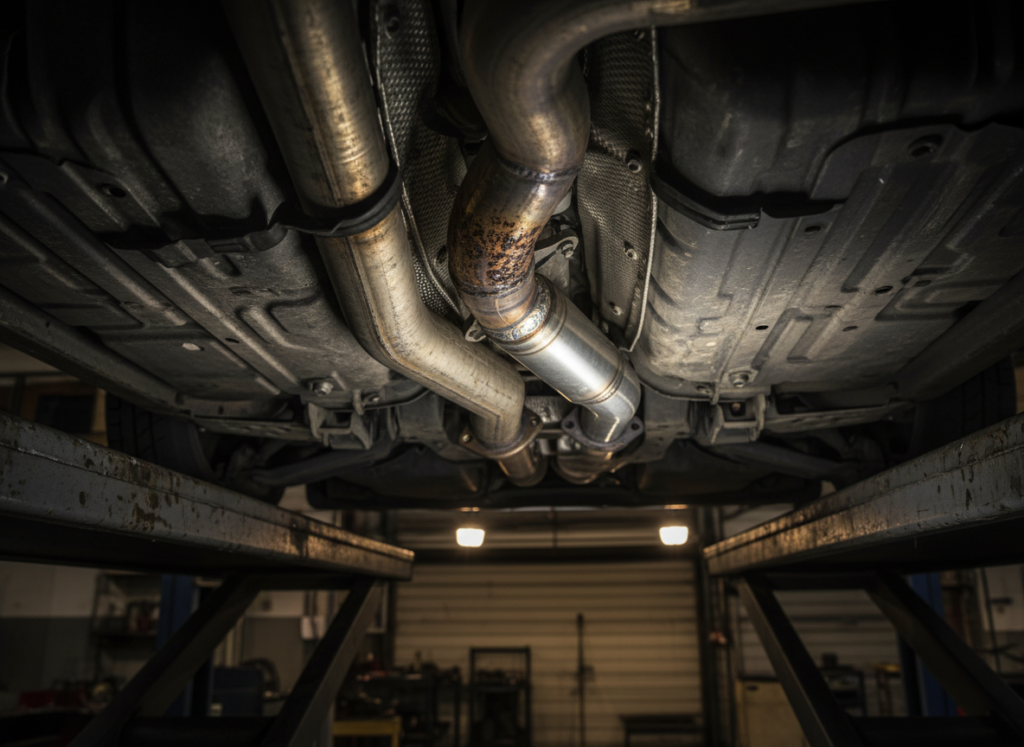
Corrosion near suspension mounts, subframe mounts, and chassis rails is another common fail area—especially on vans, pickups, and 4x4s.
These areas take load constantly, so any weakness is a safety issue.
How to avoid a repeat fail: the repair must be structurally sound, properly attached, and extend into solid metal.
If corrosion is in a box section, it may require more involved work than a simple outer patch.
Related service page:
Chassis & Structural Welding.
5) “Inadequate Repair” (When Previous Welding Doesn’t Meet Standard)
Sometimes the MOT fail isn’t just corrosion—it’s the quality of a previous repair. Testers can fail a vehicle if a repair looks insecure, poorly attached,
or if it appears to be hiding corrosion.
Common causes of “inadequate repair”:
- Patch welded onto thin/weak metal that flexes
- Corrosion left behind under the repair
- Repair doesn’t cover the full affected area
- Poor fit-up with gaps, leading to weak joins
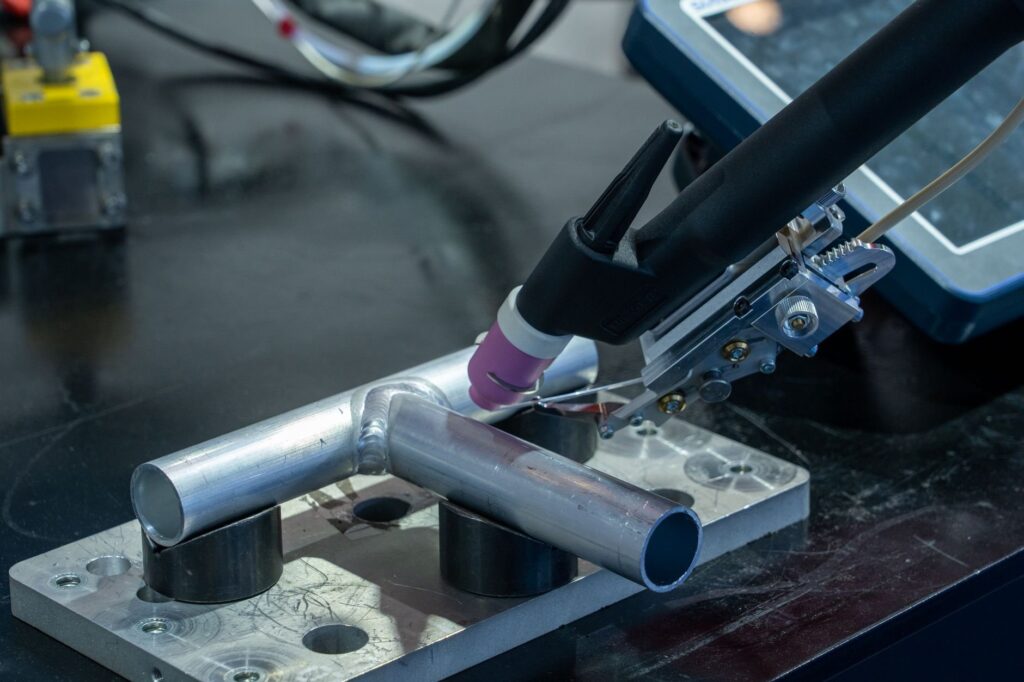
At Star Welding Mansfield, welding is carried out by B6 and 6G MIG/TIG coded welders.
That matters for structural repairs because consistency and control are key—especially on thin automotive steel.
Learn more here: About Us.
6) Corrosion Spreading Beyond the Repair (The “Chasing Rust” Problem)
This is one of the biggest reasons people end up paying twice. Rust rarely stays in one neat circle.
If the repair only covers the visible hole, corrosion can continue spreading around it and the next MOT picks it up.
How to avoid it: repairs should extend into sound metal, and the area should be protected afterwards.
If the corrosion is widespread, it may be better to repair a larger section properly rather than doing multiple small patches.
7) Underseal Hiding Rust (Looks Fine… Until It Doesn’t)
Underseal can be helpful when applied correctly to clean metal. But it can also hide corrosion if it’s been applied over rust.
From the outside it can look “protected”, while underneath the metal is rotting away.
How to avoid it: if you’re buying a vehicle or preparing for an MOT, don’t rely on thick underseal as proof of a solid underside.
A proper inspection matters—especially around seams, jacking points, and mounts.
How to Avoid MOT Welding Failures: A Practical Checklist
If you want to reduce the chance of an MOT corrosion fail (or a repeat fail), here’s a practical approach:
- Check common areas early: sills, arches, floor pans, jacking points, mounts
- Don’t ignore small bubbles: bubbling paint often means rust underneath
- Fix bracket and support issues: movement causes cracks and spreads damage
- Choose repairs that remove rust: avoid “cover-up” patches on weak metal
- Protect repaired areas: sealing and corrosion protection helps slow rust returning
- Book a pre-MOT inspection: it’s often cheaper than rushing after a fail
For a DIY guide, read:
Spot MOT Welding Failures Before Your Test.
FAQs: Common MOT Welding Failures
-
What’s the most common MOT welding fail?
Sills and floor pans are among the most common, especially near jacking points and prescribed areas. -
Can I just weld a small patch for an MOT pass?
Sometimes, but it depends on where the corrosion is and how far it has spread. Small patches on weak metal often lead to repeat fails. -
Why did my car fail again after welding?
Usually because rust was left behind, the repair was too small, or the patch was welded onto thin metal that later failed. -
Do you do MOT welding in Mansfield?
Yes. Start here: MOT Welding & Rust Repair.
Most of these failures come down to how the repair was carried out rather than the rust itself, which is why it pays to know how to choose a coded welder before the work starts.
Book MOT Welding & Rust Repair in Mansfield
If you’ve failed an MOT for corrosion—or you want to avoid failing in the first place—we can assess the vehicle and recommend the right repair approach.
Start here: MOT Welding & Rust Repair.
To book in, contact us here or call:
We also work closely with our sister company Star Garage Mansfield
(and Lonestar Performance) for mechanical repairs and diagnostics.
“`