What Is a Coded Welder? How to Choose Someone to Weld Your Car
The DVSA MOT inspection manual does not just say a structural repair has to look tidy. It names the methods a tester must reject on any load-bearing part of your car: gas brazing, soldering, adhesive bonding, fibre reinforcement and body filler. It also states that patch repairs, in almost all circumstances, must be continuously seam welded.
That single paragraph is the honest dividing line between a repair that carries your car and one that simply hides a hole. Choosing a coded welder is how you stay on the right side of it. Here is what the term actually means, and what to ask before you hand over your keys.
By the Star Welding Mansfield workshop team · Published 17 September 2026 · Last updated 17 September 2026
What is a coded welder?
A coded welder is one who has passed a formal, independently assessed qualification test to a recognised standard rather than simply learning on the job. In the UK that standard is usually BS EN ISO 9606-1, which covers fusion welding of steels. The test proves the welder can produce sound welds in a defined process, material, thickness and position.
The wording matters. ISO 9606-1 states that when qualifying welders, the emphasis is placed on the welder’s ability to manually manipulate the torch and produce a weld of acceptable quality. It is a test of the person, not of the workshop, the machine or the brochure.
What the coding actually covers
A welding qualification is deliberately narrow. It is tied to specific variables, which is why an experienced welder often holds more than one:
- Process — MIG and TIG are separate qualifications. Being coded in one does not qualify you in the other.
- Material and thickness — thin car body steel behaves very differently from thick section plate.
- Position — flat bench work is the easy case. The 6G qualification tests welding a fixed pipe at 45 degrees, where the welder has to work overhead, vertically and horizontally in one continuous joint.
- Joint type — butt joints and fillet joints are assessed differently.
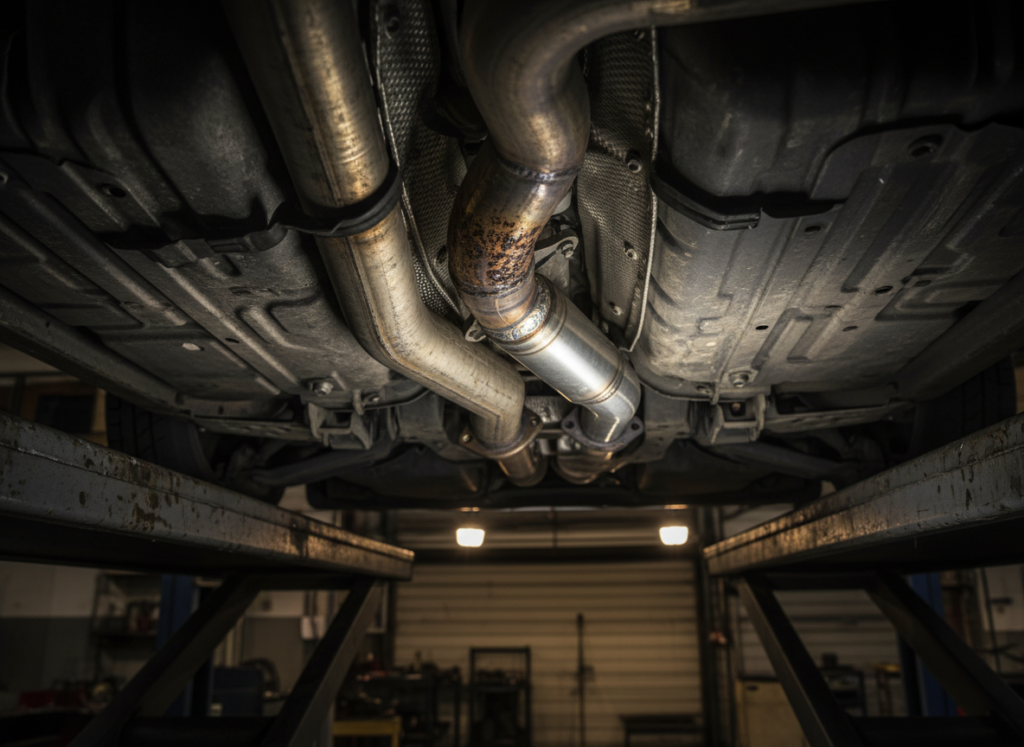
The 6G element is the one worth understanding as a car owner. Almost all structural work on a vehicle happens with the car in the air and the welder lying underneath it, working upwards into a sill or a chassis rail. That is exactly the awkward, out-of-position welding a 6G test is designed to prove. Our welders are B6 and 6G coded in both MIG and TIG, which is why we lead on it rather than on price.

Why the MOT manual makes this more than a badge
Most people assume welding is welding, and that an MOT tester either passes the repair or does not. The inspection manual is far more specific than that. It defines a prescribed area as any load-bearing or supporting structure within 30cm of the mounting point for a brake, steering, suspension, seat belt or other testable component.
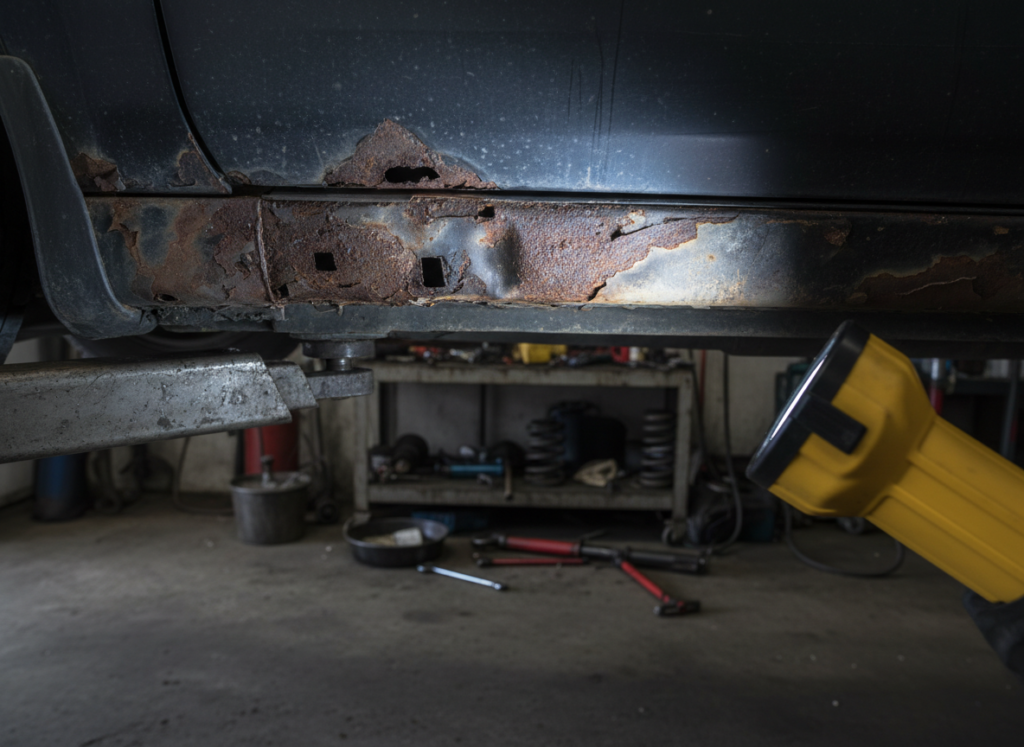
Inside a prescribed area, corrosion is a failure if it has caused a hole, if the metal does not feel firm under finger and thumb pressure, or if a corrosion assessment tool goes through it. Crucially, the manual also says that any fracture or inadequate repair within a prescribed area should also be rejected.
In other words, a bad repair in the wrong place is itself a failure item. You can pay for welding and end up further from a pass than when you started. The full rules are published in Appendix A of the DVSA MOT inspection manual, and they are worth a five-minute read before you book anything.
If you want the tester’s-eye view of how this is assessed on the ramp, we have written that up separately in our guide to what MOT testers check for welding and rust.
What most “how to choose a welder” advice gets wrong
The standard advice is to get three quotes and check the reviews. Reviews are useful and we would never argue against them, but on structural work they measure the wrong thing. A customer leaves a five-star review because the car passed, the price was fair and the staff were pleasant. None of those tell you whether the repair panel was seam welded to sound metal or plated over rust that is still spreading underneath.
Three quotes are worse. Structural welding is one of the few jobs where the cheapest quote is often cheapest because it is a different, lesser job. A plate tacked over a rotten sill takes twenty minutes. Cutting the corrosion back to clean steel, fabricating a repair section to the original profile and seam welding it in takes hours. Compare those two on price and you will pick the wrong one every time.
Our view, plainly: on anything structural, stop comparing prices and start comparing methods. Ask what they will do, not what they will charge. The price question answers itself once you know the two quotes are for different work.
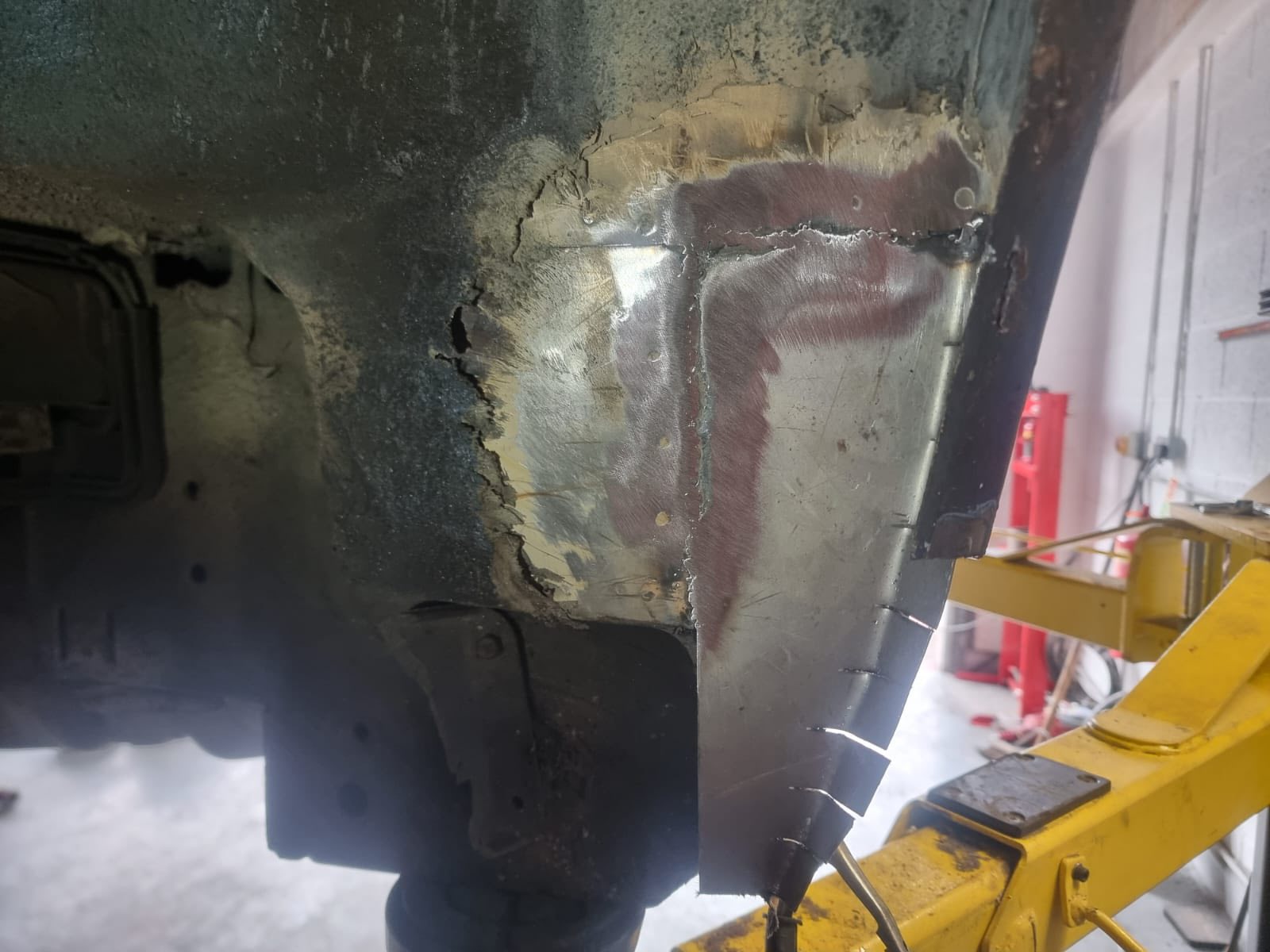
Five questions to ask before you book
- Are your welders coded, and in which process? A straight answer takes two seconds. Vagueness here tells you what you need to know.
- Will you cut the rust out, or plate over it? The manual requires welding to extend to a sound part of a load-bearing member. If corrosion is left behind the patch, it keeps going.
- Will the repair be seam welded or spot welded? Spot welded repairs are only acceptable where the original panel was spot welded and the original section has been removed. Otherwise patch repairs must be continuously seam welded.
- What happens to the bare metal afterwards? A fresh weld with no treatment, seal or paint is a rust site waiting to start. Ask what goes on it before the car leaves.
- Will I get photographs? Once the underseal goes on, nobody can see the joint. Photographs before and after are the only record you will ever have, and they are useful evidence for the retest.
If the answers to questions two and three are confident and specific, you are almost certainly dealing with someone who does this properly. Our own approach to that process is set out on our MOT welding and rust repair page.
How to spot a poor structural repair afterwards
You do not need to be a welder to recognise the obvious warning signs on the underside of a car:
- Thick, fresh underseal applied generously over one small area and nowhere else. It is usually covering something rather than protecting it.
- A row of separate tack welds around the edge of a plate, with visible gaps between them, where a continuous seam should be.
- Filler or bonding compound feathered along a joint edge on a structural panel. Neither is an acceptable method on a load-bearing member.
- A repair plate that sits proud and flat over a curved original profile, rather than being shaped to follow it.
- Bubbling paint or flaking scale reappearing at the edge of a repair within a year or two. That is the original corrosion, still working.
These are also the defects that turn up repeatedly on retests. We have covered the pattern in more depth in our rundown of the most common MOT welding failures.
What even a coded welder should not weld
This is the part that rarely gets said out loud, and it is a fair test of whether you are being given honest advice. The inspection manual is explicit that welded repairs to highly stressed components — steering and suspension arms, rods and levers — are not normally acceptable, other than where the component is made up of sections that were welded together originally. It also states that repairs to non-metallic structures in prescribed areas are not acceptable at all.
So if a corroded suspension arm has failed your MOT, the answer is a new component, not a weld. Anyone offering to run a bead along it and send you to the retest is doing you no favours. A welder who tells you a job is not a welding job is usually the one worth trusting with the jobs that are — and on structural work, that judgement is the whole point of our chassis and structural welding service.
Because we share premises with Star Garage Mansfield, we can also sort the mechanical side of a failure sheet at the same time, rather than sending you somewhere else with half a job done.
Frequently asked questions
Is welding an MOT failure?
No. A previous weld is not a failure item in itself. What fails is corrosion in a prescribed area, or a repair the tester judges to be inadequate. A properly executed weld that restores the original strength is perfectly acceptable and is the intended fix.
Do car welders have to be qualified in the UK?
There is no law requiring a specific certificate to weld a car. The requirement sits on the outcome instead: the repair must be properly carried out and appear to be as strong as the original structure. Coding is not a legal obligation, it is evidence that the person doing it has been independently tested.
Can any garage weld a car for an MOT?
Many general garages will weld an exhaust or a simple bracket, and that is fine. Structural corrosion around sills, chassis rails, floor pans and mounting points is a different job in preparation, access and technique. It is worth going to a workshop that does structural welding daily rather than occasionally.
How can I tell if a weld has been done properly?
Look for a continuous, evenly spaced seam that follows the original panel line, with new metal shaped to the original profile rather than a flat plate bridging a hole. Ask for photographs taken before sealing and painting, since the joint is invisible once it is covered.
Need structural welding in Mansfield?
Star Welding Mansfield is a workshop-based vehicle welding specialist on New Mill Lane, Mansfield Woodhouse. All welding is carried out by B6 and 6G coded MIG and TIG welders. If you have an MOT failure sheet, bring it with you — we will go through the listed points with you and tell you honestly what needs welding, what needs replacing, and what does not need touching.