How to Spot MOT Welding Failures Before Your Test: A DIY Guide for Mansfield Drivers
MOT welding failures are one of the most common—and costly—reasons cars and vans fail their test in Mansfield. But with a quick DIY check, you can spot the warning signs early, avoid nasty surprises, and even save money by booking repairs before your MOT is due. Here’s a practical guide from the coded welders at Star Welding Mansfield.
Why Do Cars Fail MOT on Welding?
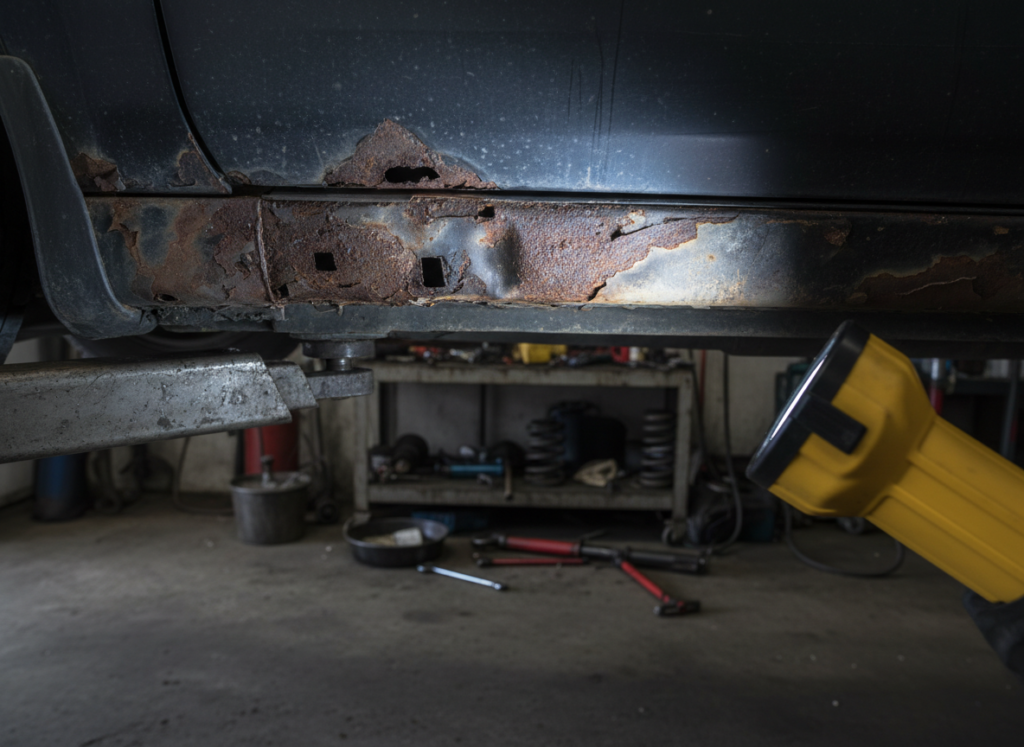
The MOT test is strict on structural rust—especially within 30cm of seatbelt mounts, suspension, sills, and chassis rails. If the tester finds corrosion, holes, or weak spots near these areas, it’s an instant fail. Most welding failures are due to:
- Rusty or holed sills and floor pans
- Corroded chassis rails or crossmembers
- Weak or poorly repaired seatbelt/jacking points
- Old “patches” that haven’t lasted
Learn more about MOT welding failures and our repair process here.
DIY MOT Welding Check: What to Look For
- Check the sills (under the doors): Look for bubbling paint, soft spots, or visible holes. Run your hand along the bottom edge—if it feels rough or flakes away, it’s a warning sign.
- Inspect wheel arches and floor pans: Use a torch to check inside arch lips and under carpets for rust or damp patches.
- Seatbelt and jacking points: Press around these areas—if they flex or sound “crunchy,” they may need welding.
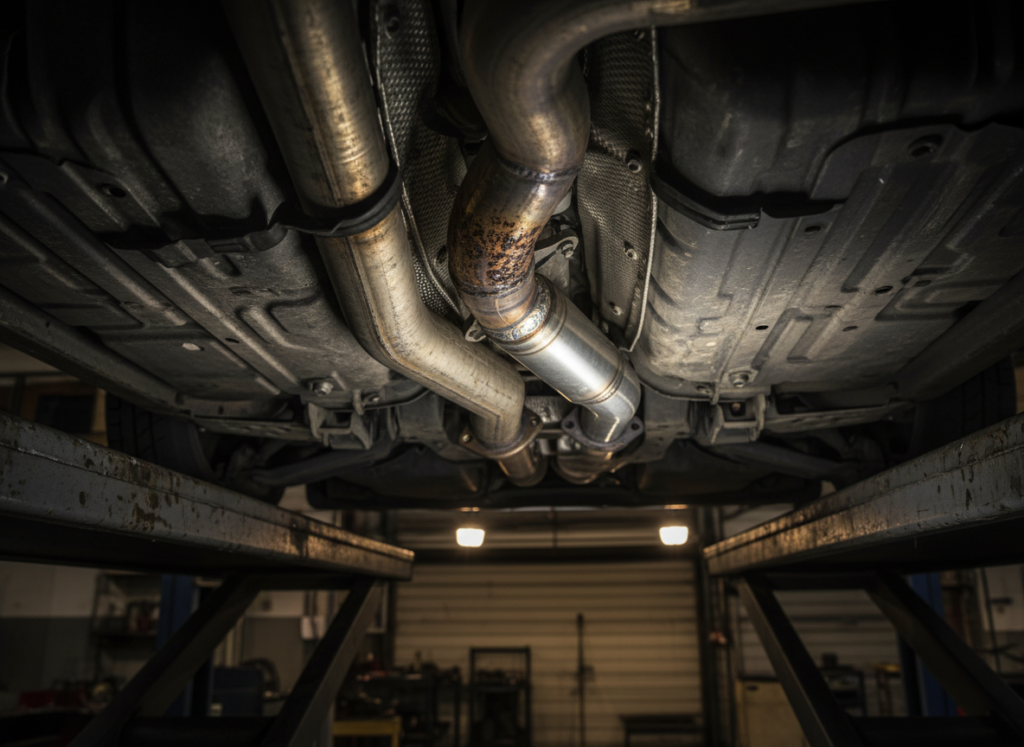
- Chassis rails and crossmembers: Look underneath the car for rust, holes, or old repairs starting to fail.
- Previous patches: If you see old welds or plates, check if they’re still solid—tap with a screwdriver and listen for a dull “thud” (bad) vs. a sharp “clink” (good).
Not sure? Book a free welding assessment—we’ll check your car and give you honest advice before your MOT.
What Happens If You Ignore MOT Welding Warnings?
Ignoring early signs of corrosion can turn a simple repair into a major job. MOT failures for welding often mean:
- Higher repair costs (more metal to replace, more labour)
- Longer off-road time for your vehicle
- Potential safety risks if rust is left unchecked
- Failed MOT and no certificate—so you can’t drive legally
Why Use a Coded Welder for MOT Repairs?
MOT repairs are not the place for shortcuts. At Star Welding Mansfield, all welding is carried out by B6 & 6G coded welders—meaning repairs are strong, safe, and built to last. We use:
- Proper cut-back to solid metal—no plating over rust
- Pattern repair panels for a seamless, original look
- Photos and documentation for your MOT tester if needed
- Clear quotes and honest advice—no pressure
FAQs: MOT Welding & Rust Repairs
- How much does MOT welding cost? It depends on the size and location of the repair. We always quote after seeing the car or good photos.
- Can I drive after a welding MOT fail? Only to and from a pre-booked repair or retest. Otherwise, it’s illegal and unsafe.
- Do you guarantee your welding? Yes—all repairs are guaranteed and MOT-compliant. We stand by our work.
- Do you do aluminium or custom fabrication? Yes! See our custom work here.
Book a Pre-MOT Welding Assessment in Mansfield
Don’t wait for your MOT to fail! Book a free welding check with our coded team and get honest advice before your test. Contact us here or call us:
Want to see real repairs? Check out our recent projects and case studies.
Related reading: Wheel Arch Rust Repair: What Mansfield Drivers Need to Know.