Classic Car Welding: What Restoration Work Involves and Why a Specialist Matters
Classic car restoration welding is one of the most technically demanding areas of automotive metalwork. Unlike a standard MOT repair — where the scope is usually clear and replacement panels are available — restoration work on an older vehicle often means fabricating sections from scratch, working around corrosion that has developed over decades, and managing thin or period-specific steel that does not behave like modern pressings.
This guide covers what classic car welding work typically involves, the areas most commonly affected, what to expect in terms of time and cost, and how to find the right specialist. Written by the team at Star Welding Mansfield, a specialist welding workshop in Mansfield Woodhouse, Nottinghamshire.
Published: 8 September 2026 | Author: Star Welding Mansfield Team
Quick Answer: What Classic Car Welding Usually Covers
Classic car welding typically covers sill replacement, floor pan repair, wheel arch patching, and chassis or crossmember work. The process involves cutting back to sound metal, fabricating unavailable panels, and continuously seam welding in new steel. UK specialists typically charge £50–£75 per hour for this type of structural work, with a full sill replacement on one side taking 15–20 hours including prep, fitting, and finishing.
What Types of Welding Work Does a Classic Car Typically Need?
The areas requiring welding on a classic car restoration depend on the vehicle, its age, and how it has been stored and maintained. Some require targeted repairs; others need work across the entire underside and body structure. The most commonly affected areas are:
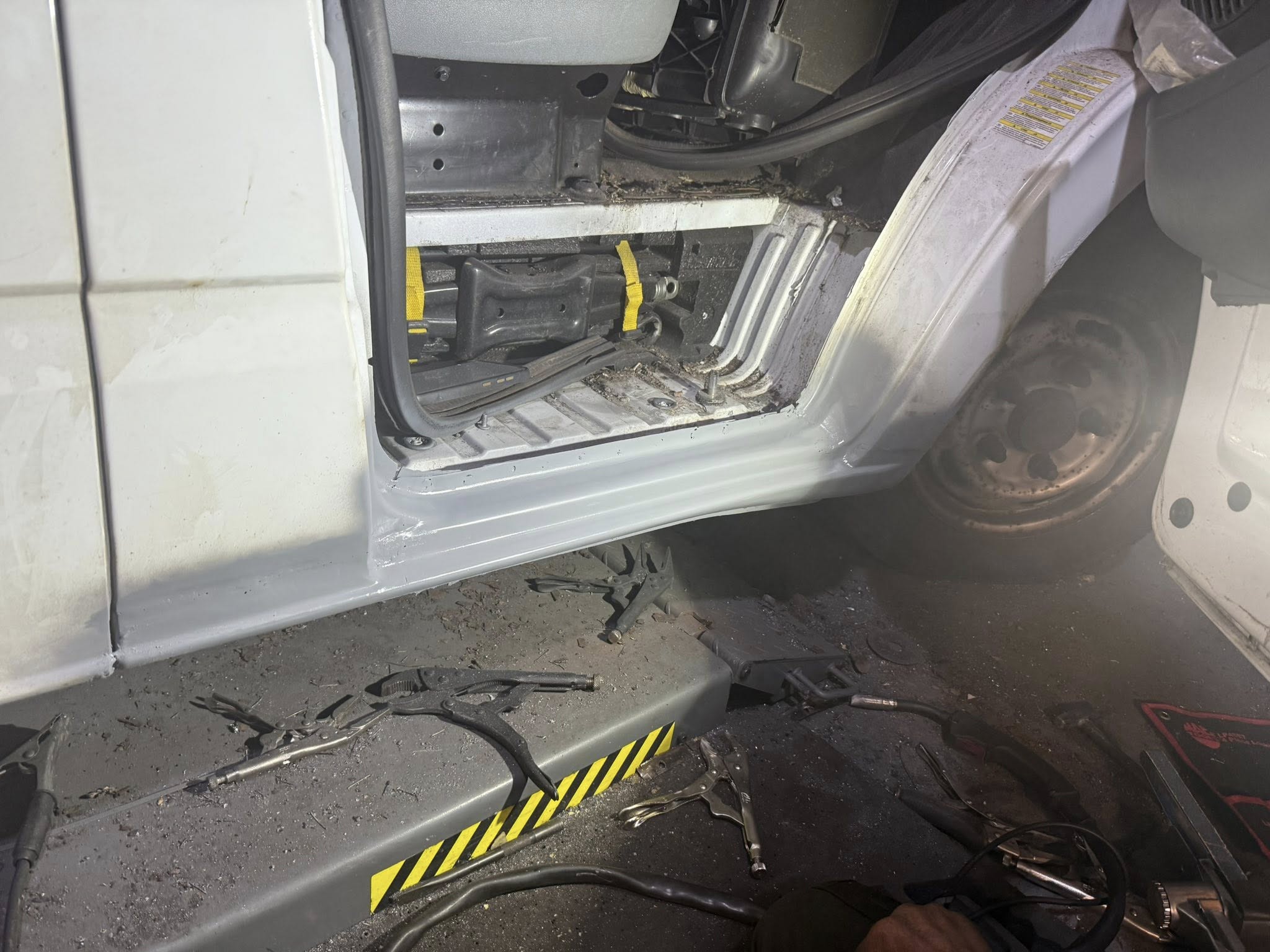
- Inner and outer sills: The sill seam is one of the first places moisture penetrates. Inner sills often rust from inside outward, meaning the outer sill may look presentable while the structural section behind it has collapsed.
- Floor pans: Water pools in footwells and beneath carpets, rusting floor panels through from the inside. This ranges from small patch repairs to near-full floor replacement.
- Wheel arches: The outer arch lip traps mud and moisture. The inner arch behind the liner deteriorates quietly. Both often need attention on vehicles of more than 30 years.
- Chassis rails and crossmembers: The most structurally serious area. Chassis corrosion affects the fundamental integrity of the car and requires careful repair by someone with experience in coded structural welding.
- A-pillars and B-pillars: Less common but significant — pillar corrosion affects door alignment and crash protection and requires care to maintain geometry.
- Seat belt anchor points: Safety-critical. Any corrosion near a seat belt mounting is a MOT failure and must be repaired by welding back to fully sound metal.
For vehicles requiring focused structural repairs, chassis and structural welding at Star Welding Mansfield covers the kind of work that requires coded welding experience and proper workshop access.
Classic Car Welding vs Standard MOT Welding — What’s Different?
Standard MOT welding repairs follow a relatively clear process: identify the failure area, cut back to sound metal, weld in a repair section, and pass the structural inspection. Replacement panels are usually available for common vehicles, and the scope of work is defined before it starts.
Classic car restoration is different in several ways. First, the scope is often unclear until the car is stripped and inspected. Rust hides behind underseal, inside door apertures, and beneath vinyl that has been applied over bodywork for decades. What looks like one area of damage often connects to several others once cutting starts.
Second, panels are frequently unavailable. A repair section that would be ordered off a shelf for a modern car may need to be fabricated from scratch for a 1970s saloon. That fabrication adds time and cost but, done well, produces a repair that matches the original.
Third, classic car steel is often thinner and more brittle than modern pressings. Heat management during welding is more demanding — too much heat causes warping, too little and the weld does not penetrate properly. This is where the difference between an experienced coded welder and a general mechanic with a welder matters most. The underlying sill rust repair process is the same on a classic as on any other vehicle. What changes is the preparation time, the likelihood of fabrication, and the complexity of the panels involved.

Do Classic Cars Still Need an MOT?
Vehicles manufactured before 1 January 1977 are exempt from the annual MOT test in the UK. That exemption covers most vehicles commonly referred to as classics in the traditional sense — pre-1970s and early 1970s cars, vans, and motorcycles.
However, MOT exemption does not mean roadworthy exemption. Every vehicle driven on public roads in the UK must be in a roadworthy condition regardless of age. Owners are responsible for ensuring their classic is safe, and the MOT inspection standard remains the most practical definition of what ‘safe’ means in structural terms. Most reputable welding specialists carry out restoration welding to MOT standard even on exempt vehicles, because the standard defines genuine structural integrity.
For vehicles manufactured after 1 January 1977, the annual MOT applies as normal. Restoration or structural welding work must meet DVSA Appendix A requirements — continuous seam welding, sound metal, and no unacceptable repair methods — the same standards that apply to any structural repair.
Watch: Jimmy welding new metal into the inner chassis rails of a 1988 Fiat Panda. The fuel tank and fuel pipe had to come out first to reach the rot.
What Happens During a Classic Car Welding Assessment?
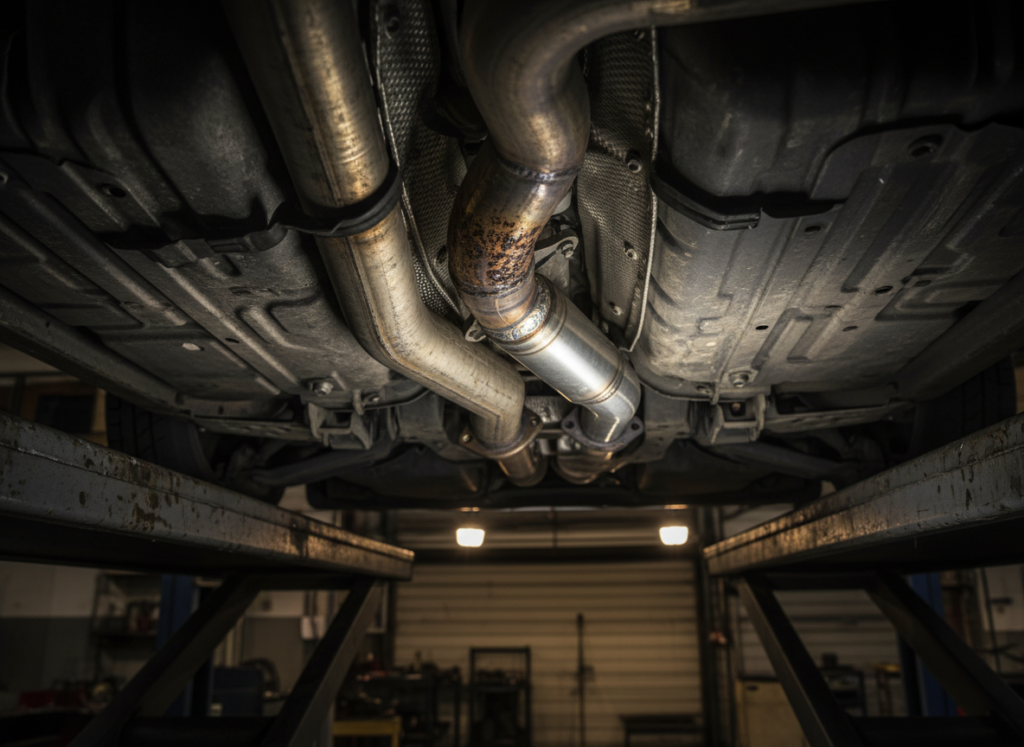
Before any structural work starts, a proper assessment is essential. The car is raised on a lift or inspected over a pit so the entire underside can be examined. Underseal is removed in key areas — sill seams, floor pan edges, arch lips, chassis rails — to inspect the metal underneath rather than what has been painted or sealed over.
The welder uses a combination of visual inspection, light tapping, and finger-pressure testing to identify where the metal is sound and where it has deteriorated beyond acceptable limits. This initial pass often reveals more than expected — it is not unusual for a car that looks presentable to have significant hidden decay once underseal is removed and seams are properly examined.
After the assessment, a clear picture of what is needed can be given: which areas require repair, which panels may need fabricating, how long the work is likely to take, and what it is likely to cost. That conversation before committing is important — restoration welding is an investment, and the owner needs to know what they are investing in.
What Does Classic Car Welding Cost in the UK?
Classic car welding is priced on time rather than flat rates because the scope varies so significantly. UK specialists typically charge £50–£75 per hour for structural welding work on classic and vintage vehicles, with materials — steel, primer, underseal — added on top. Based on current UK welding market rates (MyBuilder 2026 Welding Cost Guide), here are typical time estimates:
- Single outer sill replacement (accessible vehicle): approximately 8–12 hours plus materials
- Full inner and outer sill replacement: approximately 15–20 hours per side
- Floor pan section repair: approximately 4–8 hours depending on size
- Wheel arch repair: approximately 3–6 hours per arch
- Chassis rail or crossmember section: 6–20+ hours (highly variable)
For a vehicle requiring full sill replacement on both sides plus floor pan patches — a common combination on British classics from the 1960s and 1970s — total repair hours often reach 50–70 before any cosmetic finishing is included. The labour cost of a thorough restoration reflects the time required to do the job properly.
Quoting restoration welding without seeing the car is very difficult. An honest specialist gives a realistic estimate after assessment rather than a headline figure that changes once work is underway. Understanding floor pan welding repairs and how rust spreads on cars can help set realistic expectations before any assessment begins.
What to Look for in a Classic Car Welding Specialist
Not every garage with a MIG welder is the right choice for structural work on a classic car. A few things are worth checking before committing to a specialist:
- Coded welding certification: Coded welders have been tested to a recognised welding standard. For structural automotive work that affects crash safety or MOT compliance, coding matters.
- Experience with your vehicle type: Different classics have different steel gauges, seam constructions, and repair challenges. A welder who regularly works on older British cars will know the common failure patterns and fabrication requirements.
- Fabrication capability: If panels for your vehicle are unavailable, the specialist needs to fabricate them. Ask whether they have done this before.
- Honest assessment process: A good specialist tells you what they find — including news you may not want to hear — before work starts. Be cautious of anyone reluctant to give a clear assessment before charging.
- Clear communication on scope and cost: A clear explanation of what has been found, what needs doing, and what the work is likely to involve in time and cost.
Frequently Asked Questions: Classic Car Welding
How much does it cost to weld a classic car’s sills?
Expect roughly £500–£1,500 per side for a full inner and outer sill replacement, depending on the extent of the damage, whether fabrication is needed, and the hourly rate charged. For a single outer sill on a reasonably accessible car, costs can be lower. A proper assessment is the only way to get an accurate figure — sill condition is almost always worse than surface inspection suggests.
Can you weld over rust on a classic car?
No. The correct method is to cut back to sound metal, clean the edges, and weld in new steel. Patch welding over live rust produces a repair that will fail quickly and will not pass a structural inspection. Under DVSA rules, any plating or welding must extend to a sound part of the load-bearing structure.
Does a classic car need an MOT before welding repairs are made?
Not necessarily. Many owners bring classic cars in for restoration work before booking an MOT, or to prepare a vehicle after a long period off the road. The welding work needs to meet DVSA structural standards whenever it is done — the sequence of assessment, repair, and test is up to the owner.
Can any welder work on a classic car?
Structural welding on a classic car should be carried out by a coded welder with the right equipment and experience. Thin or aged steel requires careful heat management — an inexperienced welder can cause warping, burn-through, or produce welds that look acceptable on the surface but are not structurally sound. For safety-critical structural work, coding and experience are not optional extras.
Restoration or Structural Welding on a Classic Car Near Mansfield?
Star Welding Mansfield is a specialist welding workshop in Mansfield Woodhouse, Nottinghamshire. The team are specialist coded welders with experience in structural repairs and restoration work across a range of vehicles, including older and classic cars where fabrication and careful metalwork are part of the job.
If you have a classic car that needs assessing — whether it is a single area of concern or a full underside survey before starting a restoration — the workshop can give you a clear, honest picture of what is involved before any work is committed to. Star Welding Mansfield is not a mobile service. All work is carried out in the workshop, where the right equipment and access are available.