Wheel Arch Rust Repair: What Mansfield Drivers Need to Know
Wheel arch rust is one of the most common reasons a car fails its MOT — and one of the most commonly ignored warning signs until it’s too late. For many drivers, a small patch of bubbling paint or surface orange on the inner arch doesn’t look serious. In reality, rust in this area can spread through the metalwork faster than most people expect, and once it reaches structural sections of the sill or floor pan, the repair becomes significantly more involved.
At Star Welding Mansfield, we see wheel arch rust at all stages — from early surface oxidation through to advanced rot that has eaten through the arch lip and into the inner panel. This guide explains what wheel arch rust repair actually involves, when it becomes an MOT concern, and what you can realistically expect if you bring your car in for assessment. If you are still deciding who should handle the work, our guide to whether car body damage needs a welder or a bodyshop covers where the line falls.
Why Wheel Arch Rust Is So Common
The wheel arch area is one of the most punishing environments on any vehicle. Road grit, water, salt, mud, and small stones are constantly thrown at the inner and outer arch panels every time the wheels turn. Over time, the protective coatings wear away, exposing bare metal to moisture and oxygen — the two things rust needs to take hold.
UK roads, particularly in and around Nottinghamshire, see significant use of gritting salt through autumn and winter. That salt accelerates the corrosion process considerably. Even cars that appear solid from the outside can be quietly rotting from within the arch cavity, where drainage is poor and damp collects against the metal.
Older vehicles are naturally at higher risk, but it’s not unusual to find significant arch rust on cars less than ten years old if they’ve had a hard life or the protective coatings weren’t well maintained.
How Quickly Does Arch Rust Spread?
The speed at which rust progresses depends on a number of factors: how thick the original metal is, how well the area retains moisture, whether there are drainage channels that have blocked, and how much road exposure the vehicle has had.
Surface rust — the reddish-orange bloom that appears on painted surfaces — can remain relatively stable for some time if caught early. But once rust penetrates the metal and works its way through the thickness of the panel, it becomes progressively harder to stop without cutting back to clean metal and welding in new material.
What makes arch rust particularly problematic is its proximity to the sill, the inner arch seam, and in some cases the floor pan. Rust that starts on the outer arch lip can track inward along seams and panel joins where moisture gathers. By the time it becomes visible from outside, there may already be significant deterioration on the hidden inner faces of the panels.
What Does Wheel Arch Rust Look Like?
Wheel arch rust presents differently depending on how far it has progressed. Early signs include:
- Bubbling or blistering paint along the arch lip or lower edge
- Surface orange staining on unpainted inner arch metal
- Flaking or peeling underseal on the inner arch
- A rough, pitted texture on the metal when the paint is scraped back
More advanced rust shows as:
- Holes or perforations in the arch lip or lower panel
- Soft or crumbling metal that moves when pressed
- Rust tracking along the seam between the arch and the sill
- Visible daylight through holes in the inner arch when viewed from inside the wheel well
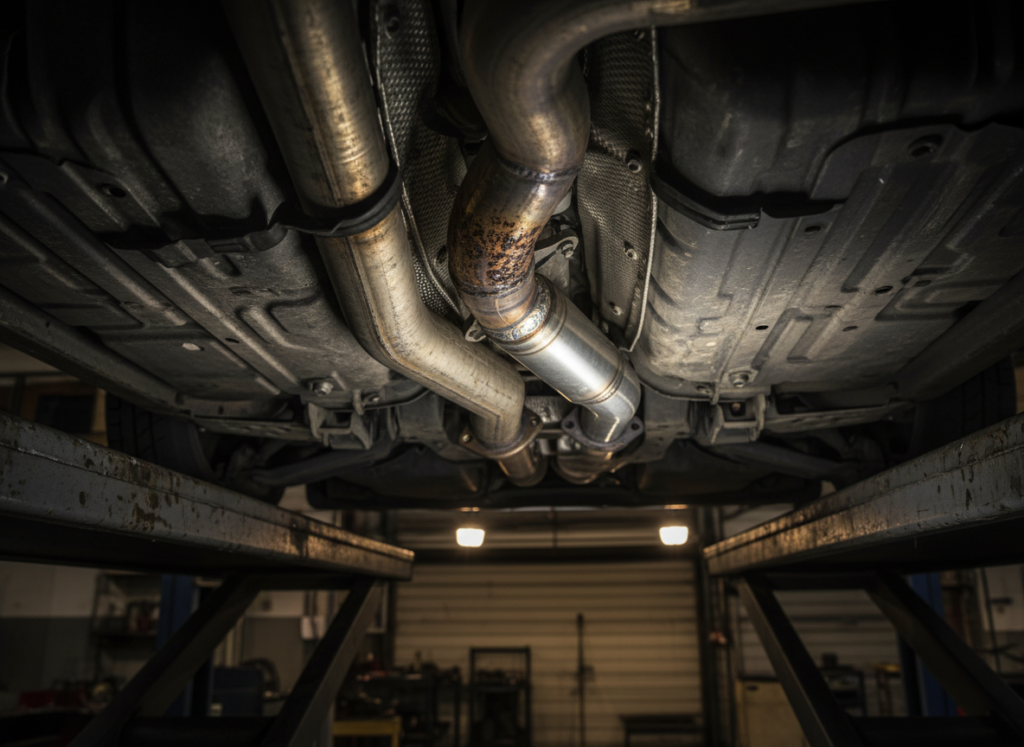
In some cases, arch rust won’t be visible at all until the vehicle is put on a lift and the wheel arch liner removed. This is one of the reasons a proper inspection by an experienced welder matters — it’s easy to miss what you can’t easily see.
When Does Arch Rust Become an MOT Failure?
Not all wheel arch rust will cause an immediate MOT failure, but it’s a fine line. The key consideration is whether the rust affects or is adjacent to a structural load-bearing area. Under DVSA assessment criteria, MOT testers must fail a vehicle if rust has penetrated to the extent that it has seriously weakened a prescribed area of the body structure.
The outer arch panel itself is not always considered structural, depending on the vehicle. However, the inner arch, the arch-to-sill seam, and anything that connects to the chassis rail or floor pan is assessed much more critically. When rust tracks from the visible outer arch into these areas, it becomes an MOT failure point.
Even where rust doesn’t directly cause a fail, MOT testers may note it as an advisory — particularly if it’s advancing toward a structural zone. An advisory today can easily become a failure point at the next test if the rust is left untreated.
The safest approach is to get a professional assessment before the MOT, so there are no surprises on test day.
What Does the Wheel Arch Repair Process Involve?
The repair process depends on how far the rust has spread and which panels are affected. A typical wheel arch repair at Star Welding Mansfield follows a straightforward process, though each vehicle is assessed individually before any work begins.
- Assessment and inspection. The arch area is examined with the vehicle on the ramp. Arch liners are removed where necessary. The extent of rust penetration is checked on all visible and accessible surfaces, including the inner arch face, the arch-to-sill seam, and any adjacent floor pan sections.
- Cutting back to clean metal. Any rusted material is cut back until clean, solid metal is reached. This is a critical step — attempting to weld onto rusted or weakened metal produces a result that won’t hold and won’t pass an MOT assessment.
- Fabricating repair sections. New metal sections are cut and shaped to match the profile of the removed panels. Where standard repair sections are available, these may be used. In many cases, panels are fabricated to fit the specific vehicle.
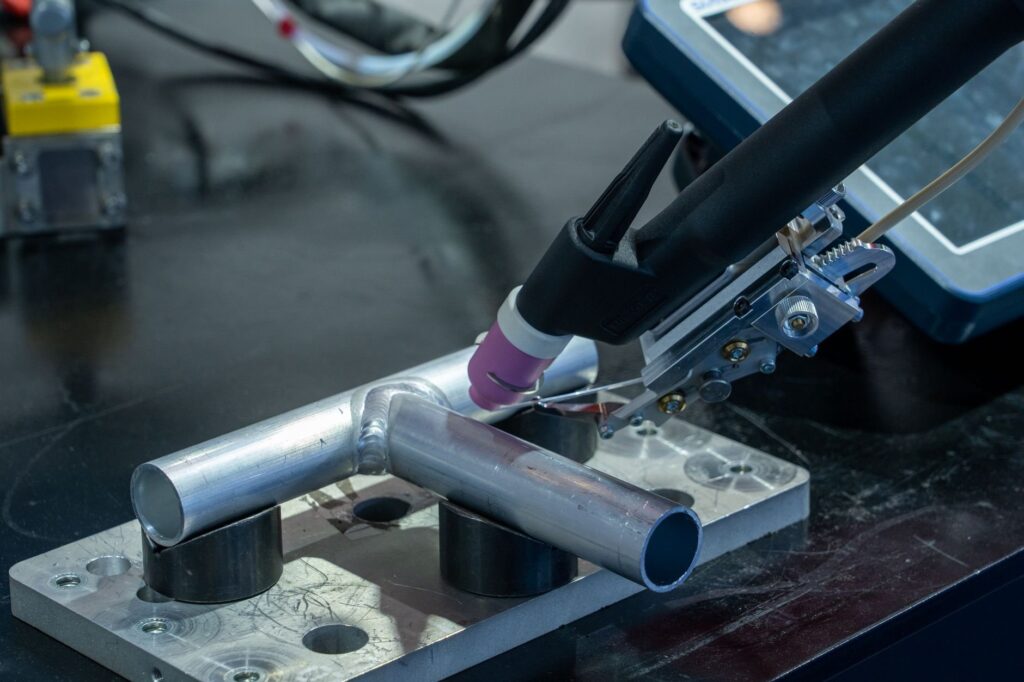
- Welding and grinding. The new sections are welded in using MIG or TIG welding, depending on the material and area. Once welded, the seams are ground back and dressed to a clean finish.
- Rust treatment and protection. Before the repair is sealed and finished, cut edges and adjacent areas are treated to inhibit further corrosion. Seam sealer is applied to joins where appropriate.
The result should be a structurally sound repair that meets MOT requirements. At Star Welding, our coded welders carry out this work to the same standard we would expect on any safety-critical repair.
For extensive arch rust that has also affected the sill or floor pan, a combined repair may be needed. More detail on that is covered in our sill, arch and floor pan repair service page.
How Long Does Wheel Arch Welding Take?
A straightforward wheel arch repair — where rust is limited to the outer arch lip and a small surrounding area — can typically be completed in a few hours. More extensive repairs that involve the inner arch, arch-to-sill seam, or multiple panels will take longer, sometimes a full day or more depending on the scope.
The honest answer is that it’s difficult to give a precise timescale without seeing the vehicle. Rust is often more widespread than it initially appears, particularly on older vehicles where it has had years to work its way through panel joins. We always aim to give a realistic assessment before work begins so there are no surprises.
If you’re working to a deadline — an MOT date, for example — it’s worth getting in touch as early as possible so we can allow enough time for a proper repair rather than a rushed job.
Can Arch Rust Be Patched, or Does It Need Full Welding?
This is a question we get asked regularly, and the short answer is: it depends on where the rust is and how much of the metal has been compromised.
Surface rust that hasn’t penetrated the metal can sometimes be treated with rust converters, properly prepared and repainted, without the need for welding. This approach is only appropriate where the metal remains solid and the rust hasn’t reached structural areas.
Once rust has perforated the metal — even small holes — welding is the only reliable fix for structural sections. Filler, fibreglass, or tape are not appropriate solutions for areas that an MOT tester will assess. They won’t hold, they won’t pass an MOT, and they may mask the true extent of the corrosion.
For non-structural cosmetic sections of the arch, there may be more flexibility. But any area adjacent to the sill, floor pan, or chassis should be treated as structural and repaired accordingly.
What Happens If You Leave Arch Rust Untreated?
The most immediate consequence is an MOT failure. But beyond that, leaving arch rust untreated has practical implications for the safety and longevity of the vehicle.
Rust doesn’t stop. It continues to spread and deepen as long as the conditions are right — and in a UK climate, those conditions exist for a significant part of the year. Rust that is confined to the arch lip today may reach the inner sill, the floor pan, or the chassis rail within one or two MOT cycles.
The longer a repair is left, the more metal needs to be removed and replaced. A repair that might have been a half-day job can grow into a much more involved piece of work. Addressing it early, while the rust is still contained, is almost always the more cost-effective approach.
There is also the safety dimension. Sills and chassis members are structural components. A vehicle with significantly weakened structural metal in these areas may not perform as designed in the event of an accident.
Rust Affecting More Than the Arch? Other Repairs We Carry Out
Wheel arch rust often doesn’t exist in isolation. Once it spreads into the surrounding panels, it can affect the inner and outer sills, the floor pan, and in some cases the chassis rail. At Star Welding Mansfield, we carry out all of these repairs in-workshop.
- Sill, arch and floor pan repairs — for rust that has spread beyond the arch into adjacent structural panels
- MOT welding and rust repair — for vehicles that have failed their MOT or need pre-MOT structural welding work
- Chassis and structural welding — for deeper structural repairs where rust has reached the chassis rails or crossmembers
Every repair starts with a proper assessment so we know exactly what we’re dealing with before any work begins.
Get Your Wheel Arch Rust Assessed in Mansfield
If you’ve noticed rust on your wheel arch — or you’ve had an MOT advisory for corrosion — it’s worth getting it looked at before the problem gets worse. Star Welding Mansfield is a specialist welding workshop based in Mansfield Woodhouse, NG19 9BL. We carry out structural rust repairs across all vehicle types and are experienced with both common arch repairs and more complex cases involving multiple panels.
We don’t do rushed or cosmetic fixes. Every repair is done properly, to a standard that we’re confident will hold up — both structurally and on MOT assessment.
Get in touch to book a welding assessment at our Mansfield workshop.