Inner Sill Rust Repair in Mansfield: What the Work Entails
Car sills are among the most rust-prone areas on any vehicle, and inner sill damage is often far more serious than it first appears. When rust takes hold inside the sill — the structural box section running along the bottom of your car’s body — it can affect the structural integrity of the whole vehicle and lead to an MOT failure for welding.
At Star Welding Mansfield, we carry out inner sill rust repairs as part of our sill, arch and floor pan repair service. This guide explains what the process actually involves, why it is more involved than patching the surface, and what you can expect when you bring your vehicle in for an assessment.
What Are Inner Sills and Why Do They Rust?
The sill is the structural section underneath the door, connecting the front and rear of the vehicle’s bodywork at the base. Each sill has two parts: the outer sill, which is the visible panel you can see from the side of the car, and the inner sill — a boxed steel section hidden behind it that forms part of the vehicle’s structural frame.
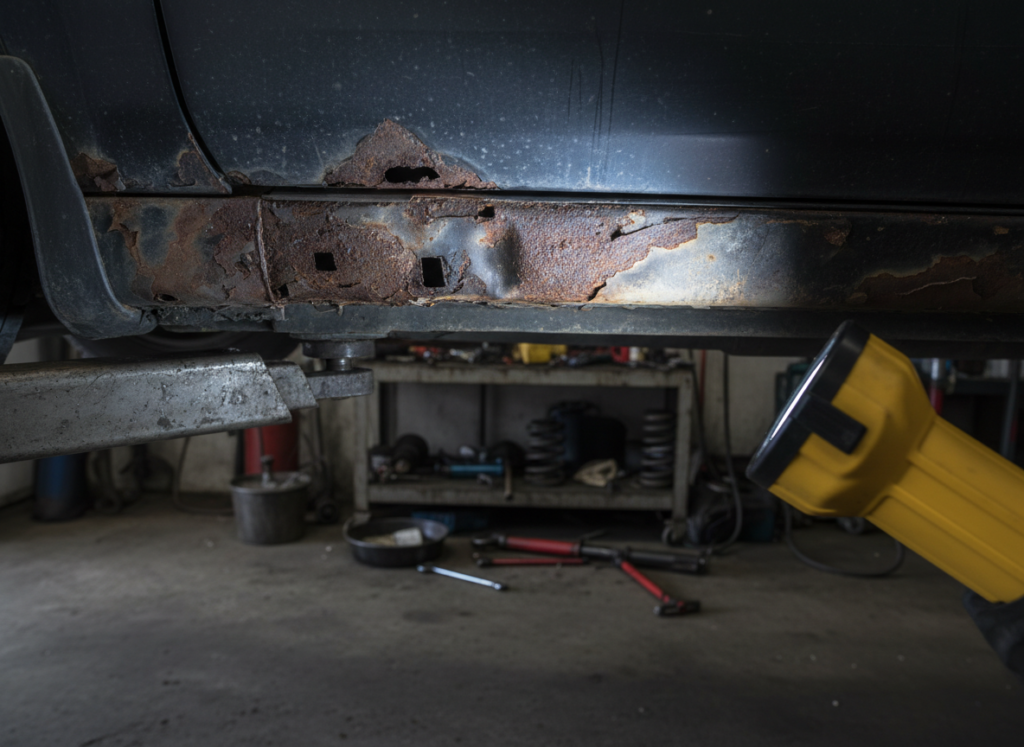
Inner sills are particularly vulnerable to rust for several reasons. Water, salt, and road grime can work their way in through small gaps in the outer sill, drainage channels, or deteriorating seam sealer. Once moisture is trapped inside the box section with no way to escape, the steel begins to corrode from the inside out. By the time you notice visible rust on the outer surface, the inner structure may already be significantly degraded.
UK road conditions make this worse. Road salt used during winter months is corrosive and gets thrown up into sill cavities by road spray. Vehicles that are used regularly in wet weather, or that are older and have lost their wax cavity protection, are especially at risk.
How Inner Sill Rust Is Identified
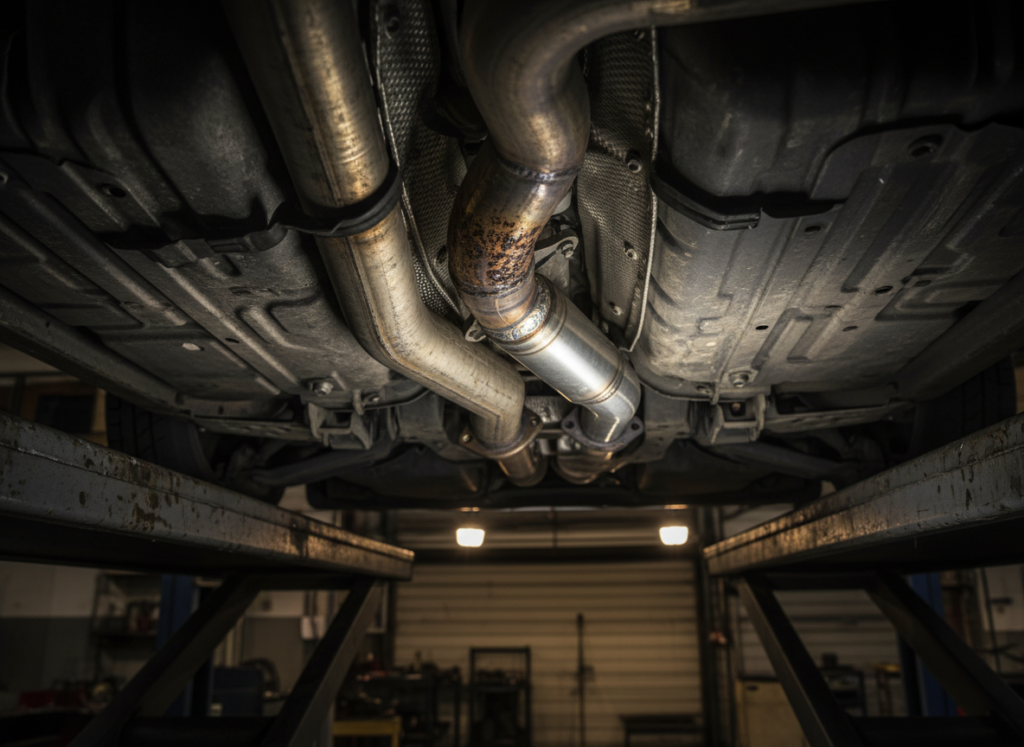
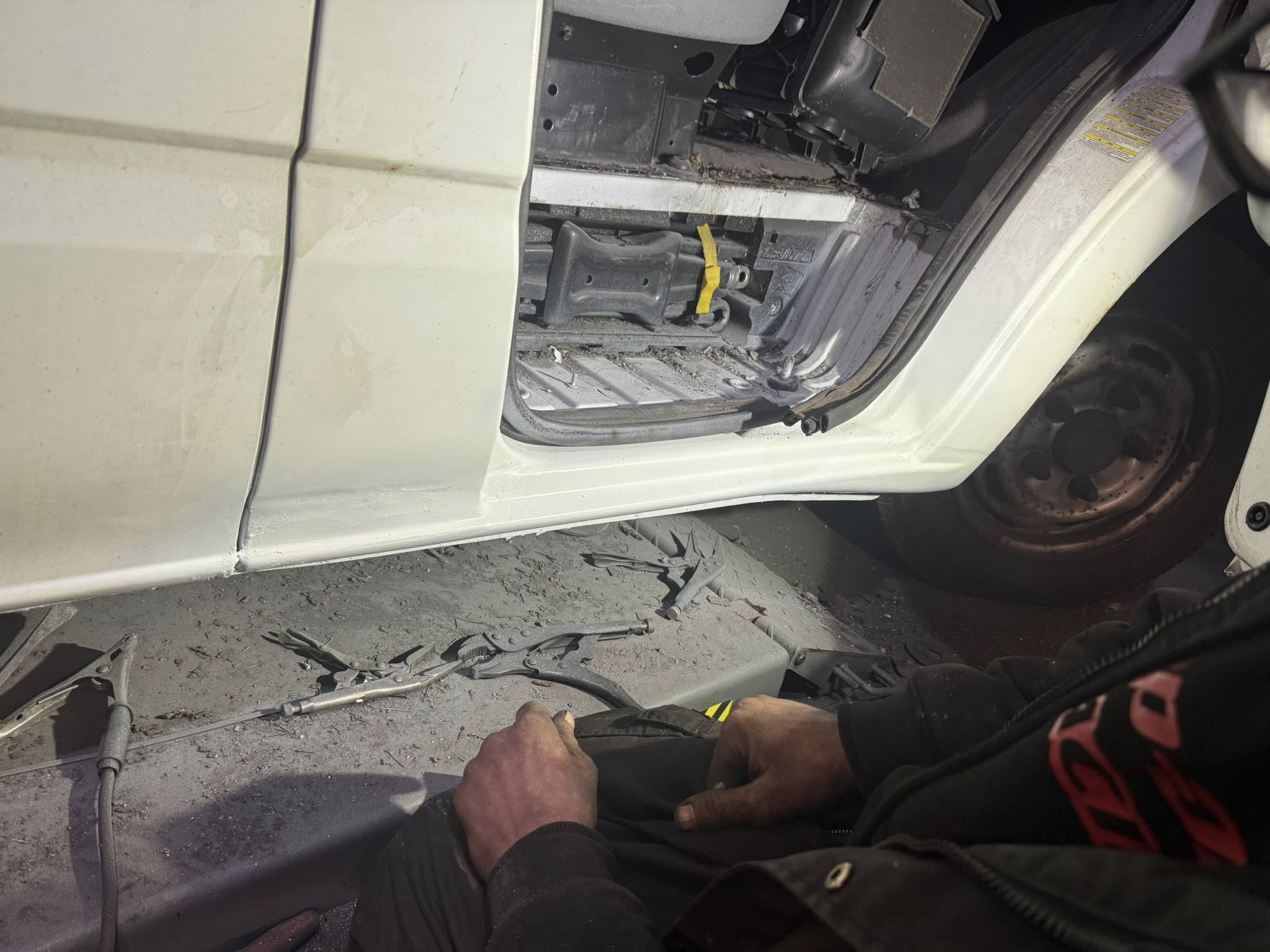
Identifying inner sill rust requires a proper inspection — not just a visual check from the outside. During an MOT welding assessment, a coded welder will examine the sill from underneath the vehicle as well as from inside the wheel arch area, prodding and probing to check for soft or perforated metal.
Common signs that inner sill rust may be present include:
- Bubbling, blistering, or flaking paint on the outer sill panel
- A hollow sound when tapping the sill rather than a solid ring
- Visible rust holes or perforations in the outer sill
- Rust visible inside the wheel arch near the sill seam
- Water pooling inside the car near the door sill trim
- An MOT advisory or failure note referencing sill corrosion
In many cases, the inner sill damage is more extensive than the outer surface suggests. A proper assessment is the only way to understand the full extent of the corrosion before repair work begins.
What Inner Sill Rust Repair Actually Involves
Inner sill repair is structural work. It is not a case of applying filler or covering the damage — it requires cutting out the corroded metal and welding in sound replacement steel. The process typically involves several stages:
- Assessment: The welder inspects the full extent of the damage, including the inner and outer sill sections and any adjacent areas such as the floor pan or wheel arch.
- Access: Depending on the vehicle, door seals, trim panels, and sometimes the outer sill may need to be removed to gain access to the inner section.
- Cutting: All corroded metal is cut back to sound, solid steel. Leaving any rusted metal behind means the rust will continue to spread underneath any new repair.
- Preparation: The remaining metal edges are cleaned and prepared for welding, removing any surface rust, paint, or sealant that would compromise the weld.
- Fabrication and welding: Replacement steel sections are cut and shaped to fit, then welded in place. The aim is to restore both the structural strength and the correct shape of the sill section.
- Treatment and finishing: Once welded, the repaired area is treated with primer and rust protection to seal the metal before any outer sill panel or trim is refitted.
The extent of the repair depends on how far the rust has spread. In some cases, only a section of the inner sill needs replacing. In more advanced cases, a full sill replacement — inner and outer — may be required. A thorough assessment will clarify what is needed before any work starts.
Why Structural Integrity Matters
The inner sill is not just a cosmetic part of the car. It forms part of the vehicle’s structural cage and plays a role in protecting the occupants in the event of a side impact. It also provides rigidity to the floor pan and doorway area. When an inner sill is severely corroded, this structural function is compromised.
This is why an MOT tester will fail a vehicle with significant sill corrosion — the car is not considered roadworthy in that condition. And it is why the repair must restore the structural strength of the section, not simply cover the visible damage.
Coded welders carry out this work to a standard that ensures the repaired section is as strong as the original. Using the right steel grade, correct weld preparation, and proper technique matters significantly in structural repair work of this kind.
The Difference Between Inner and Outer Sill Repair
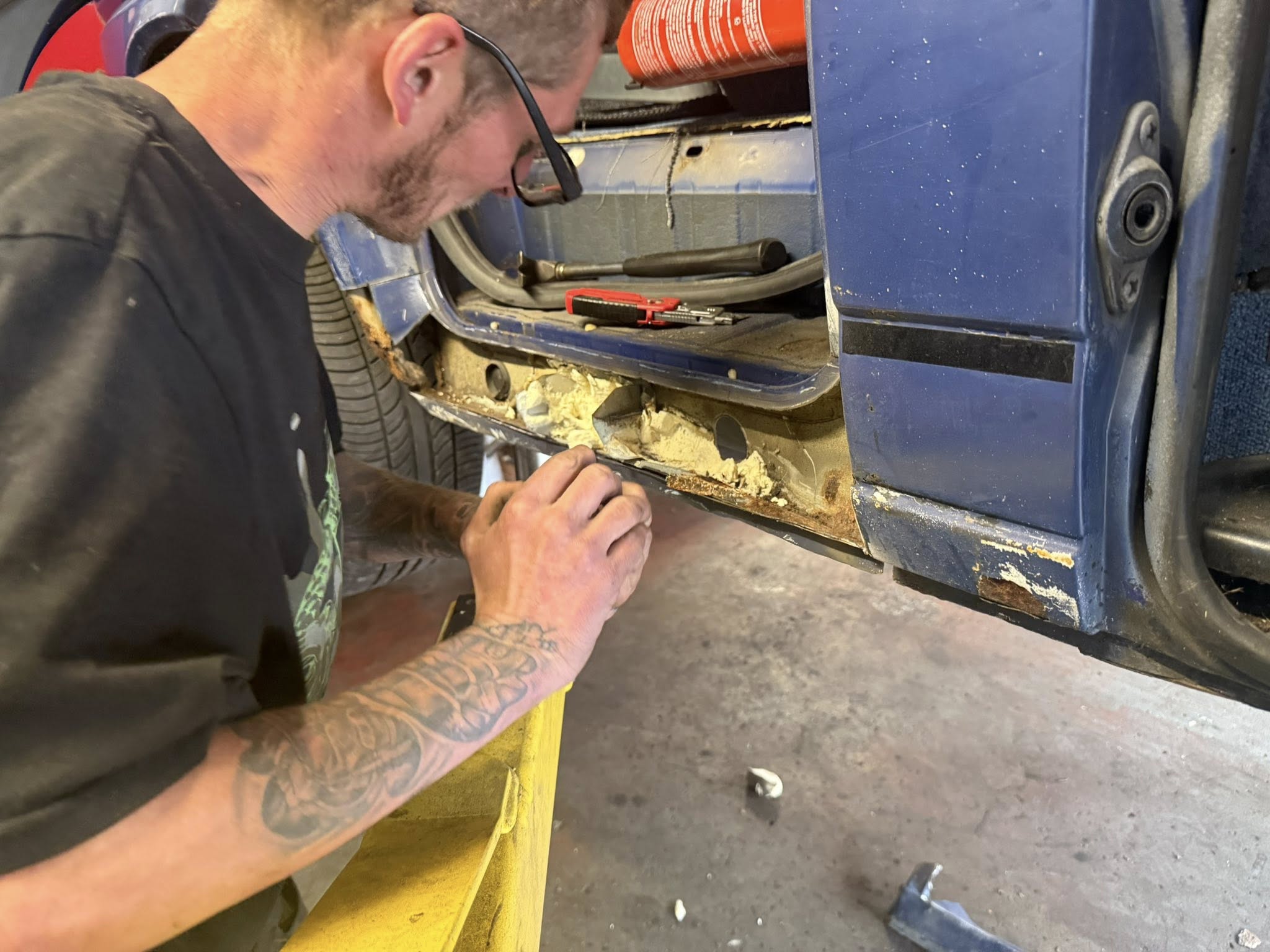
Outer sill replacement is sometimes more straightforward, as the outer panel can often be removed and replaced as a complete section. However, if the inner sill has been damaged, the outer sill repair alone will not be sufficient — the structural section must be addressed first.
In many cases, the outer sill is damaged as a direct result of the inner sill rusting and pushing through. If only the outer sill is replaced without repairing the inner, the new outer panel will quickly begin to show rust again as it is in contact with the corroded inner structure beneath.
A proper repair addresses the root cause first. Where both inner and outer sill are damaged, the inner is repaired or replaced first, then the outer section is fitted over a sound, treated base.
How Long Does Inner Sill Repair Take?
The time required depends on the extent of the damage. A section repair on a sill where the rust is localised may typically take a day or less. A full sill replacement on both sides, or where rust has spread into adjacent panels such as the floor pan or wheel arch, will take longer.
At the assessment stage, the welder can give a clearer indication of the time and work involved once the full extent of the damage is known. It is always worth getting this checked sooner rather than later — rust spreads, and a smaller repair today is usually preferable to a more extensive one later.
If you have an MOT coming up and have been advised of sill corrosion, bringing the vehicle in for a welding assessment before the test date is the sensible approach. The repair can then be completed and the vehicle retested in a condition that should pass structural requirements.
What to Do If You Suspect Sill Rust
If your vehicle has visible rust along the bottom of the doors, an MOT note about sill corrosion, or any of the warning signs listed above, the best step is to book a welding assessment. Attempting to patch sill rust with filler or surface treatment will not address the underlying corrosion and may mask the problem temporarily while it continues to spread.
An assessment with a coded welder will establish exactly what is damaged, what the repair involves, and what it will take to return the vehicle to a structurally sound condition.
Star Welding Mansfield is based in Mansfield Woodhouse, Nottinghamshire. We carry out structural and MOT-related welding repairs including sill, arch and floor pan work. If you have concerns about sill rust on your vehicle, get in touch with our team to discuss an assessment.
Need a Sill Rust Assessment in Mansfield?
If you are concerned about rust on your car’s sills — or you have received an MOT failure or advisory — our specialist coded welders can assess the damage and advise on what the repair involves.
Contact Star Welding Mansfield to book a welding assessment at our workshop in Mansfield Woodhouse, Nottinghamshire.