Subframe Welding: What It Is, When It Fails, and What Repair Involves
The subframe is one of the most structurally important parts of a modern car, yet many drivers have only a vague idea of what it is or where it sits. It’s not glamorous — it lives underneath the car, out of sight — but its condition directly affects how the vehicle handles, how safely it absorbs impacts, and whether it passes an MOT. When a subframe starts to corrode or crack, it’s not a problem that can be left alone.
This guide explains what a subframe does, what causes subframe damage, how welding repairs are carried out, and what to expect when you bring a vehicle with a suspected subframe problem to a specialist workshop in Mansfield.
What Is a Subframe and What Does It Do?
A subframe is a secondary structural frame that bolts or welds to the main body shell of a vehicle. Most modern cars have at least a front subframe — and many have a rear one too. The subframe serves as the mounting point for critical mechanical components including the engine, gearbox, steering rack, front suspension wishbones, and anti-roll bars.
By grouping all of these components on a rigid sub-structure that attaches to the main body at controlled mounting points, car manufacturers achieve several things at once. The subframe can be engineered independently of the body shell, it makes assembly and manufacturing more efficient, and it allows the suspension geometry to be tuned precisely.
From a structural safety standpoint, the subframe also plays an important role in crash energy management. In a front impact, a properly intact subframe helps to channel crash forces around the passenger compartment rather than through it. A compromised subframe — whether from corrosion or damage — cannot fulfil this role reliably.
Crossmembers are a closely related structure. These are the lateral beams that run across the width of the vehicle, connecting the chassis rails and providing rigidity against side-to-side flex. A car may have multiple crossmembers, and their condition is assessed alongside the subframe and chassis rails during a structural inspection.
Why Subframes Corrode and Fail
Subframes are made from steel, and steel corrodes when it’s exposed to moisture, salt, and oxygen over time. The UK’s road environment — particularly in winter when roads are salted — is harsh on anything underneath a car. Subframes typically have some form of protective coating applied at manufacture, but this degrades over the years, particularly where stone chips and road debris have damaged the surface.
The areas most vulnerable to corrosion are typically around the mounting points where the subframe bolts to the body shell, at the junctions between sections, and anywhere that mud and road debris can accumulate and hold moisture against the metal. These pockets of trapped moisture corrode from the outside in, and the damage can be significant before it becomes visible on a casual inspection.
Impact damage is another cause of subframe failure. A significant pot hole, kerb strike, or minor collision at low speed can crack or deform a subframe section. Sometimes this is immediately apparent — the geometry of the front wheels changes noticeably. In other cases, the damage is internal: a cracked weld or hairline fracture that’s not visible until the area is cleaned and properly inspected.
Age and mileage also play a role. On older vehicles — those fifteen years or more — the sheer number of heating and cooling cycles, plus accumulated corrosion, means subframe problems are more common. Vehicles that have spent significant time parked on damp ground, or those that were purchased second-hand without a comprehensive inspection, are particularly prone.
Symptoms That Suggest Subframe or Chassis Rail Problems
Subframe problems don’t always announce themselves loudly, but there are warning signs that drivers can watch for. Some of these overlap with other suspension or steering faults, which is why a proper inspection is always needed to confirm the cause — but if you’re noticing these symptoms, subframe or structural damage is one of the possibilities worth ruling out.
- Unusual handling or steering behaviour — if the car feels vague, pulls to one side, or responds differently than it used to in corners, this can indicate subframe or suspension mounting point movement.
- Clonking or knocking from the front suspension — a worn or loose subframe mounting point allows the subframe to shift under load, creating a clonk noise that’s often most noticeable going over speed bumps or during hard acceleration or braking.
- Uneven tyre wear — if the geometry of the suspension has shifted due to a compromised mounting point, uneven tyre wear — particularly on the inner or outer edge — can follow.
- Visible corrosion or deformation — if you look underneath the car and can see heavy rust, cracked metal, or a section that doesn’t look straight, it’s worth having a specialist take a closer look.
- An MOT advisory or failure related to structural integrity — MOT testers inspect the subframe, chassis rails, and crossmembers as part of the structural assessment. An advisory or failure notice related to corrosion in these areas means the problem is significant enough that it needs addressing.
Is a Damaged Subframe an MOT Failure?
Yes, in many cases. The MOT test includes a structural inspection of the chassis, subframe, and floor sections of the vehicle. The tester looks for excessive corrosion, cracks, fractures, and any area where structural strength has been significantly compromised within a specified distance of suspension, steering, or braking component mounting points.
The precise criteria depend on the location and extent of the damage. Corrosion that’s surface-level and hasn’t penetrated through the metal in a structurally critical area may result in an advisory rather than a failure. But where metal has corroded through, cracked, or where a mounting point has been compromised, a failure is the typical outcome.
If a vehicle has failed its MOT on subframe or chassis corrosion, welding repair is often the most practical route to getting it through a retest — provided the surrounding structure is sound enough to accept a repair. This is exactly the kind of work the team at Star Welding Mansfield specialises in. For more detail, see the chassis and structural welding service page.
What Subframe Welding Repair Actually Involves
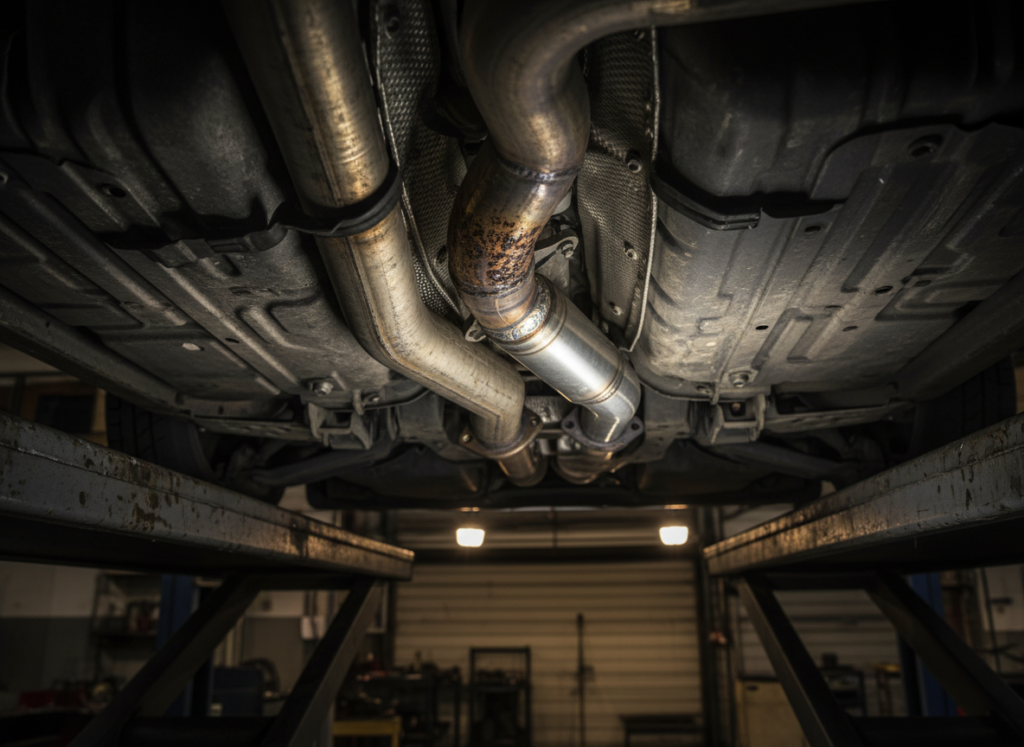
When a vehicle arrives at the workshop with a suspected subframe problem, the first step is always a thorough inspection. The vehicle is raised on a ramp so the underside can be properly examined. Corrosion is probed to establish how deep it goes, and the extent of any structural compromise is mapped before any decision is made about repair approach.
This inspection stage matters. The appearance of rust on the outside of a subframe section doesn’t always tell you how bad it is underneath. In some cases, what looks significant on the surface has only just begun to penetrate the metal, and a clean, grind-back, and weld repair is straightforward. In other cases, the metal has corroded to a point where it needs to be cut out and new material welded in.
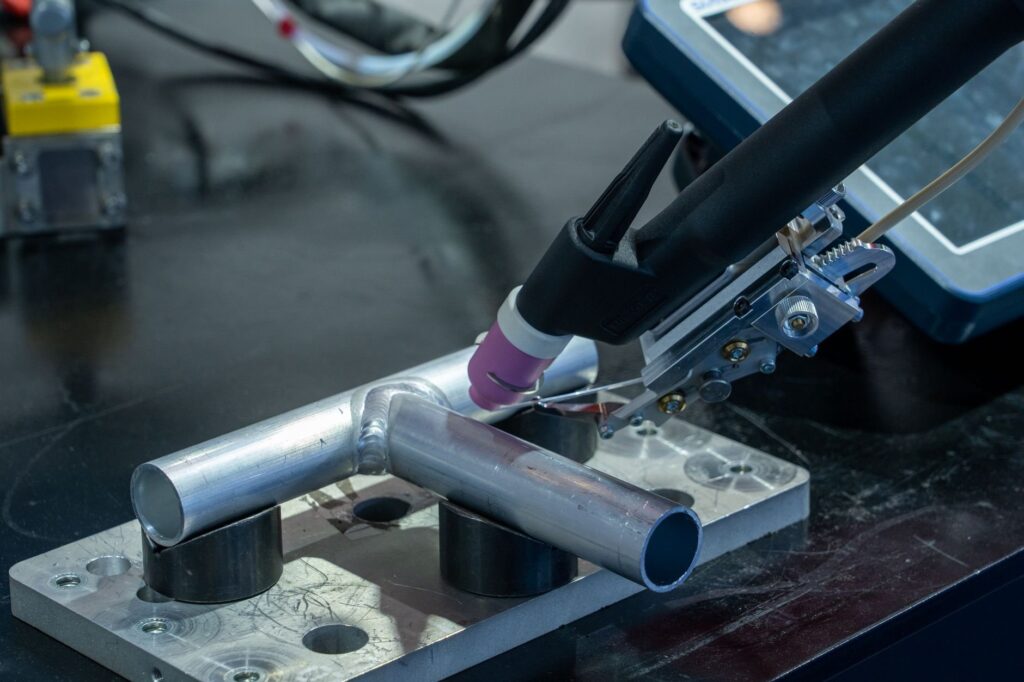
Structural welding on subframes and chassis components is not the same as general welding. The welds need to restore the original structural strength of the section — not just fill a gap or cover rust. This is coded welding work, carried out by experienced specialists, and it’s inspected carefully before the vehicle is returned.
Where material needs to be removed and replaced, the new steel is cut and shaped to match the original profile as closely as possible. In some cases, jigs are used to ensure the geometry of the subframe or chassis section remains correct during the repair. On vehicles where the subframe mounting points themselves have corroded, reinforcement plates may be welded in around the new mounting to restore strength in that area.
After welding, the repaired sections are treated against future corrosion — typically a heavy underseal or weld-through primer — to slow down the re-introduction of moisture to the new welds.
Subframe Welding vs Full Subframe Replacement
Whether to weld-repair a subframe or replace it outright depends on a few factors: the extent of the damage, the availability and cost of a replacement subframe, and the overall condition of the vehicle.
For many vehicles — particularly older cars where secondhand or aftermarket subframes may be hard to source — weld repair is the practical option. If the damage is localised and the surrounding structure is sound, a properly executed weld repair can restore the component to a condition suitable for MOT and safe continued use.
For newer vehicles where the subframe has failed catastrophically, or where the corrosion is so widespread that a repair would be uneconomical, a full replacement may be the more sensible route. A replacement subframe is typically a straight swap — the old one is unbolted, the new one is fitted, and the suspension geometry is reset. However, for many older vehicles in this situation, the cost of sourcing and fitting a replacement subframe can approach or exceed the vehicle’s value.
The workshop will be honest about which approach makes sense for the specific vehicle and the extent of damage found. There’s no benefit to recommending a repair that won’t hold — and no benefit to a driver taking a car in for repair work that isn’t economically justified.
Related Structural Welding: Crossmembers and Chassis Rails
Crossmembers and chassis rails are closely related to the subframe in terms of their structural role, and they’re often inspected together. Crossmembers — the beams that run laterally across the vehicle — provide the rigidity that stops the chassis from flexing side to side under cornering and load. Chassis rails are the main longitudinal beams that run front to back along the base of the vehicle.
Both are subject to the same corrosion risks as the subframe, and both fall within the scope of the MOT structural inspection. When a vehicle fails on one, it’s common for the workshop to identify related issues on the other components in the same area — which is why a thorough inspection pays off.
Chassis rail welding is particularly common on older vehicles and those that have been driven in a region with heavy winter salting. The longitudinal rails run the length of the car and are exposed to salt spray from both front and rear wheels. They’re also the area where bodywork drain holes can allow moisture to accumulate inside the rail, corroding from within.
Repair approach is similar: grind back to clean metal, cut out sections that have corroded through, weld in new material with the correct profile, treat against future corrosion. For a broader overview of this type of work, the chassis welding repairs guide covers these topics in more detail.
We also serve drivers from across North Derbyshire — see our overview of car welding for Chesterfield drivers covering MOT rust repairs and what B6 coded welding means for structural work.
Book a Subframe or Chassis Inspection in Mansfield
If you’ve received an MOT failure or advisory relating to your subframe, chassis, or structural corrosion — or if you’ve noticed handling changes, unexplained knocking, or heavy rust on the underside of your vehicle — it’s worth booking an assessment. The sooner structural issues are identified and addressed, the more straightforward the repair tends to be.
Star Welding Mansfield carries out structural and chassis welding at their workshop in Mansfield Woodhouse, NG19 9BL. The team can inspect the vehicle, explain what they’ve found, and give you a clear picture of what repair involves before work begins. For full details of the service, see chassis and structural welding.