If your car has just failed its MOT on corrosion, you’re not alone – and you’re definitely not the first person to Google “MOT welding requirements” in a panic. The good news is that a fail for rust doesn’t automatically mean the car is scrap, but the welding does need to be done properly to meet MOT standards and keep you safe.
This guide explains, in plain English, what MOT welding actually is, what testers are looking for, how much MOT welding typically costs, and when a vehicle simply isn’t worth repairing (for older cars we go into that decision in more depth in is it worth welding an old car?).
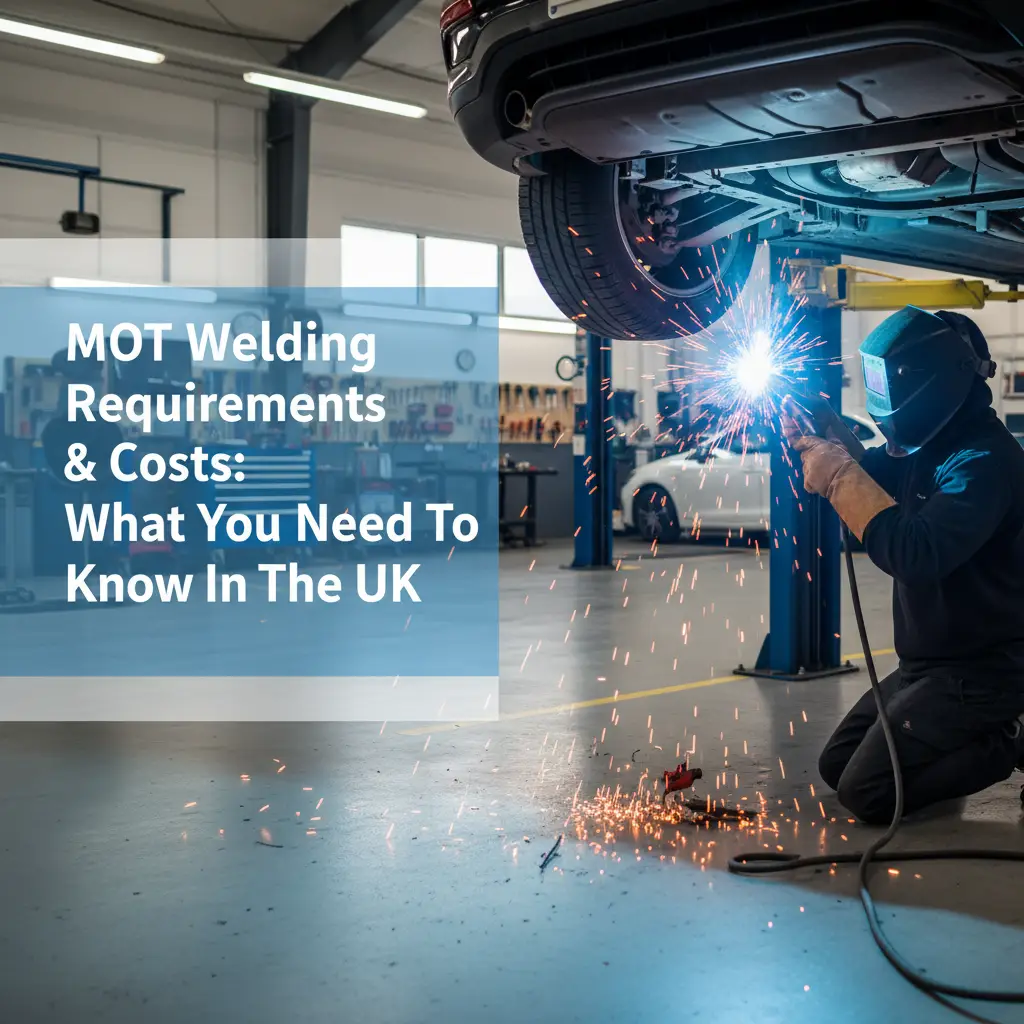
What Is MOT Welding?
MOT welding is welding carried out specifically to fix corrosion or structural issues that have caused (or would cause) an MOT failure. It’s most often needed where rust has:
- Weakened a structural area (like a sill or chassis rail), or
- Appeared within a certain distance of a safety‑critical component – for example, a suspension mount or seatbelt anchor.
The key point: MOT welding must restore the original strength of the vehicle. It’s not about hiding rust with filler or sticking a thin plate over the top. A proper MOT welding repair will:
- Remove all rotten metal
- Replace it with suitable steel of the right thickness
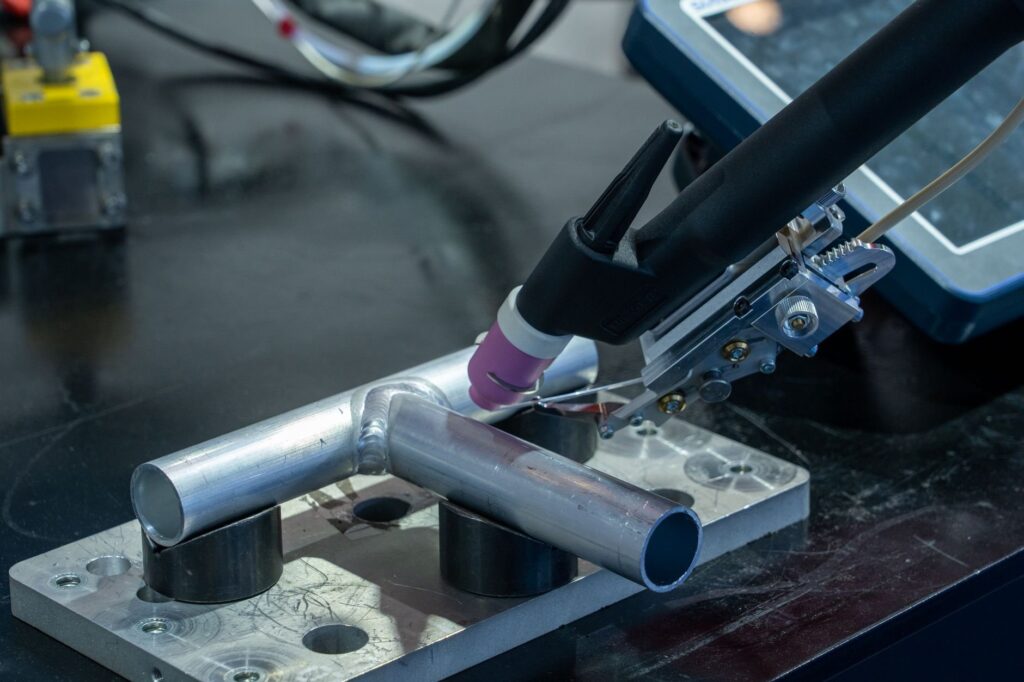
- Use a strong, continuous weld (usually MIG welding on cars and light vans)
Done correctly, the repaired area should be at least as strong as the surrounding metal and safe for everyday use and emergency situations.
MOT Welding Requirements & Standards (In Plain English)
The official MOT rules are written in fairly dry technical language, but the basic MOT welding standards boil down to a few simple principles.
1. All Rotten Metal Must Be Removed
Any metal that is:
- Flaky
- Soft
- Holed
- Clearly weakened
has to be cut out. Welding over the top of rust, or just plating over it, doesn’t meet MOT welding requirements and won’t last.
2. Use Suitable Material & Welding Method
For most cars and light vans, that means:
- Steel of similar thickness to the original panel or section
- MIG welding (metal inert gas welding) to create a strong, continuous weld bead
Thin “tin” or very light sheet that’s weaker than the original structure is not acceptable.
3. Continuous, Strong Welds – Not Just Tacks
For structural repairs, MOT welding rules expect:
- Continuous seam welds along the repair edges, not just a few tack welds
- Good penetration into both the new metal and the original metal
- No obvious holes, gaps or cracks in the welds
Spot welding can be acceptable in some bodywork situations, but for most structural MOT welding repairs, a proper seam weld is the safest option.
4. Patches vs Plates
Both patches and larger plates can be used, as long as:
- The rusted area is fully removed first
- The patch/plate overlaps solid metal all the way around
- The weld runs around the full perimeter
Simply sticking a plate over a rusty hole without cutting anything out is not MOT‑standard welding.
Common MOT Welding Fail Points On Cars & Vans

From a vehicle welding point of view, there are a few areas we see again and again on MOT failure sheets.
Sills
Sills run along the bottom of the car under the doors and often include jacking points. They’re a common rust spot because they catch road spray and salt.
- Rust here can weaken the structure
- Holes near jacking points or seatbelt mounts are especially serious
Floor Pans
The floor pan is the metal “floor” under the carpets. Water leaks, wet carpets and trapped moisture can cause it to rot from the inside out.
- MOT fails often mention “excessive corrosion within Xcm of seatbelt mount”
- Repairs usually involve cutting out sections and welding in new steel panels
Chassis Rails & Crossmembers
These are the main structural beams under the car or van.
- Corrosion here is taken very seriously
- Repairs must fully restore strength, not just appearance
Suspension Mounts & Subframe Mounts
Rust around suspension or subframe mounting points is a big red flag.
- These areas take huge loads under braking and cornering
- MOT welding repairs must ensure the mount is supported by solid metal all around
Seatbelt Mounts
Any corrosion near seatbelt anchor points is treated as a safety‑critical issue.
- Even small holes can cause a fail if they’re within the specified distance
- Repairs must be strong enough to hold the belt in a crash
Jacking Points
Jacking points are often part of the sill or floor structure.
- If they’re rotten, the car can’t be safely lifted
- Proper MOT welding will rebuild the jacking point so it can take the load again
How Much Does MOT Welding Cost?
This is one of the most common questions we get, and it’s where “MOT welding cost” and “MOT welding prices UK” searches come from.
The honest answer: it depends on the job, because no two rust problems are identical. Costs are affected by:
- Size of the area that needs cutting out and replacing
- Location and access (e.g. underbody vs easy‑to‑reach sill)
- Thickness of the original metal and how many layers are involved
- Whether we can repair from one side or both sides
- Whether multiple areas on the MOT sheet need welding
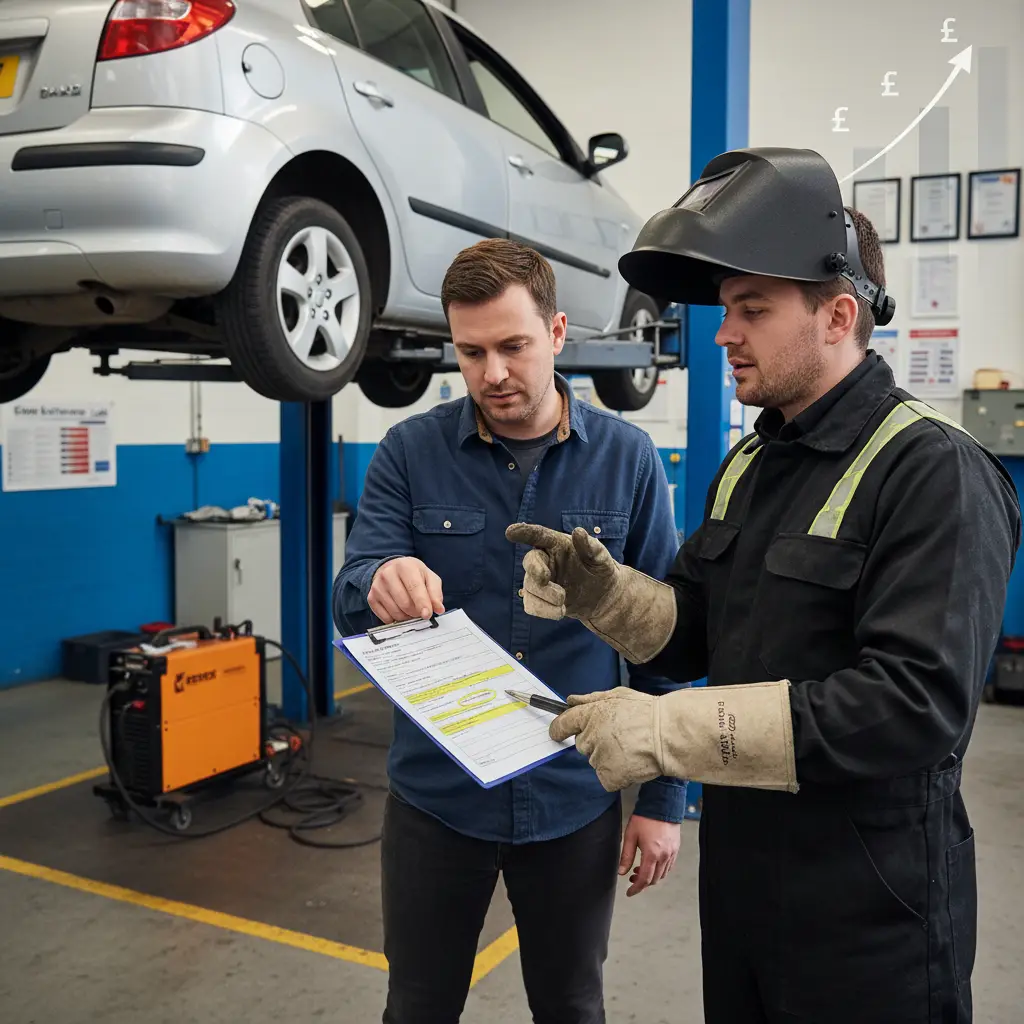
To give you a rough idea (not fixed prices):
Small Localised Patch
A small hole or localised rust patch in an otherwise solid area – usually the cheapest type of MOT welding repair.
Larger Sill Or Floor Section
Longer runs of rust, inner and outer sill, or bigger floor pan sections – more cutting, fabrication and welding time involved.
Multiple Structural Areas
Several separate fails (for example both sills, floor and a chassis rail). Labour adds up quickly and we’ll always discuss whether it’s economical.
At Star Welding Mansfield we always quote after seeing the vehicle or clear photos plus the MOT sheet. That way you know exactly what you’re agreeing to before any cutting or welding starts.
How We Handle MOT Welding At Star Welding Mansfield
Our MOT welding repairs are carried out at our workshop on New Mill Lane in Mansfield Woodhouse. We specialise in vehicle welding and MOT welding repairs, using MIG welding for cars and light vans.
Our typical process looks like this:
-
Inspect The MOT Fail Points
We look at each area listed on your MOT sheet, plus any other obvious rust nearby. Where possible, we check from both sides (inside and underneath). -
Cut Out Rotten Metal
All soft, flaky or holed metal is removed. We only weld onto clean, solid steel. -
Fabricate Repair Sections
New steel patches or panels are cut and shaped to follow the original contours. For structural areas, we use appropriate thickness and sometimes strengthening plates. -
MIG Weld The Repairs
Repairs are MIG‑welded in with continuous welds around the edges. We check for good penetration and a strong, tidy finish. -
Protect The Repaired Area
Welds and bare metal are treated, sealed and painted to help prevent future rust. We can provide photos of the work if you’d like them for your records or MOT tester.
Because we’re focused on vehicle welding, not general fabrication, everything we do is aimed at meeting MOT welding standards and keeping your car or van structurally sound.
When Is A Car Not Worth MOT Welding?
Sometimes, the most honest answer is: it’s not worth it.
MOT welding may not be economical if:
- Corrosion is widespread across the whole underside, not just a few localised areas
- Key structural sections (multiple chassis rails, crossmembers, inner sills, etc.) are heavily rotten
- The value of the vehicle is low compared to the cost of extensive welding
- Previous poor repairs or thick underseal have hidden how bad the rust really is
In those cases, we’ll explain:
- What would be needed to make it safe and MOT‑worthy
- A realistic estimate of the cost and time involved
- Whether we’d personally recommend repairing or walking away
That level of honesty builds trust – and it often saves people from throwing good money after bad.
Need MOT Welding In Mansfield?
If your car or van has failed its MOT on rust and you’re searching for “MOT welding near me”, we can help.
Star Welding Mansfield specialises in:
We’re based at 1 New Mill Lane, Mansfield Woodhouse, and we work on cars, vans and light commercial vehicles from across Mansfield and the surrounding areas.
To get started:
- Grab your MOT failure sheet
- Take a few clear photos of each rusty area (underneath and inside if possible)
- Get in touch with us and send the details over
We’ll come back with straightforward advice and a clear quote before any work begins.