Horsebox & Trailer Welding Repairs: Chassis, Floors and Ramp Frames Explained
Trailer chassis corrosion is one of the most underestimated structural risks in towing. A trailer that appears serviceable from outside can have rotten floor cross-members, weakened ramp frames, and chassis rails that are no longer load-bearing — often without obvious external signs until the damage is well advanced.
Trailer welding repair covers: cutting back corroded steel in the chassis, floor cross-members, or ramp frames to sound metal, and welding in new steel to restore structural strength. The result is a trailer that can carry its rated load safely again. It addresses load-bearing metal, not surface rust.
At Star Welding Mansfield, our workshop at New Mill Lane in Mansfield Woodhouse handles trailer and horsebox structural welding as in-workshop repairs — trailers are brought to us, inspected, and returned structurally sound. This guide explains what the repairs cover, how corrosion develops, and what the process involves.
Reviewed and signed off by Star Welding Mansfield — Published September 2026 — Updated September 2026
Why Trailer Corrosion Is a Serious Structural Issue
A trailer chassis carries the full loaded weight of its cargo — horses, vehicles, plant, livestock — across every road surface and speed bump. The structural members have none of the protection of a car body: no inner linings, no factory-applied underbody coatings, and no regular servicing schedule that flags deterioration early.
Corrosion in chassis rails and cross-members reduces the load the frame can safely carry. Cracks near axle mounts or the coupling hitch — common failure points under fatigue — are serious if not caught early. A structural collapse under load has severe consequences.
For horseboxes, the risk compounds further. Horse urine contains ammonia, which accelerates steel corrosion significantly faster than road salt or rainwater alone. Floor boards and the steel cross-members beneath them absorb moisture and waste and, without regular cleaning and treatment, can corrode through within a few years even on a relatively new horsebox. Road salt during winter towing compounds the damage from the underside simultaneously.
Early warning signs: soft spots or flex in the floor when you walk across it, rust staining visible on the underside, a persistent damp or ammonia smell inside, and ramp hinges or frames that feel loose or show visible cracking at their edges.

Which Areas of a Trailer or Horsebox Are Commonly Repaired by Welding
Trailer welding repairs tend to focus on several recurring areas, though specific locations vary by trailer type, age, and use history.
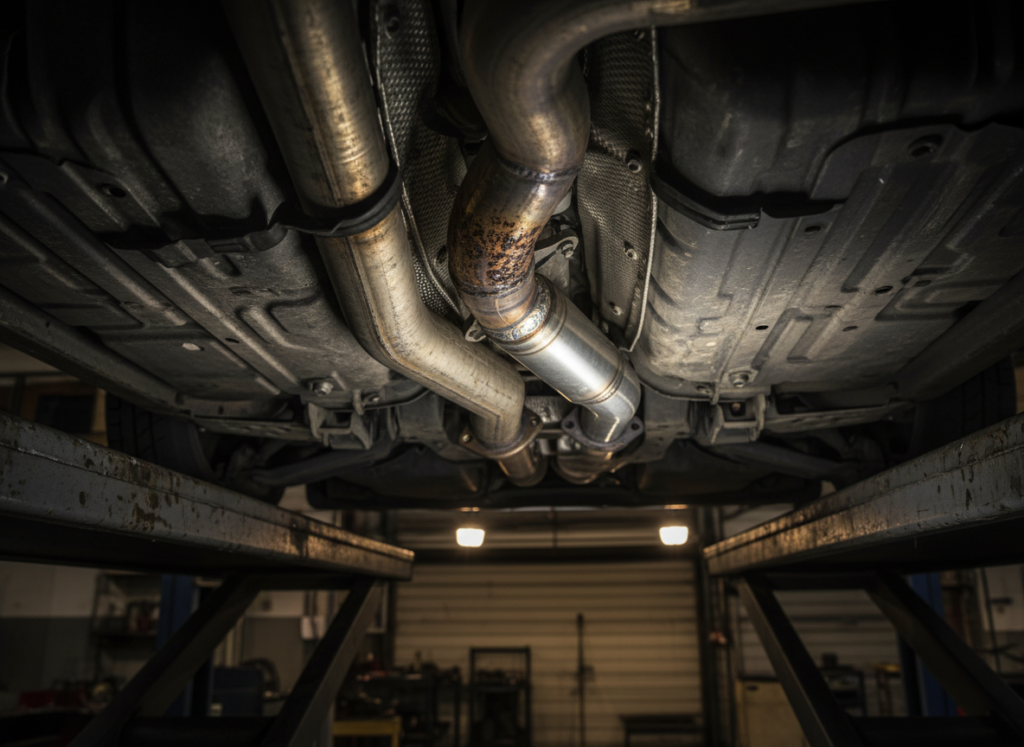
- Chassis rails and longitudinal members — the main structural beams running the length of the trailer. Corrosion near axle mounts, cross-member junctions, or the drawbar hitch is the most critical failure point and typically requires cutting back to sound metal and welding in new steel sections.
- Cross-members and floor support framework — the steel members beneath the floor boards. Exposed to horse urine from above and road spray from below, these corrode from both sides simultaneously and are frequently the first structural area to fail.
- Ramp frames and hinge mounts — loading ramps take repeated impact loads each time an animal loads or unloads. The hinge mounts and outer frame corners are common failure points due to corrosion, cracking at the weld roots, and worn hinge pin holes.
- Side and partition frames — internal partition brackets and wall attachment points corrode where they meet the floor, particularly in enclosed horseboxes where moisture is trapped.
- Drawbar and coupling assembly — the drawbar connecting the trailer to the towing vehicle is safety-critical. Cracks or corrosion near the coupling head or where the drawbar meets the main chassis are repaired by welding or, in severe cases, by replacing the drawbar section entirely.
If the trailer has a steel floor rather than timber boards on steel cross-members, the floor panels themselves may also need welding where they have corroded through — more common on older livestock trailers than on modern aluminium-floored units.
For all chassis rail and structural member repairs, our chassis and structural welding service applies equally to trailer chassis as to vehicle chassis work.
How a Ramp Frame Welding Repair Works
Ramp frame repairs are among the more common horsebox welding jobs we see. The ramp is hinged at the rear of the horsebox and takes the full impact load of a horse loading and unloading — often 500–600kg or more, concentrated on a relatively small steel structure that is also permanently exposed to the elements.
Corrosion typically starts at the corners of the ramp frame, where steel sections are mitred and welded together and where water sits rather than draining. The hinge brackets are another regular failure point — the pin holes wear oval over time and the brackets can crack at their weld roots.
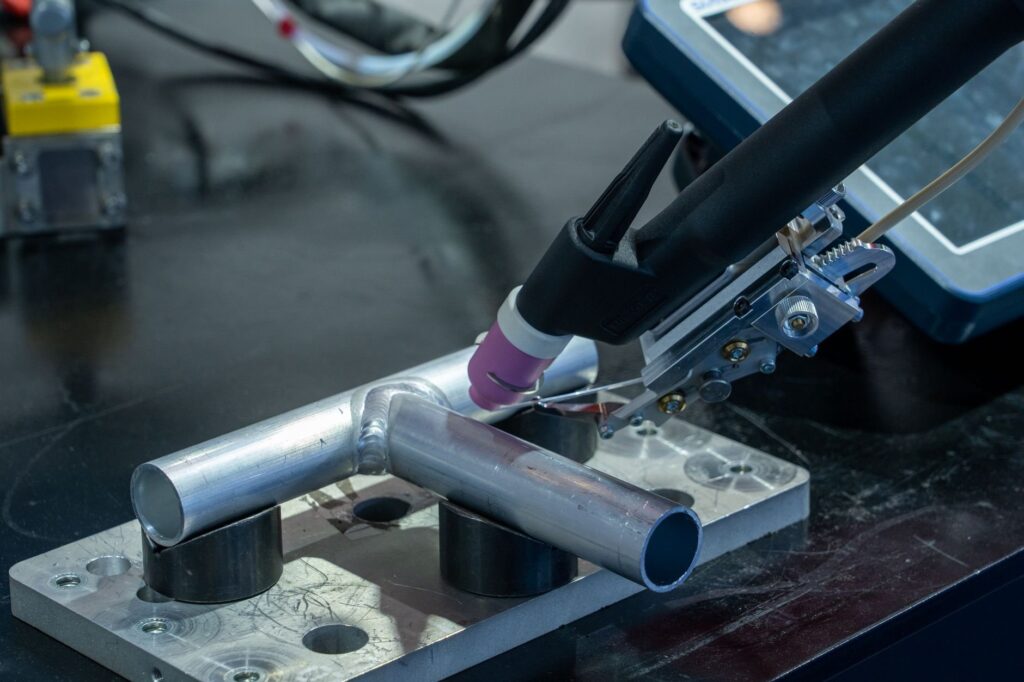
Where the frame can be repaired: corroded sections are cut back to solid metal and new steel box section or flat bar is welded in using MIG welding. The repair is ground flush and treated to prevent recurrence. Cracked hinge brackets are cut off, and new brackets are fabricated and welded in the correct geometry for the hinge to operate smoothly under load.
A full ramp replacement is only required when corrosion is so extensive that there is insufficient sound metal remaining to weld to. In practice, most ramps brought in before failure are repairable, which is considerably cheaper than replacement. A workshop assessment confirms which applies.

What to Expect When You Bring Your Trailer to the Workshop
Star Welding Mansfield is a workshop-based service. Trailers and horseboxes are towed or driven to our New Mill Lane site in Mansfield Woodhouse — we do not carry out mobile or roadside welding. This is important because proper structural trailer welding requires the vehicle to be stable, grease-free, and in many cases disassembled so sections can be cut out and refitted safely.
On arrival, we carry out a full inspection of the areas described or identified, plus any adjacent sections where corrosion may have spread. It is common for what appears to be a localised floor problem to have also affected the cross-members beneath — identifying the full extent of the damage before quoting is far better than doing a partial repair that leaves a structural weakness in place.
We discuss findings with the owner before any work begins and agree the scope. Most trailer welding repairs are completed within one to two days depending on extent. Repaired areas can be treated with a weld-through primer or rust inhibitor coating where access allows, to extend the life of the repair.
For tow bar mount and coupling repairs on the towing vehicle itself, see our tow bar mount fabrication service. For a broader overview of how subframe and structural welding repairs are approached, the subframe welding repair guide covers the principles that apply to trailer chassis work too.
Heavier Horseboxes and Commercial Trailers Over 3,500kg
Most single-horse and small twin-horse trailers fall under 3,500kg gross weight. Larger horseboxes — those carrying three or more horses, or professional yard vehicles — may exceed this, and livestock trailers used commercially frequently do.
According to GOV.UK guidance on trailer MOT testing, trailers over 3,500kg gross weight are subject to the annual trailer MOT scheme, which requires an annual roadworthiness certificate in addition to the vehicle being roadworthy in practice. If you are unsure whether your trailer falls into this category, check the plate on the A-frame, which lists the maximum authorised mass (MAM).
For horseboxes built onto a truck chassis — where the entire vehicle is registered as a goods vehicle — testing and plating requirements differ, as the whole unit falls under HGV rules. We handle welding repairs on standard trailers and horseboxes; very large commercial livestock trailers or HGV-based horseboxes should be discussed with us directly before booking so we can confirm scope.
It is also worth noting that light trailers under 3,500kg do not currently require an annual MOT test — but the owner and driver are responsible for ensuring the trailer is safe and roadworthy under the Road Traffic Act. A structurally compromised trailer is an offence regardless of whether it carries a test certificate.
Frequently Asked Questions
Do trailers and horseboxes need an MOT in the UK?
Light trailers and horseboxes under 3,500kg gross weight do not currently require an annual MOT test. Heavier commercial trailers over 3,500kg are subject to the government trailer MOT scheme requiring annual testing. Regardless of MOT status, owners are responsible for keeping trailers roadworthy — a structurally compromised trailer can result in prosecution even without a test requirement.
Can a horsebox ramp frame be repaired rather than replaced?
In most cases, yes. Ramp frames can be repaired by cutting back to sound metal and welding in new steel. Full replacement is only necessary when corrosion has left insufficient sound metal to weld to — most ramps brought in promptly are repairable, which is cheaper than replacement. A workshop inspection confirms which applies.
How much does trailer chassis welding cost?
Costs vary considerably depending on the extent of corrosion and the number of areas requiring attention. Minor repairs may start from a few hundred pounds; extensive structural work covering multiple cross-members or chassis sections can run to several hundred more. A physical inspection is required for an accurate quote, as cut-back welding frequently reveals more damage than is visible on the surface.
What causes horsebox floors to corrode so quickly?
The primary cause is horse urine and ammonia, which accelerate steel corrosion significantly faster than road salt or rainwater. The floor boards and steel cross-members beneath them absorb moisture and waste continuously and, without regular cleaning and treatment, can corrode through within a few years. Road salt compounds the damage from the underside during winter towing.
Bring Your Trailer to Our Mansfield Workshop
If your trailer or horsebox has corroded chassis members, rotten floor cross-members, damaged ramp frames, or weakened hinge mounts, the repairs are structural welding work that needs to be done properly and in a workshop by welders who understand load-bearing steel.
Our coded welders at New Mill Lane, Mansfield Woodhouse are experienced with automotive and light commercial structural welding and can assess and quote for trailer and horsebox work. Bring the trailer to us and we will confirm the scope before any work begins — no obligation to commit until you have seen the assessment.