Ford Fiesta and Vauxhall Corsa Sill Rust: What MOT Testers Find and What Welding Involves
The Ford Fiesta and Vauxhall Corsa are two of the most common cars on UK roads, and for good reason. They are economical, practical, and easy to run — but both have a well-known weakness. Sill rust. Drivers across Nottinghamshire are regularly caught out by MOT advisories or outright failures caused by corroded sills, and many are surprised to find that the only compliant fix is professional welding.
This guide explains why Fiesta and Corsa sills rust so readily, what MOT testers actually look for during inspection, and what a proper sill welding repair involves at Star Welding Mansfield.
Why Ford Fiesta and Vauxhall Corsa Sills Rust Faster Than Many Cars
Sill rust is not unique to Fiestas and Corsas, but the volume of these cars on UK roads — combined with their typical age profile — means a significant proportion of them are now reaching the stage where rust has progressed beyond cosmetic damage.
Several factors make sills particularly vulnerable on these models. Both cars sit relatively low to the ground, meaning the sill panels are exposed to road spray, winter grit, and de-icing salt constantly. Salt is highly corrosive when it sits in the seams and drainage channels of a sill structure, and it accelerates rust from the inside out. By the time rust is visible on the outer surface, the inner sill may already be in poor condition.
The Fiesta, particularly pre-2012 models, and the Corsa D and E generations are among the cars most commonly presented to us for sill welding. Older examples often have door rubbers that have perished, allowing water to enter the sill cavity where it sits without drying out. Repeated wetting and drying through the seasons speeds up corrosion considerably.
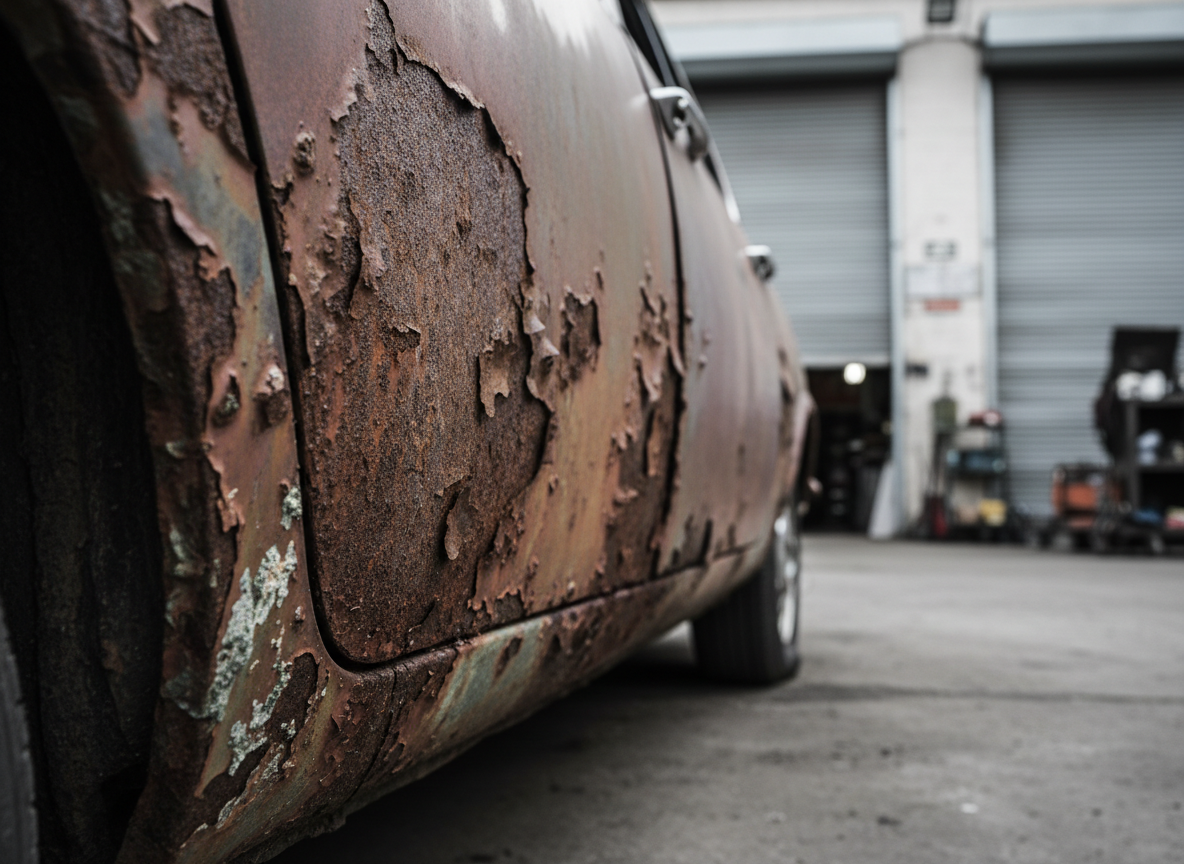
It is worth noting that sill rust on these cars is rarely visible on the top surface where you would notice it. The structural damage tends to develop underneath, in the box section of the sill, in the inner sill panel, and along the flange where the floor pan meets the sill. Drivers often have no warning until an MOT tester flags it.
What an MOT Tester Looks for When Checking Sills
MOT testers do not fail cars for rust alone. They fail cars when rust has weakened metal to the point where it no longer provides structural strength in safety-critical areas. Sills fall into this category because they support the floor pan, the door aperture, and in many cars the jacking points and seat belt anchorages.
During an inspection, a tester will look at and probe the sills physically. A screwdriver or probe tool is often used to check whether the metal deforms, flexes, or crumbles under light pressure. If the sill is soft, holed, or shows perforation within 30 centimetres of a load-bearing mounting point, it is likely to result in a failure.
The key standards that apply are:
- Corrosion that causes perforation near structural areas — likely a fail
- Excessive corrosion within 30 centimetres of seat belt anchorages — likely a fail
- Metal so weakened it offers no structural resistance — fail
- Surface corrosion that has not yet affected structural integrity — advisory
Advisories are important to take seriously. A sill that earns an advisory today may well fail at the next MOT, particularly if the car is driven through another winter without treatment or repair.
If your Fiesta or Corsa has come back with a sill advisory, or if you have noticed bubbling paint, soft spots under the doors, or visible holes in the sill panel, it is worth booking an assessment before the problem becomes more extensive.
When Welding Is the Only Proper Fix for Sill Rust
When sill rust on a Fiesta or Corsa has progressed to the point of structural failure or MOT failure, the repair must restore the structural strength of the metal — not simply cover over the damage.
Filler, expanding foam, or plates bolted over existing rust may temporarily hide the problem visually, but they do not restore the strength of the sill. MOT testers are trained to identify these cover-up repairs, and they will still fail a vehicle if the underlying metal has not been properly addressed.
The correct approach is to cut back the corroded metal to solid material, fabricate a new steel section that matches the sill geometry, and weld it in place. This restores the original structural integrity of the sill and brings the car back to a standard that can pass the MOT.
See our sill, arch and floor pan repair service for full details on how we approach these repairs.
Not every sill rust situation requires the same extent of work. In some cases, only the outer sill panel needs replacing. In others, the inner sill box section or the floor pan edge is also affected. A proper assessment is the only reliable way to know what is actually required before any costs are confirmed.
What Sill Welding Actually Involves at Our Workshop
When a Ford Fiesta or Vauxhall Corsa comes in for sill welding, the process begins with a thorough assessment. We look at both the inner and outer sill sections, the floor pan edges, the jacking points, and the surrounding areas to understand the full extent of the corrosion before any work begins.
The repair process typically follows these stages:
- Removing door rubbers and trim where necessary to access the sill cavity
- Cutting back corroded metal until solid, unaffected steel is reached
- Fabricating a new steel section to match the profile of the original sill
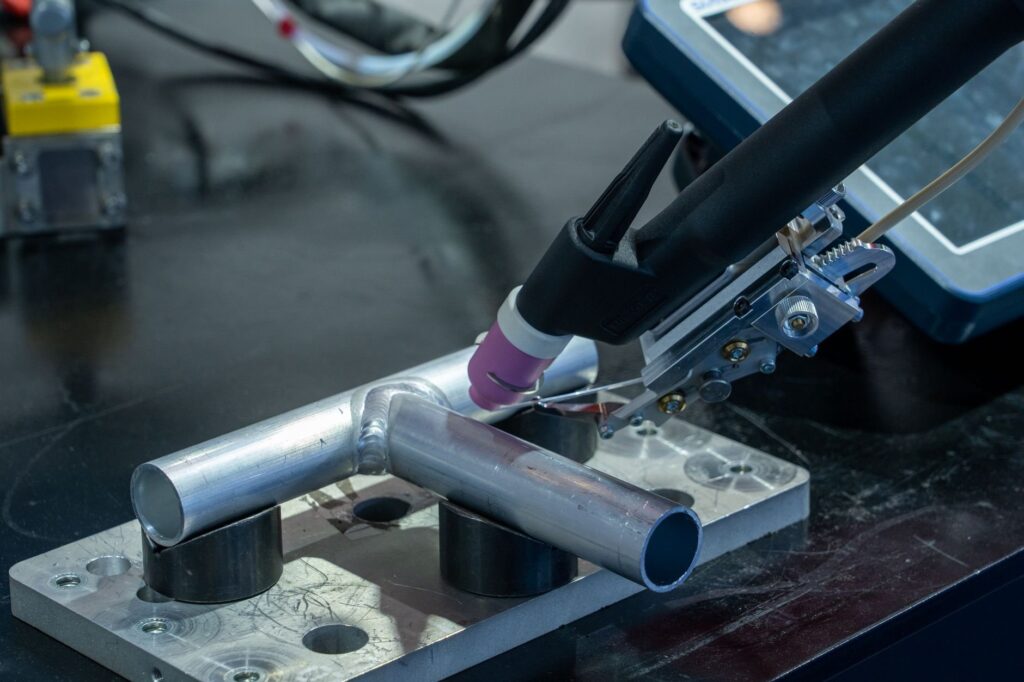
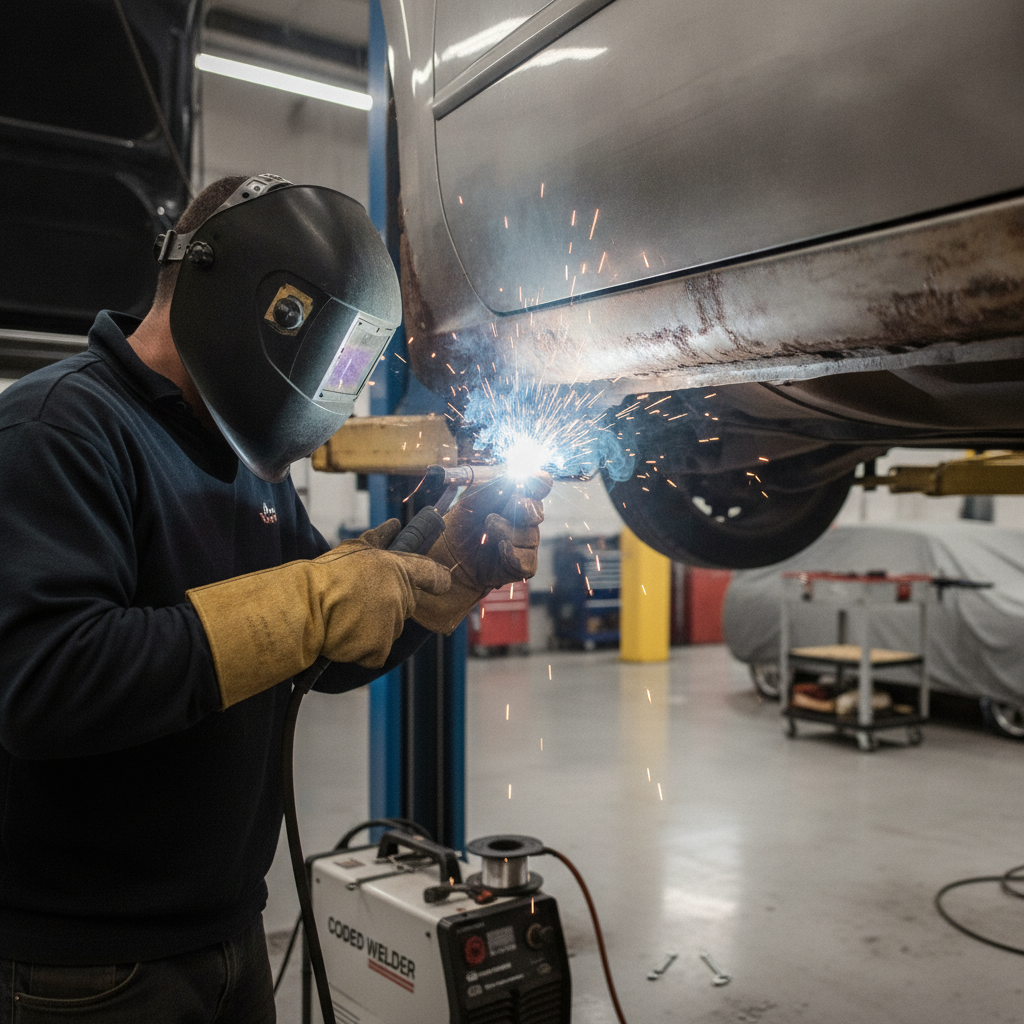
- Welding the new section in place using MIG welding to restore structural integrity
- Grinding the weld flush with the surrounding panel
- Applying rust treatment and protective coating inside the sill cavity
- Refitting any trim removed during the repair
All welding work is carried out by coded welders who understand the standards required for safety-critical structural repairs. We do not patch over rust or use filler as a structural fix. Every repair is done to a standard suitable for MOT retesting.
Rust treatment applied to the inside of the repaired cavity significantly extends the life of the repair. A properly sealed sill repair will typically remain sound for many years of normal use, particularly if the car is kept clean underneath during winter months.
How Long Does Sill Welding Take on a Fiesta or Corsa?
The time required depends on the extent of the damage and whether one or both sides need attention. As a general guide:
- Outer sill panel only, one side — typically half a day
- Inner and outer sill combined, one side — typically a full day
- Both sides requiring attention — typically one to two days
- Additional floor pan or arch work alongside — adds to the time required
We will always provide a clear estimate of time and cost before any work begins. Booking in advance is recommended, as slots fill quickly in the weeks leading up to MOT renewals.
If you have an upcoming MOT and are concerned about sill rust, it is worth arranging a pre-MOT assessment before the test date. This gives you the option to have welding completed beforehand rather than failing the MOT and needing to arrange urgent repairs.
Common Questions from Fiesta and Corsa Owners
Is it worth repairing a Ford Fiesta with sill rust?
In many cases, yes. If the engine, gearbox, and mechanical condition of the car are sound, sill welding is often considerably cheaper than replacing the car. Fiestas and Corsas are generally reliable mechanically, and a structural sill repair can give many more years of use from an otherwise good vehicle. Our team can help you think through the cost versus value question when you bring the car in.
Will a Fiesta or Corsa pass its MOT after sill welding?
Yes, provided the repair has been carried out correctly and the rest of the car is roadworthy. A welded sill repair that cuts back to solid metal and replaces the affected section with new steel will satisfy the MOT requirements for structural integrity. We carry out the repair to a standard suitable for retesting, and many customers have their cars retested directly after collection from us.
Can I leave the advisory and deal with it at the next MOT?
You can, but rust does not stand still. A sill that earns an advisory today will typically worsen over winter, and what is an advisory in summer may well be a failure by the following spring. Addressing sill rust early, before it spreads to the inner sill or floor pan, generally keeps the repair simpler and less expensive.
Book Your Sill Welding Assessment in Mansfield
If your Ford Fiesta, Vauxhall Corsa, or any other vehicle has been flagged for sill rust — whether as an advisory or a failure — our specialist coded welders can assess the damage and carry out the repair to the correct structural standard.
We are based in Mansfield Woodhouse and serve drivers from across Nottinghamshire, including Kirkby-in-Ashfield, Sutton-in-Ashfield, Hucknall, Newark, Worksop, and beyond. All repairs are completed in our workshop — we do not carry out mobile welding.