What Does a Welded Exhaust Actually Mean? Your Questions Answered
If you have been told your exhaust needs welding, or if you have been searching for “welded exhaust” and are not sure exactly what that means, this guide is for you. Exhaust welding is one of the most common repairs we carry out at Star Welding Mansfield — but it is also one of the most misunderstood. People often confuse welded repairs with full system replacement, or assume that welding is a temporary fix when in fact it can be the most durable solution available.
This guide explains how exhaust systems are constructed, what a welded repair actually involves, when welding makes more sense than replacement, and what you should expect from the repair process. If you have specific questions not covered here, our FAQs page covers a range of common exhaust repair queries.
How a Standard Exhaust System Is Constructed
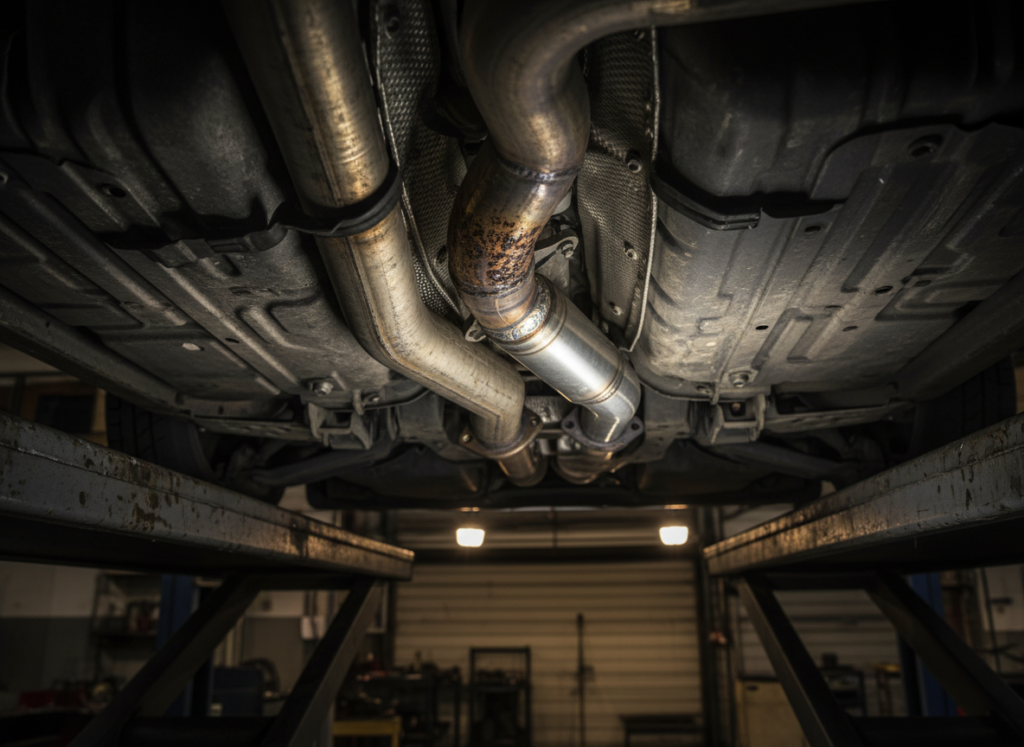
A typical vehicle exhaust system runs from the engine, through the downpipe and catalytic converter, along the underside of the vehicle, and exits at the rear through the back box. Along the way, the system passes through a middle section and, on some vehicles, a centre box or resonator.
The sections are connected together and are suspended from the underside of the vehicle by a series of rubber hangers and metal brackets. These joints and connections are where most exhaust failures occur — either through direct corrosion of the pipe or through failure at the joints between sections.
The way these joints are made varies. Factory-fitted systems often use a combination of welded permanent joints and slip-fit or flanged connections, which can be separated for servicing. Aftermarket systems may use clamps, band joints, or flexible couplings at section joins. Each of these connection types has different repair implications when they fail.
Welded vs Clamped: What Is the Difference?
When people refer to a “welded exhaust,” they typically mean one of two things: either an exhaust system where sections are permanently joined by welding rather than clamps, or a repair where a section of pipe has been welded to address a crack, split, or leaking joint.
A clamped exhaust system uses mechanical clamps to hold the sections together. These are easier to disassemble and replace in sections, but the clamps themselves can corrode and loosen over time — particularly under the thermal cycling that exhaust systems experience.
A welded joint, where properly executed, is typically stronger and more durable than a clamped joint in the same location. The weld forms a continuous, permanent bond between the two pieces of pipe. This is why welded repairs, when carried out correctly on sound pipe, tend to outlast the equivalent clamped repair on the same section.
It is worth noting that “welded” does not automatically mean better across the whole system. A welded system is harder to service in sections — if one part fails later, the adjacent sections may need to come off together. For high-mileage or older vehicles where multiple sections are likely to fail over time, the choice between welded and clamped repair may depend on the long-term plan for the vehicle.
Why Exhaust Welds and Joints Fail
Exhaust components operate under extreme conditions. The system heats up to several hundred degrees during normal driving and cools back down when the engine is switched off — every single journey. This thermal cycling causes expansion and contraction that stresses every joint in the system over time.
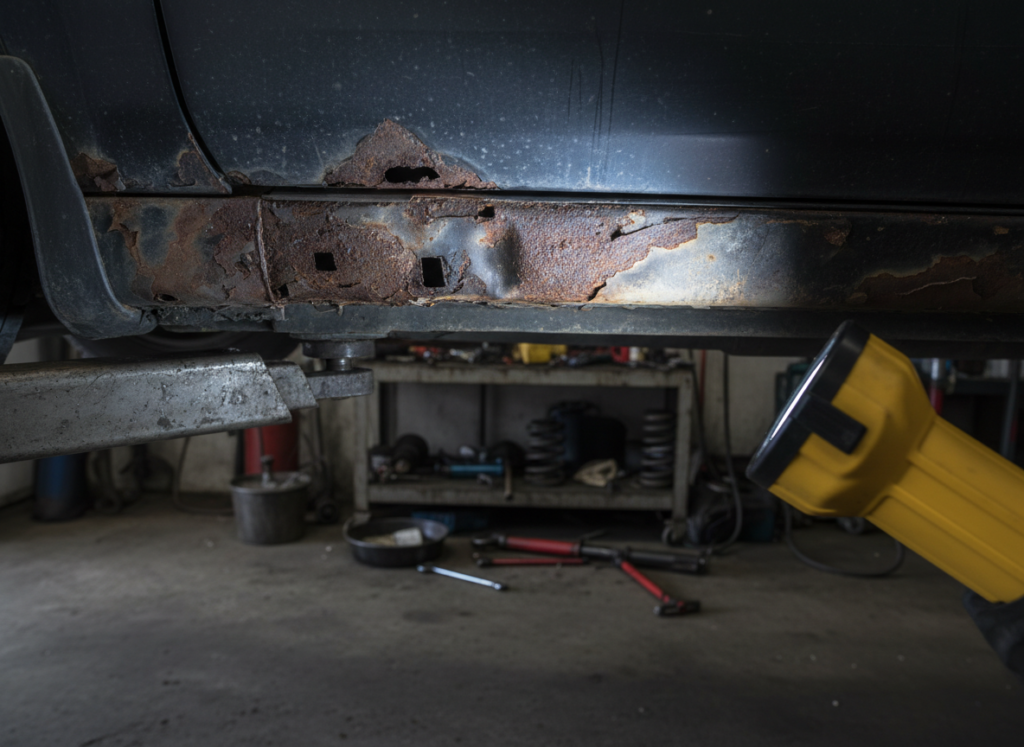
Combined with moisture, road salt, and physical vibration from the engine and road surface, exhaust components are among the fastest-corroding parts on a vehicle. The most vulnerable points are:
- Section joints and sleeve connections, where two pieces of pipe overlap and trap moisture
- The area around clamps, where dissimilar metals can accelerate corrosion
- The flexi pipe section on the downpipe, which is subject to both movement and high heat
- The back box inlet, which collects condensate and is prone to internal corrosion
- Any section running close to the floor where road debris and water contact is more frequent
UK driving conditions — particularly winter road salt — accelerate all of these failure modes. In our workshop, the exhausts that come in needing their first weld are usually on cars that have been through several UK winters on salted roads rather than nearly new ones, but age on its own is a poor guide. Mileage, lots of short trips (which leave condensate sitting inside the system) and where the car is parked overnight make far more difference than the date on the logbook.
Signs Your Exhaust Needs Welding
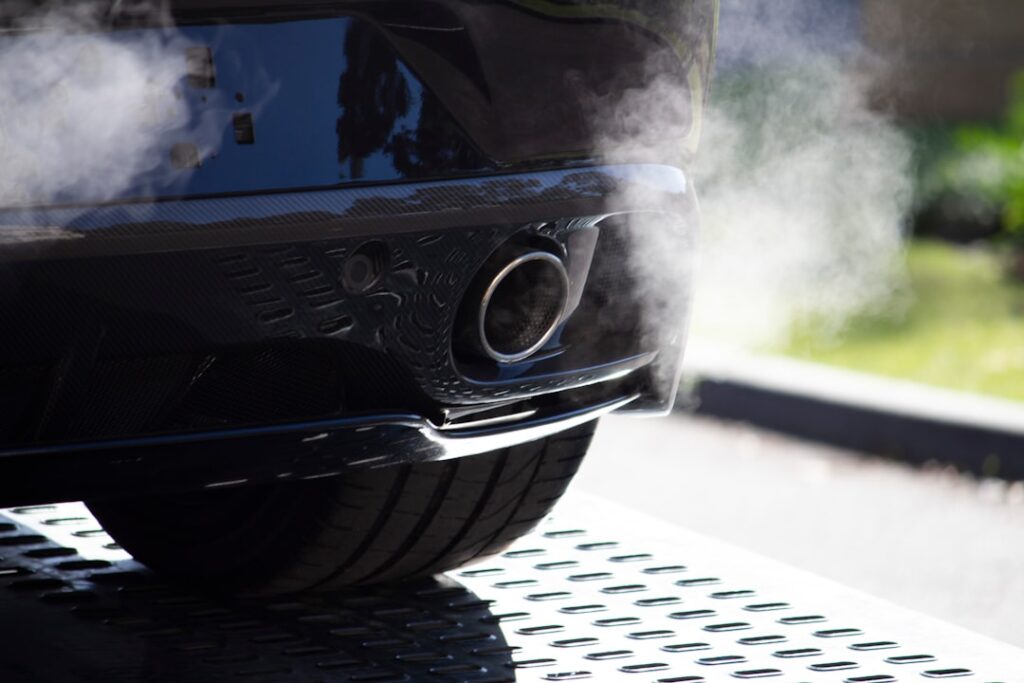
The most obvious sign of an exhaust problem is noise. A blowing exhaust — the characteristic raspy, ticking, or droning sound that gets louder under acceleration — typically indicates a crack, hole, or failed joint in the system. This is often a sign that welding is needed somewhere along the pipe.
Other signs that the exhaust may need attention include:
- A rattle from underneath the vehicle, particularly at low speeds, which can indicate a failed bracket or hanger allowing the pipe to move
- An exhaust pipe that has visibly dropped lower at the back, suggesting a broken hanger or bracket
- A smell of exhaust fumes inside the cabin, which can indicate a leak in the system ahead of the rear section
- Visible rust or black soot marks around a joint, which indicate exhaust gases escaping at that point
- A rattling or tapping noise from near the engine that intensifies when cold — often the flexi section on the downpipe beginning to fail
If you notice any of these symptoms, it is worth having the system inspected before the MOT rather than waiting. A blowing exhaust will fail an MOT, and delaying repair often allows the damage to spread or worsen.
What the Welding Repair Process Involves
When a vehicle comes in for an exhaust welding repair, the first stage is a ramp inspection to find exactly where the exhaust is leaking or failing. On some vehicles the failure point is obvious; on others, particularly older vehicles with extensive corrosion along the system, there may be multiple points that need attention.
Once the leak point is identified, the repair approach depends on the condition of the surrounding pipe. If the pipe wall is sound on either side of the crack or hole, a weld repair can be carried out directly. The damaged section is cleaned back, the crack or hole is addressed by welding, and the area is left with a clean, continuous weld that seals the failure point and restores the structural integrity of the pipe.
If the pipe wall is too thin or corroded to take a direct weld, a short section may need to be cut out and a new piece of pipe welded in — a “sleeve” or “patch pipe” repair. This approach uses more material but is still more cost-effective than replacing a full section in many cases.
Our exhaust welding and bracket repair service covers both direct weld repairs and section replacements, as well as bracket and hanger fabrication where standard replacement parts are not available.
How Long Does a Welded Exhaust Repair Last?
A well-executed weld repair on sound pipe can last for many years — in some cases, for the remaining life of the vehicle. The weld itself does not corrode in the same way that a clamp joint can. What typically limits the longevity of a welded repair is not the weld but the condition of the surrounding pipe: if the rest of the system continues to corrode, further failures can occur at other points.
For newer vehicles or vehicles with mostly sound pipe, a targeted welded repair is often the most durable and cost-effective solution. For older vehicles with extensive corrosion throughout the system, a full section or full system replacement may offer better long-term value.
When you bring your vehicle in, we will inspect the whole system and give you an honest assessment of the overall pipe condition — not just the obvious failure point. If there are other areas showing significant deterioration, we will point them out so you can make an informed decision about whether a targeted repair or a more comprehensive approach makes better sense for the vehicle.
Weld the Exhaust or Replace the Section? How to Decide
The decision between welding a repair and replacing the section comes down to the condition of the pipe on either side of the failure point. If the surrounding metal is solid and has good wall thickness, a weld repair is typically the right call. If the surrounding pipe is thin, heavily corroded, or showing multiple failure signs, replacing the section gives a cleaner result and better long-term reliability. We set that judgement out in full in our guide to how we decide between welding and replacing an exhaust section.
Cost is also a factor. For standard vehicles, replacement sections are often available as aftermarket parts and can be fitted relatively quickly. For less common vehicles, older vehicles, or systems with non-standard dimensions, fabricating a repair or replacement section in steel may be necessary and can be more cost-effective than sourcing a specific part.
We are always transparent about the options — if a replacement section is available and makes more sense than a weld repair for your vehicle, we will tell you. The goal is always the repair that gives you the best result for the least cost and disruption.
Need Exhaust Welding in Mansfield?
If your exhaust is blowing, rattling, or has failed an MOT, Star Welding Mansfield can carry out the assessment and repair you need. We are based in Mansfield Woodhouse, Nottinghamshire, and handle exhaust welding repairs on cars, vans, and light commercials as part of our everyday workshop workload.
We will put your vehicle on the ramp, identify the fault, and give you a straight assessment of the repair options and costs before any work begins. There is no pressure and no guesswork — just an honest diagnosis and the right repair for your vehicle.
Get in touch with Star Welding Mansfield to arrange your exhaust repair