The short answer: if your exhaust has a small crack, a leaking joint or a broken bracket and the rest of the system is still solid, it can usually be welded. If the pipes or boxes are rotten and thin along their length, replacement is the better, longer-lasting option.
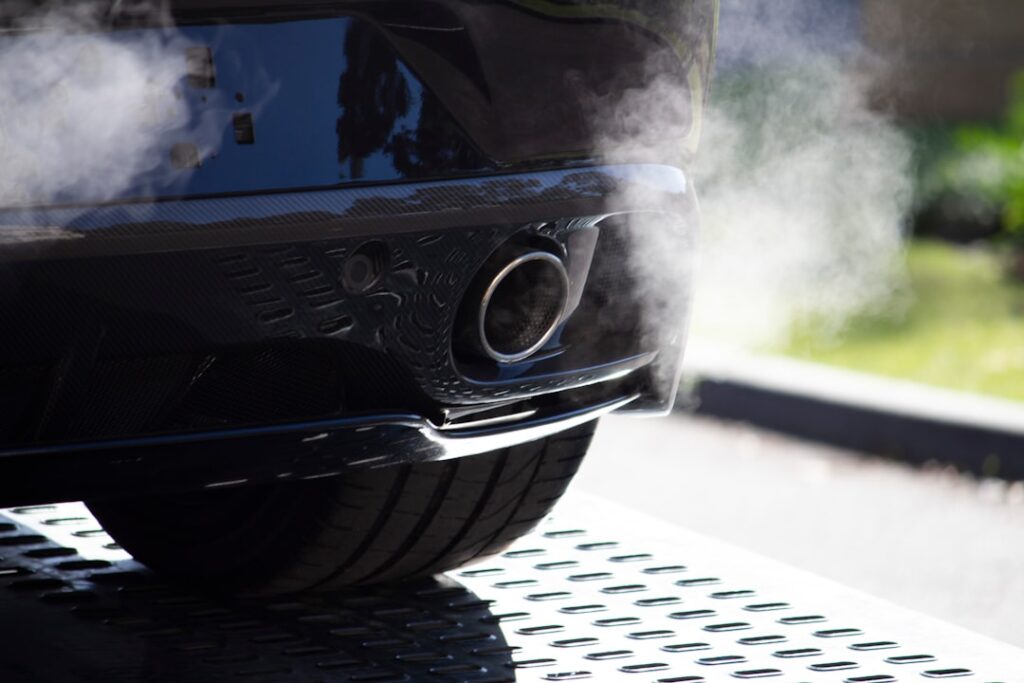
A blowing exhaust, loud rattle or fresh MOT fail for “exhaust leak” is never a nice surprise, and the first question people ask us is: “Can you weld my exhaust, or do I need a new one?” Below we explain exactly when each option makes sense, what exhaust welding typically costs in the UK, and whether a welded exhaust will pass its MOT.
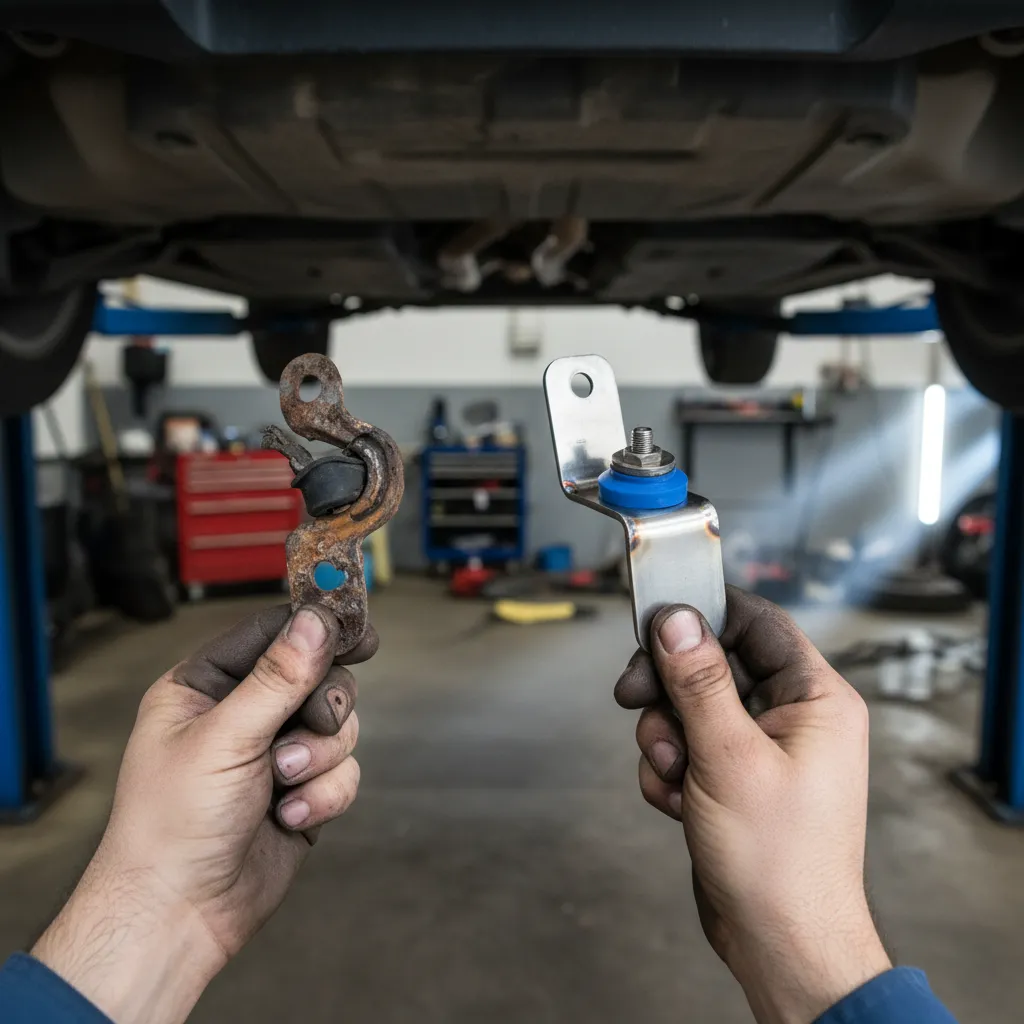
What Does Exhaust Welding Actually Fix?
Exhaust welding is usually done with MIG welding on mild steel exhaust systems. It’s ideal for
localised damage where most of the system is still solid, for example:
- Small cracks or holes in a pipe or joint
- A leaking joint where two sections meet
- Broken exhaust brackets or hangers
- Cracked flanges where the exhaust bolts to the cat or downpipe
In these situations, exhaust welding can be a cost‑effective repair. We clean back to solid metal, weld the damaged area, and protect it to help slow future corrosion.
What exhaust welding doesn’t do is magically turn a rotten, paper‑thin exhaust into a new one. If the metal around the damage is already very thin, welding will not last long and usually isn’t worth the money.
When Can An Exhaust Be Welded – And When Can’t It?
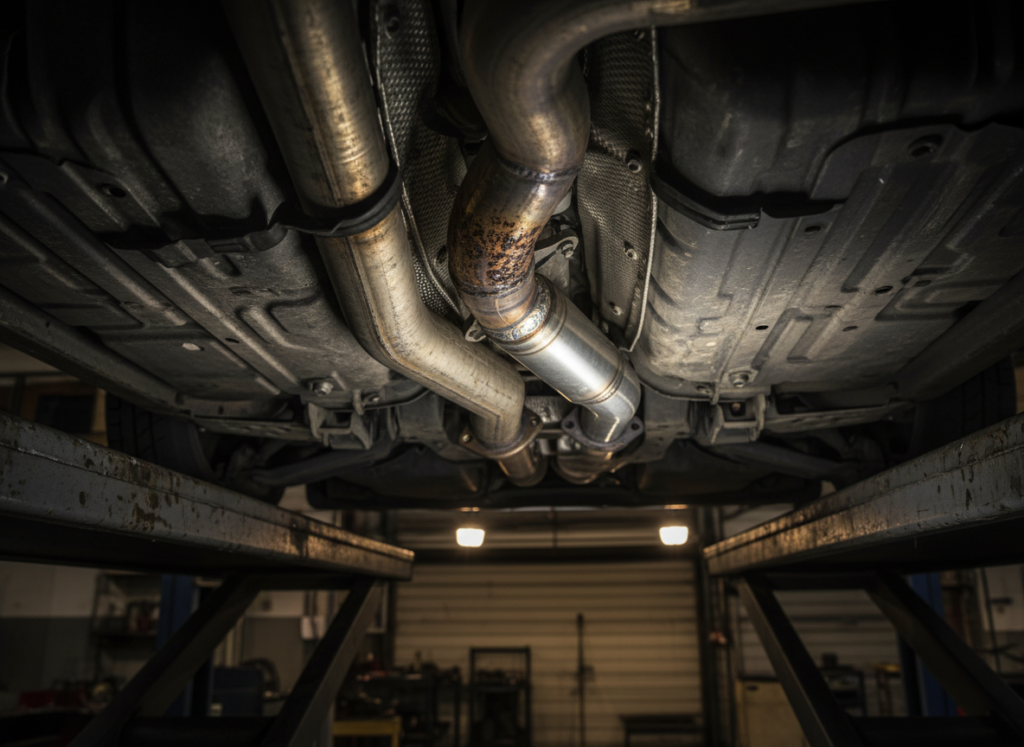
A quick inspection underneath the car usually tells us whether exhaust welding is a sensible option or not.
Good Candidates For Exhaust Welding
- A small crack in an otherwise solid pipe
- A localised hole caused by a stone impact or stress
- A broken hanger or bracket where the rest of the system is sound
- A leaking joint between two sections that can be cleaned and re‑welded
In these cases, welding can restore strength and stop the leak without the cost of a full new section.
Poor Candidates For Exhaust Welding
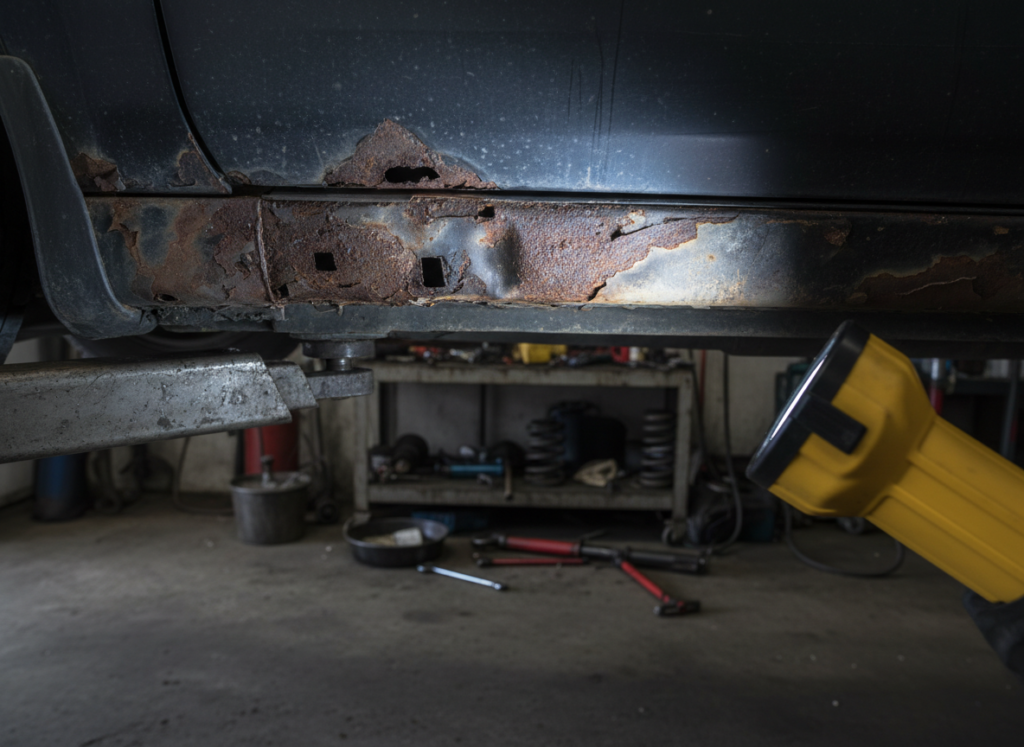
- Pipes that are very thin and flaky all the way around, not just in one spot
- Back boxes or silencers that are rusted through in several places
- Systems with multiple holes and heavy surface rust from front to back
- Previous poor repairs where patches or paste are already failing
In those situations, the metal around the weld is often too weak to support a long‑term repair. You might get it to pass an MOT briefly, but it’s likely to fail again soon – which isn’t good value for you.
Exhaust Welding vs Replacement: Which Makes Sense?
When you’re deciding between welding and replacement, it really comes down to
condition, cost and how long you want the fix to last. Here’s a quick at‑a‑glance guide:
| Situation | Best option |
|---|---|
| Small crack or hole in a solid pipe | Weld |
| Leaking joint between two good sections | Weld |
| Broken bracket or hanger, pipe still solid | Weld / fabricate |
| Back box rotted through in several places | Replace |
| Thin, flaky rust from front to back | Replace |
| New section cheaper than the welding time | Replace |

When Welding Makes Sense
- Damage is localised and the rest of the exhaust is in good condition
- A new section is expensive or hard to source quickly
- You want a cost‑effective repair to keep the vehicle going
- A hanger or bracket has failed but the pipe itself is solid
When Replacement Is Better
- The exhaust is heavily corroded along its length, not just at one point
- The back box or centre box is rotted out in several places
- A new section or back box is relatively cheap compared to the welding time
- You want a long‑term solution rather than a short‑term patch
At Star Welding Mansfield we’ll always talk you through both options. If we think a new section is better value than welding, we’ll say so – even if it means less work for us.
How Much Does Exhaust Welding Cost In The UK?
There isn’t one fixed exhaust welding cost that suits every car, but the table below gives a realistic feel for typical UK prices. As a rule, welding a localised repair is far cheaper than fitting a new section – which is exactly why it’s worth asking before you replace.
| Job | Indicative UK cost |
|---|---|
| Small weld – crack, hole or leaking joint | from around £30–£60 |
| Broken bracket or hanger weld / fabrication | around £40–£80 |
| Flexi pipe cut out & weld‑in repair | around £90–£180 |
| New section or back box (supply & fit) | typically £150–£400+ |
| Full system replacement | £250–£850+ |
These are general UK guide prices for a typical car or van, not quotes. Your price depends on the vehicle, where the damage is, how easy it is to reach on the ramp, and how much cleaning is needed to get back to solid metal.
The pattern is clear: a single localised weld is usually the cheapest fix, while costs climb once several joints, brackets or pipes all need attention. At that point we’ll always discuss whether replacement is better value than trying to save every piece.
We always quote after seeing the exhaust in person or from clear photos, so you know exactly what’s involved before we start cutting, cleaning or welding.
Will A Welded Exhaust Pass Its MOT?
Yes – a properly welded exhaust will pass the MOT, as long as the repair is gas‑tight, secure and the rest of the system is sound. There’s nothing in the MOT rules that says an exhaust can’t be repaired by welding.
During the test, the exhaust is checked for leaks, corrosion and secure mounting, and the car goes through an emissions test. A blowing exhaust or a leak before the tailpipe will fail on both condition and emissions – so a neat weld that seals the leak and firms up the mountings is exactly what brings it back to a pass.
What won’t last is welding onto paper‑thin, rotten metal. It might scrape through once, but it tends to fail again quickly – which is why we’re honest about when replacement is the safer route.
How We Handle Exhaust Welding At Star Welding Mansfield
At Star Welding Mansfield we focus on vehicle welding, not general fabrication. Our exhaust welding work is all about
safe, sensible repairs that make financial sense for you.
Our typical process looks like this:
-
Inspect The Exhaust
We put the car or van on the ramp, check the full system and confirm where the leak or damage is coming from. -
Assess Overall Condition
We look at the rest of the exhaust to see if it’s generally solid or if rust is widespread. This helps us advise welding vs replacement. -
Clean Back To Solid Metal
We remove rust, scale and old paste so we’re welding onto clean, sound steel. -
MIG Weld The Repair
We carry out a neat MIG weld to close cracks, seal joints or attach new brackets and hangers. -
Protect The Area
Where appropriate, we treat and coat the welded area to help slow future corrosion.

If we think a
custom bracket or small fabrication will give a stronger, longer‑lasting result than trying to re‑use a weak original part, we’ll suggest that too.
When We Recommend Replacing The Exhaust Instead
Sometimes the most honest thing we can say is: “Don’t weld this – replace it.”
We’ll usually recommend replacement if:
- The exhaust is very rusty from front to back, not just in one area
- The back box or centre box is blowing in several places
- The metal is so thin that a weld is unlikely to last
- A new section or back box is cheaper than the welding time needed
That kind of honesty builds trust – and it usually works out cheaper for you in the long run.
Exhaust Welding FAQs
How much does it cost to weld an exhaust?
Small localised welds – a crack, hole or leaking joint – usually start from around £30–£60. Bracket and hanger repairs are a little more, and welding several areas costs more again. We confirm the price once we’ve seen the exhaust.
Is it cheaper to weld or replace an exhaust?
If the damage is localised and the rest of the system is solid, welding is almost always cheaper than a new section. Once corrosion is widespread, a new section or back box becomes the better value – and the longer‑lasting fix.
Will a welded exhaust pass its MOT?
Yes, as long as the weld is gas‑tight, the mounting is secure and the rest of the exhaust is sound. A leak‑free, solid system passes the MOT’s condition and emissions checks.
How long does a welded exhaust repair last?
On solid metal, a good MIG weld can last for years. On thin, rotten metal it may only last weeks or months – which is why we won’t weld an exhaust that’s really past it.
Need Exhaust Welding In Mansfield?
If your exhaust is blowing, rattling or has just failed its MOT and you’re searching for
“exhaust welding near me”, we can help.
Star Welding Mansfield offers:
We’re based at 1 New Mill Lane, Mansfield Woodhouse, and we work on cars, vans and light commercial vehicles from across Mansfield and the surrounding areas.
To get started:
- Make a note of any noises, leaks or MOT comments about the exhaust
- Take a few clear photos of the exhaust and any obvious damage if you can
-
Get in touch with us
and send the details over
We’ll let you know whether exhaust welding is a good option for your vehicle, or if a new section would be better value.