Subframe Welding & MOT Failure: What Nottinghamshire Drivers Need to Know
When a vehicle fails its MOT for structural reasons, the subframe is often the source of the problem. It is one of the components MOT testers probe most carefully — and when it is compromised by rust, cracks, or deteriorating welds, the outcome is usually an immediate failure.
At Star Welding Mansfield, we carry out subframe welding repair as part of our chassis and structural welding service. This guide explains what the subframe does, how MOT testers assess it, and what specialist welding involves when things go wrong.
What Is the Subframe and Why Does It Matter?
The subframe is a secondary structural frame bolted or welded to the main chassis. On most front-wheel-drive cars, there are two — a front subframe that supports the engine, steering rack, and suspension components, and a rear subframe that carries the rear suspension assembly.
Without a sound subframe, the suspension geometry cannot hold correctly. Tyres wear unevenly, steering becomes imprecise, and in serious cases the vehicle becomes unsafe to drive. This is why MOT testers inspect subframe integrity carefully rather than simply noting visible surface rust.
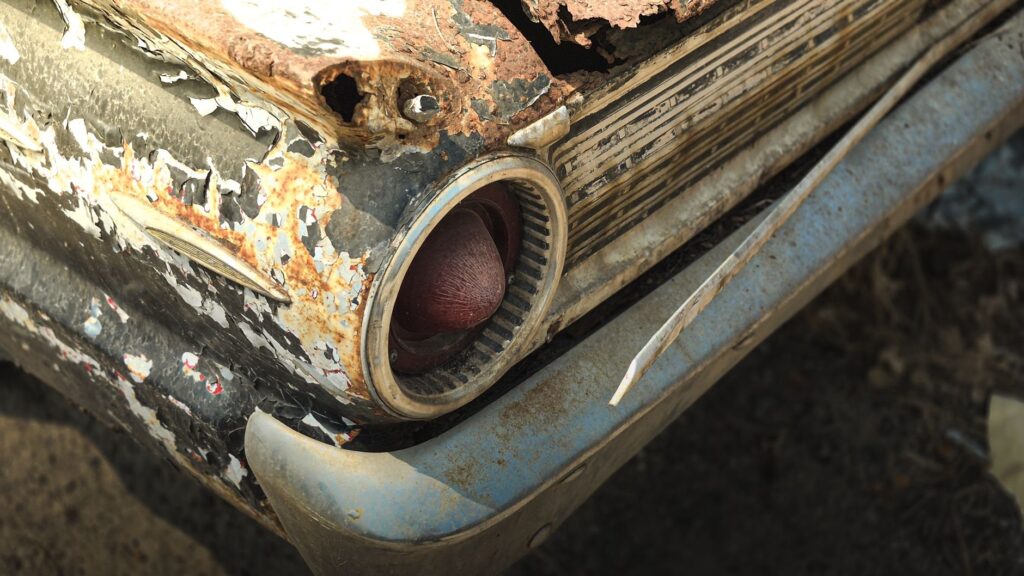
Subframes are typically made from steel and sit close to the underside of the vehicle, which exposes them to road salt, water, and stone debris throughout a vehicle’s life. Over time, rust can work through from the outer surface inwards — starting as surface corrosion and eventually eating through the metal to the point where structural integrity is compromised.
How MOT Testers Assess a Subframe
During a standard MOT inspection, the tester examines the underside of the vehicle on a ramp. They are checking for visible corrosion, cracks, deformation, and deterioration of any structural welded joints or mounting points. In areas they cannot see clearly, they may use a probe to test the strength of the metal.
The DVSA sets specific criteria for how much deterioration is acceptable. A subframe that shows any of the following is likely to result in a major or dangerous defect:
- Excessive thinning of the metal beyond safe limits
- Cracks running through load-bearing sections
- Severe corrosion that compromises structural integrity
- Weld failure at suspension mounting points or crossmember joints
- Deformation that affects the suspension geometry or steering
A dangerous defect means the vehicle cannot legally be driven away. A major defect means it has failed and cannot be driven until repaired, though it can be taken directly to a workshop for those repairs.
Not all rust results in a fail. Surface corrosion on non-structural sections may be recorded as an advisory. But where rust has penetrated key structural sections — particularly near suspension or engine mounting points — the outcome is usually straightforward.
When Is Subframe Welding the Right Repair?
Subframe welding repair is the right option when the structural damage is localised — meaning it has not spread across the entire subframe to the point where replacement is the only viable course of action.
A specialist coded welder will assess the extent of the corrosion or cracking and advise on whether welding can restore the required structural integrity. In many cases, the corroded section can be cut back to clean, sound metal, and a repair piece fabricated and welded in to match the original profile. The repair must be solid and continuous — not a surface patch.
This is precision work. The weld must penetrate fully and create a joint that is structurally sound to meet current MOT standards. If the subframe is too far gone — heavily corroded along most of its length, or cracked through in multiple locations — welding may not be viable. In those situations, a replacement subframe is typically the right recommendation.
What the Subframe Welding Process Involves
When a vehicle comes in for subframe welding repair, the process typically follows these stages:
- Full assessment — the technician examines the subframe in its entirety, looking at all sections, mounting points, crossmembers, and the extent of any rust or cracking before any work begins.
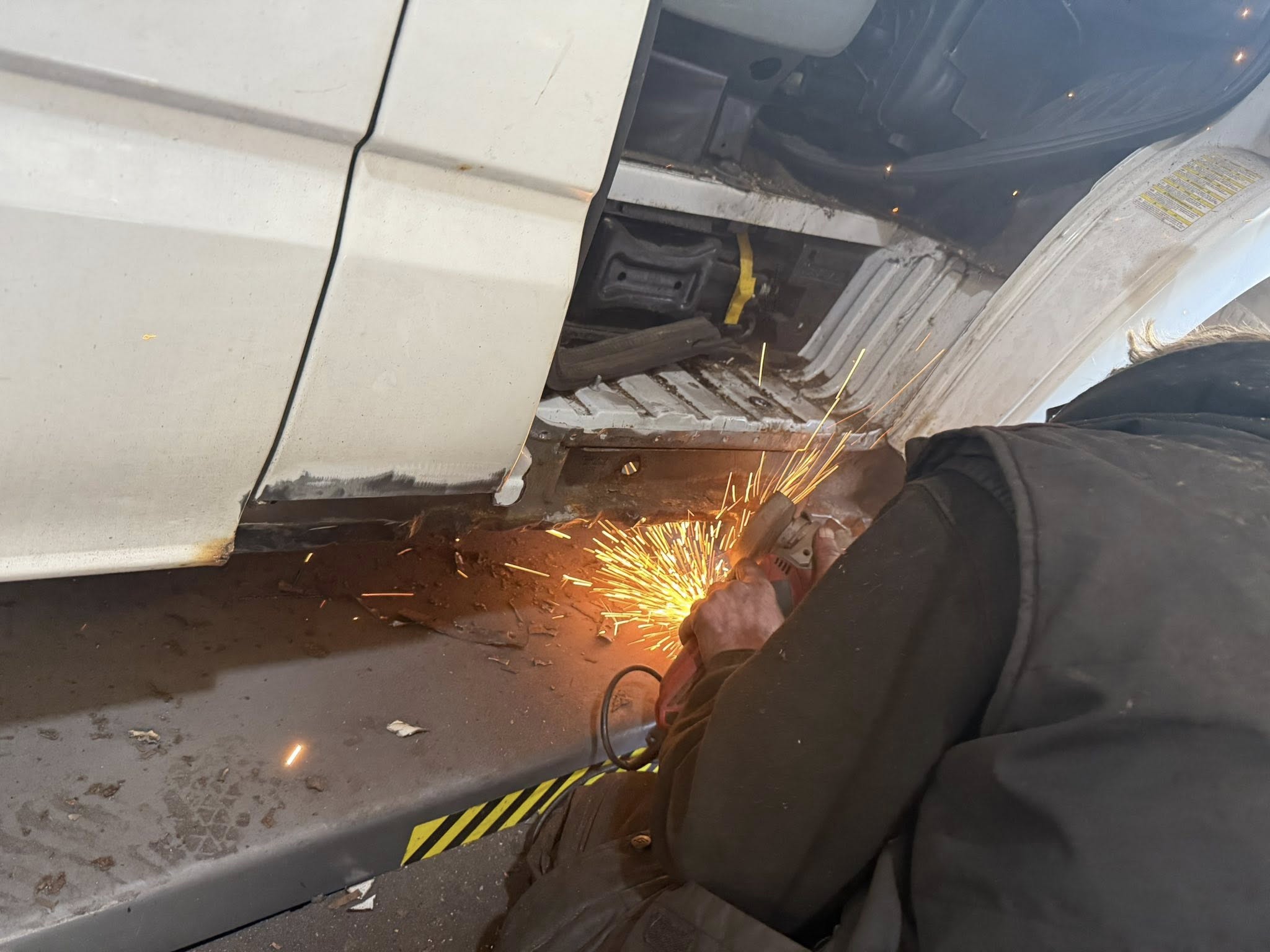
- Cut-back — corroded or damaged metal is cut back to clean, sound steel. Any compromised weld or join is fully removed before the repair piece is fabricated.
- Fabrication — where metal needs replacing, a matching section is fabricated to fit the profile of the original. This may be a simple patch or a more complex shaped section depending on the area involved.
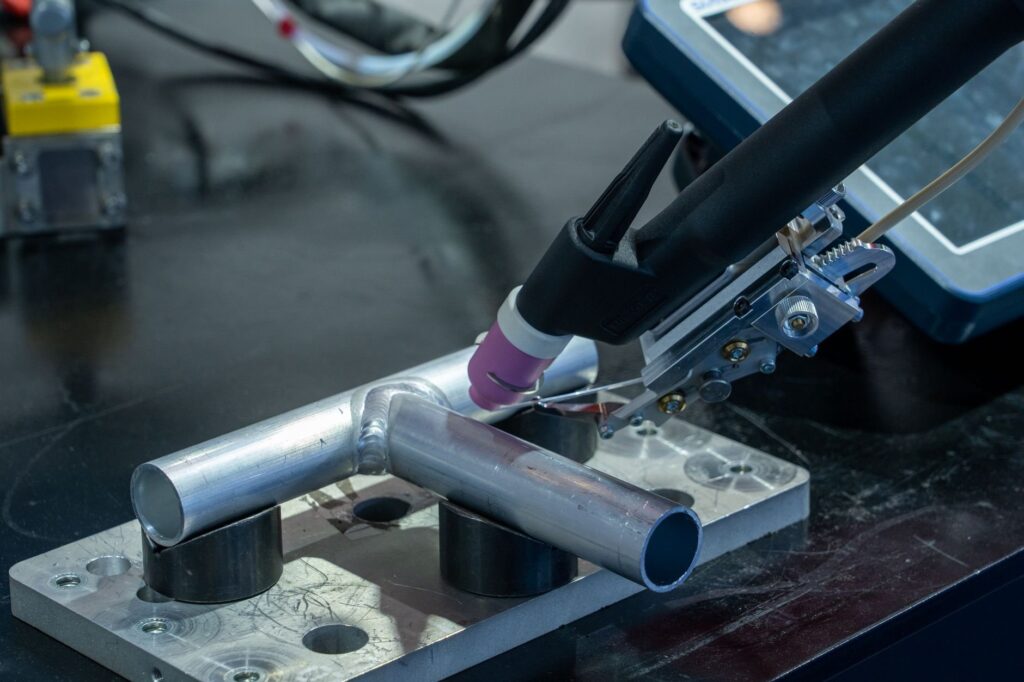
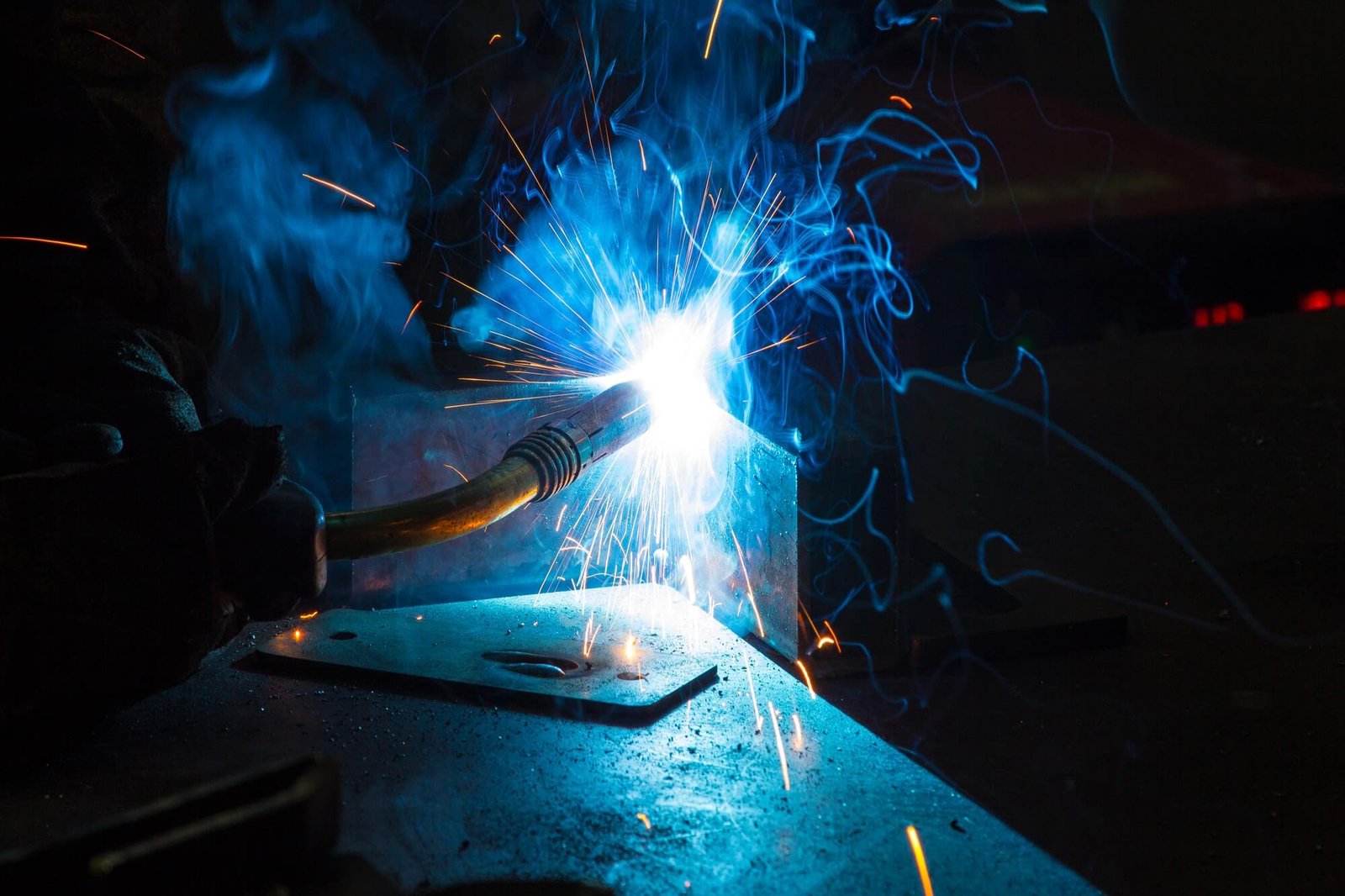
- Welding — the repair section is welded in place using the appropriate process for the material and location. Coded welders understand how to achieve the required penetration and fusion for structural work.
- Inspection — the completed repair is checked before the vehicle leaves. On an MOT reinspection, the tester verifies that the repair meets current standards.
The time this takes depends on the extent of the damage. A localised section repair might be completed within a day. More extensive work will take longer, and you should expect to be without the vehicle for that period.
What to Expect After a Subframe Repair
A properly completed subframe welding repair restores the structural integrity of that section of the vehicle. Most drivers find the car feels noticeably more settled and precise afterwards — particularly if the corrosion had been developing for some time without obvious symptoms.
After any welding repair to the underside, it is worth applying a rust protection treatment to the repaired area and adjacent sections. This slows the progression of surface rust elsewhere on the subframe and reduces the likelihood of a similar issue appearing at the next MOT. Ask the team about rust treatment options when your vehicle comes in.
For older vehicles in particular, a subframe repair is often the most practical route to passing an MOT — especially when the rest of the car is in reasonable condition and a full subframe replacement would not be cost-effective. A welding repair carried out correctly can add several years of reliable use to a vehicle that might otherwise be written off.
Subframe Welding at Star Welding Mansfield
If your vehicle has failed its MOT for subframe corrosion or has been flagged during a pre-MOT check, the team at Star Welding Mansfield can assess the damage and advise on the most appropriate course of action.
We are based in Mansfield Woodhouse, Nottinghamshire — convenient for drivers across Mansfield, Kirkby-in-Ashfield, Sutton-in-Ashfield, and the surrounding area. Our chassis and structural welding service covers subframe welding repairs, chassis rail work, and crossmember repairs. We can also assess related structural areas including sills and floor pans via our sill, arch, and floor pan repair service.
Get in touch to arrange a welding assessment at our Mansfield workshop.