Exhaust Noise in Cold UK Weather: What You Need to Know
If your exhaust seems louder in cold weather — or you notice a rattle or blowing noise after a frosty morning or a wet drive — you are not imagining it. Cold and damp conditions genuinely accelerate the deterioration of exhaust weld joints and mounting brackets, and can cause problems that were not apparent during summer to make themselves known.
This guide explains what happens to an exhaust system in cold weather, why noise often worsens at this time of year, and what the different types of sound can tell you about what has failed. Our team at Star Welding Mansfield can carry out an exhaust assessment and advise on the best approach to repair.
Why Does Exhaust Noise Often Worsen in Winter?
An exhaust system works hard in cold weather. When a vehicle is started from cold, the exhaust pipes and joints go from ambient temperature — which may be close to or below freezing — to operating temperature within minutes. This rapid thermal expansion puts significant stress on weld joints, clamps, and brackets.
If a weld joint or bracket is already weakened by corrosion or fatigue, this thermal cycling is often what pushes it to the point of failure. A joint that has been gradually deteriorating through summer and autumn may hold together during warmer months but develop a crack or separation once it has been through repeated freeze-thaw cycles.
The result is that drivers often notice the problem in autumn or early winter — when the damage that has been accumulating over time finally becomes audible.
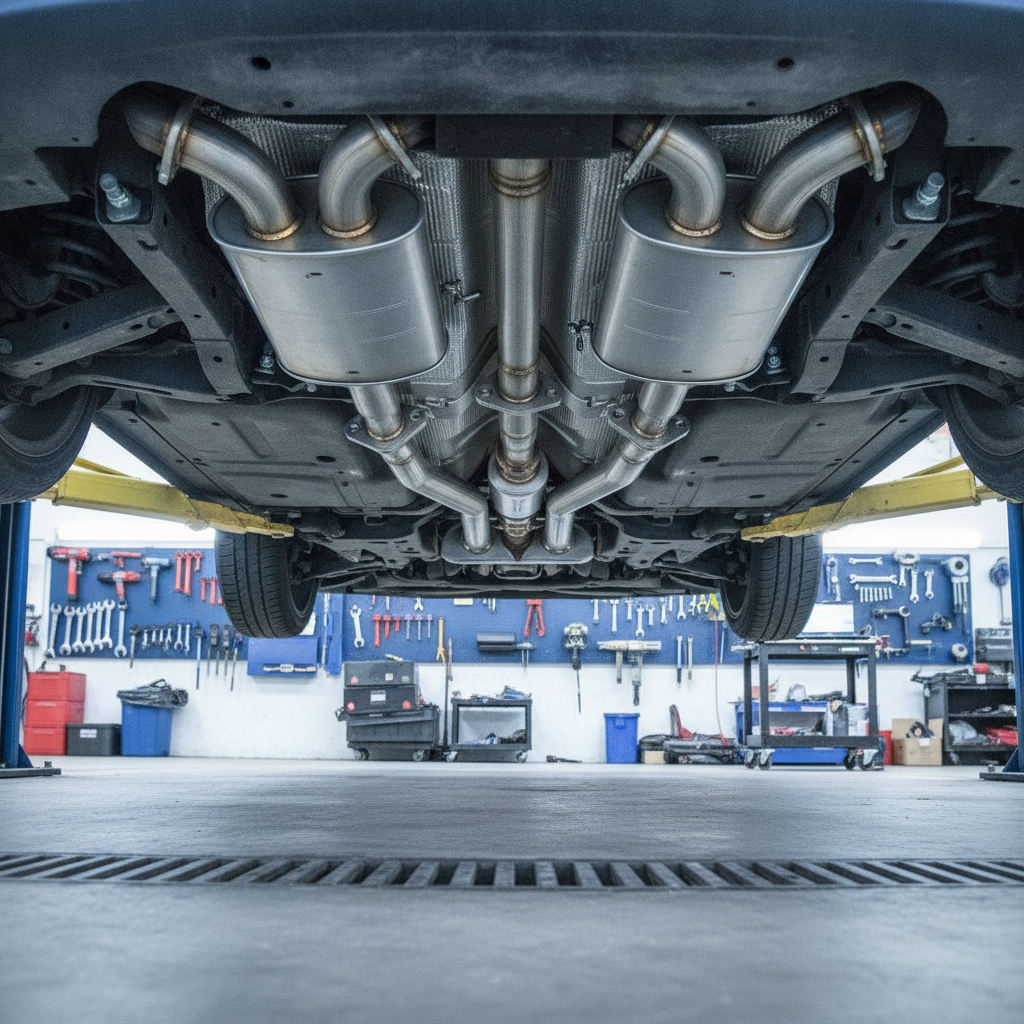
Cold Temperatures and Metal Fatigue in Exhaust Systems
All metals expand when heated and contract when cooled. An exhaust system is designed to handle this to a degree, but when the metal is already compromised — through rust, weak welds, or bracket corrosion — the repeated movement caused by thermal cycling eventually causes fatigue cracking.
Weld joints are particularly susceptible to this. A weld that was originally sound but has been exposed to years of heat, vibration, and moisture will typically develop micro-cracks over time. Cold weather accelerates this process because the metal contracts more sharply, placing additional stress on any weak point in the join.
Exhaust brackets are also vulnerable. These small metal mounts hold the exhaust in position under the vehicle. Over time they corrode, stiffen, and eventually fracture. A broken bracket may not cause an immediate blow in the exhaust itself, but it allows the pipe to move and vibrate, which puts pressure on the weld joints further along the system.
What Happens When a Weld Joint Fails on an Exhaust?
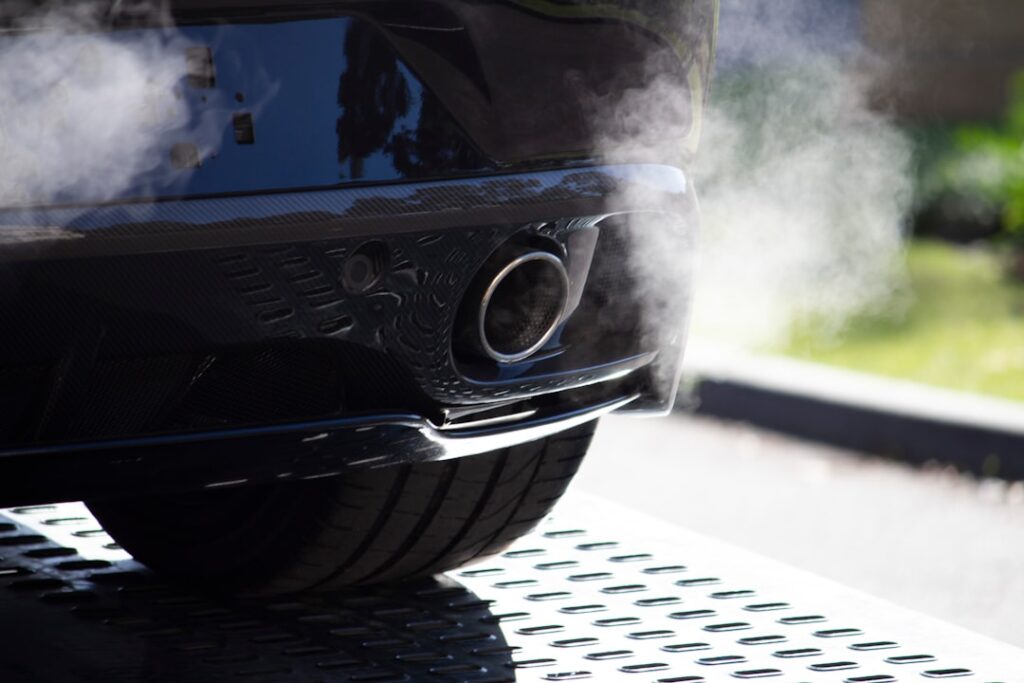
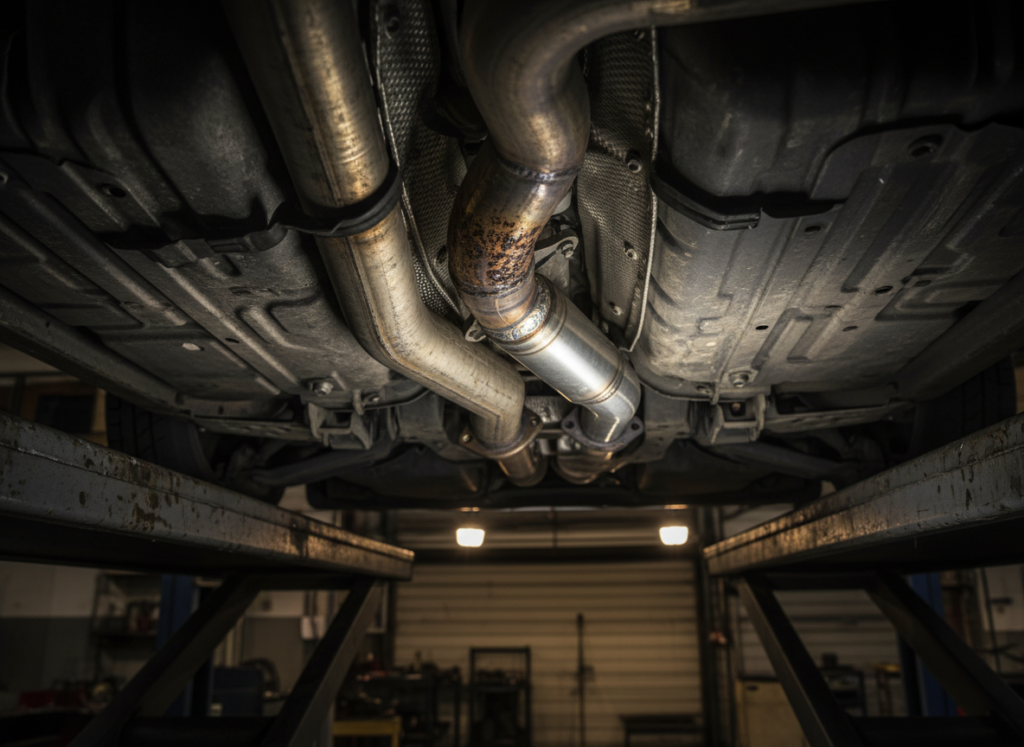
When a weld joint fails — either cracking fully or developing a gap — exhaust gases can escape before they reach the tailpipe. This is commonly called a blow or blowing exhaust. The noise typically sounds like a rhythmic hissing, puffing, or tapping sound that increases with engine speed.
The location of the blow affects what you hear. A blow close to the engine and manifold tends to produce a louder, more mechanical sound, and where the manifold casting itself has cracked, our guide to welding a cracked cast-iron exhaust manifold explains when a repair will hold. A blow further back — at a centre section join — may produce a less intense noise more noticeable at low revs or when pulling away. A blow near the silencer at the rear is often softer but still audible with the window open.
In all cases, a blowing exhaust should not be left unattended. Exhaust gases escaping from a failed weld joint can find their way into the vehicle cabin over time, and the noise typically worsens if the joint continues to deteriorate.
Why Wet Roads and Road Salt Make the Problem Worse
Cold weather and wet roads often go hand in hand, and the combination is particularly harsh on exhaust systems. Water thrown up from wet road surfaces gets into every gap and joint underneath the vehicle, accelerating surface corrosion on exhaust pipes, brackets, and clamps.
Road salt — applied widely to UK roads during freezing conditions — is highly corrosive when mixed with water. It attacks bare and thinly coated metal aggressively, and the underside of a vehicle is exposed to significant salt contamination during and after a period of gritting. Exhaust systems, sitting relatively low beneath the car, are in the direct path of this spray.
Over successive winters, this accumulation of salt and moisture causes corrosion to increase significantly. Exhaust pipes can develop surface rust, joints can weaken, and brackets can corrode through entirely. Vehicles used regularly in all weathers tend to experience this deterioration earlier.

How to Tell If the Noise Is a Bracket, Joint, or Something Else
Not all exhaust noises sound the same, and the type of noise can give a useful indication of what has failed:
- A blowing or hissing sound that increases with engine revs typically indicates a weld joint failure or a crack in the exhaust pipe itself.
- A rattling or knocking sound from under the car, particularly over bumps, often indicates a broken or corroded bracket allowing the exhaust to move against the vehicle body.
- A deep rumbling or droning sound that increases on acceleration may indicate silencer deterioration or a larger failure in the rear section of the system.
- A metallic ticking sound louder when cold and fading as the car warms up can indicate a small crack near the manifold that expands and seals slightly as the metal heats.
These are general patterns. An inspection by a specialist is the most reliable way to identify what has failed and what the correct repair involves.
Can an Exhaust Be Welded Rather Than Replaced?
In many cases, yes. Exhaust welding is often a practical and cost-effective alternative to replacing a full section, provided the surrounding metal is in reasonable condition and the failure is localised to a joint or cracked section of pipe.
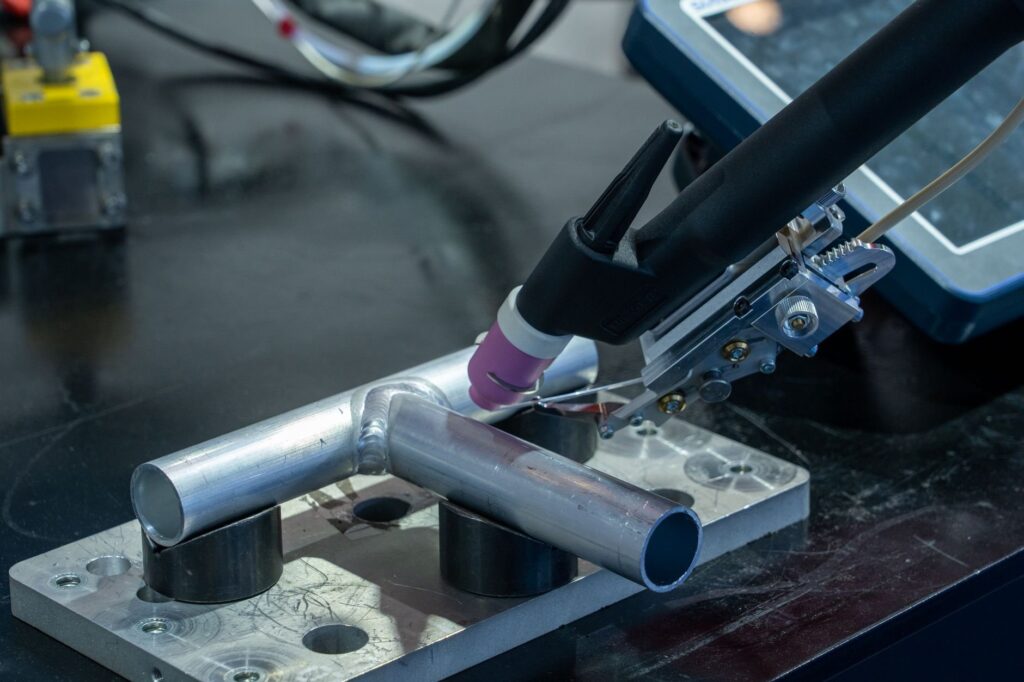
Our exhaust welding and bracket repair service covers failed weld joints, cracked sections, and bracket replacement. A welded repair restores the seal at the joint and, when carried out properly, provides a durable fix rather than a temporary patch.
The suitability of welding depends on the overall condition of the exhaust. If the pipe is heavily corroded along its length, replacement of that section may be more appropriate. An assessment will establish which option is best for your vehicle.
What to Do If Your Exhaust Noise Has Worsened
If your exhaust has become noticeably louder or has developed a new noise, it is worth getting it inspected sooner rather than later. A failing weld joint or bracket left to deteriorate will typically worsen over time — and the longer it is left, the more of the system may be affected.
An exhaust welding assessment at Star Welding Mansfield will identify exactly what has failed, whether a repair is suitable or a section needs replacing, and what the work involves. We are based in Mansfield Woodhouse, Nottinghamshire, and carry out exhaust welding and bracket repairs from our specialist workshop.
Get in touch with our team to arrange an assessment and discuss what your vehicle needs.
Exhaust Welding and Repair in Mansfield
Do not ignore a louder or rattling exhaust. Our specialist welders at Star Welding Mansfield are experienced in exhaust repair, bracket replacement, and weld joint restoration.
Contact us today to book an exhaust inspection at our Mansfield Woodhouse workshop.