Rust Prevention After Welding: What to Apply on Your Car
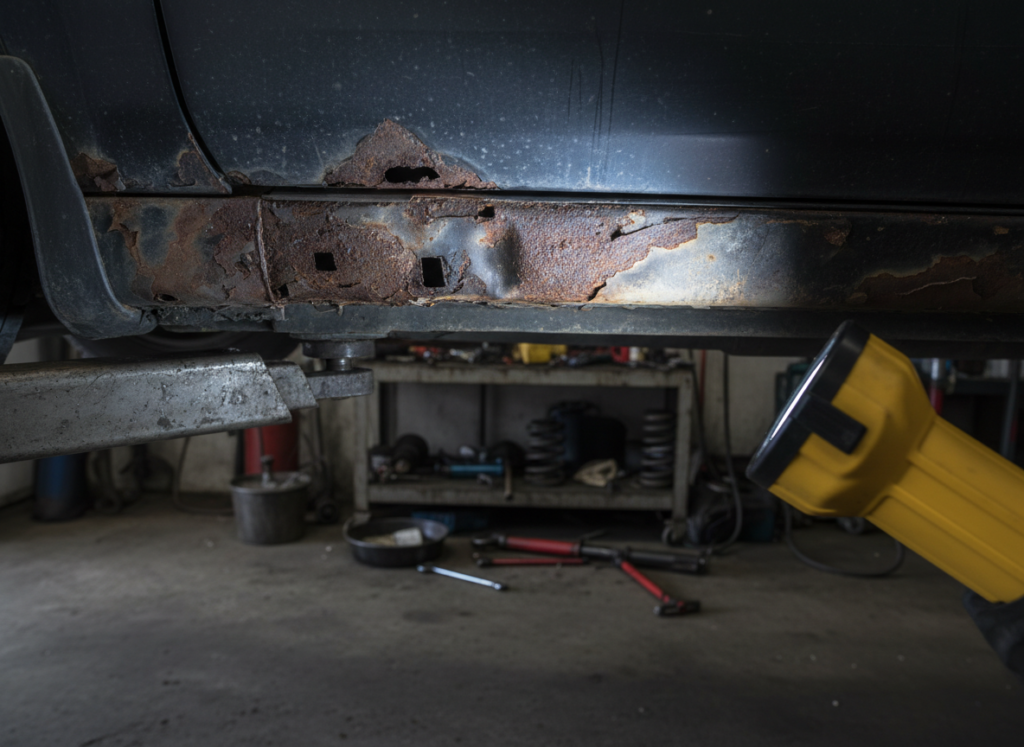
A welding repair fixes the structural damage that rust has caused — but without proper treatment applied to the repaired area, corrosion can return. Bare metal exposed during the welding process is immediately vulnerable to moisture, and without protective coatings, rust can begin to re-establish within days in the UK’s damp climate.
Understanding what happens to metal after welding, and what treatments help protect it, is useful for anyone who has had structural welding work carried out on their vehicle or who is planning to. This guide covers the key approaches to rust prevention after welding repair, and what to consider for long-term protection.
Why Rust Returns If You Don’t Treat After Welding
During welding, the heat involved burns away any existing primer, paint, or protective coating in and around the repair area. The result is bare metal — both on the new steel that has been welded in and on the surrounding area where the original coating has been damaged by heat.
Bare steel corrodes quickly. In contact with moisture and air, it can begin to develop surface rust within 24 to 48 hours. In a UK climate where humidity, rain, and road spray are constants, unprotected steel does not stay clean for long.
This is the practical reason why rust prevention treatment is a necessary part of any structural welding repair, not an optional extra. Welding without treating the bare metal is like replacing a roof tile without resealing around it.

What Happens to Bare Metal After Welding
After a weld is completed and the metal has cooled, the surface may appear clean and smooth — but it is in a vulnerable state. The weld itself may have slight surface scale from the heat process, and the surrounding area will have lost its previous protection.
The priority at this stage is to seal the metal before moisture gets to it. This typically involves cleaning the surface to remove any scale, weld spatter, or contamination, then applying a rust-inhibiting primer as quickly as possible. Primer acts as a barrier coat, slowing down the rate at which moisture can reach the steel beneath.
From there, additional layers of protection can be applied depending on where the repair is located on the vehicle and what level of exposure it will face. Areas on the underside of the car, inside sill cavities, or along wheel arches require more robust protection than areas that are enclosed or sheltered from direct road spray.
Rust Prevention Products and What They Do
Several types of product are commonly used to protect repaired metal from rust, and they serve different purposes:
- Rust-inhibiting primer: Applied directly to bare metal, primer contains compounds that inhibit the oxidation process. It provides a bonding surface for any paint or topcoat applied over it. Primer should be applied as soon as possible after welding.
- Zinc-rich primer or cold galvanising compound: These products contain a high concentration of zinc, which acts as a sacrificial coating. Zinc corrodes preferentially to steel, offering additional protection in exposed areas. They are often used on weld seams and structural sections before topcoat application.
- Underseal / underbody coating: A thick rubberised or bitumen-based coating applied to the underside of the vehicle. It creates a durable, water-resistant barrier and is particularly effective on floor pans, sills, and chassis sections directly exposed to road spray and stone chips.
- Cavity wax: A waxy compound injected into enclosed box sections — such as sill cavities, door cavities, and chassis sections — to coat internal surfaces and prevent moisture accumulation. Unlike underseal, cavity wax can reach into areas where brush or spray application is not possible.
- Weld-through primer: Applied to mating surfaces before the weld is made, this primer burns off during welding but leaves a protective residue at the joint interface to slow corrosion at the seam.
Underseal: When and Where to Apply It
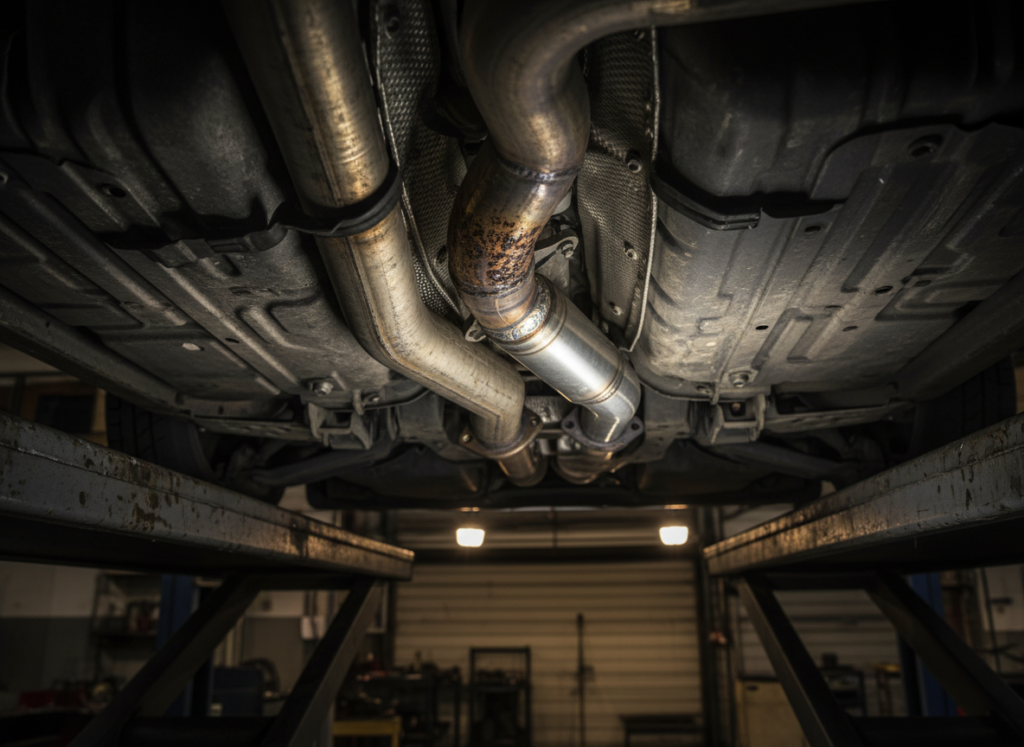
Underseal is one of the most effective rust prevention products available for vehicle underbodies, and it is well suited to protecting welded repairs on sills, floor pans, and chassis sections. It works by creating a thick physical barrier between the steel and the outside environment.
After a sill or floor pan welding repair, applying underseal over the repaired section — once it has been primed — helps protect it from road spray, water, and salt that these areas face during normal use. It also helps absorb vibration and minor stone chip impacts that would otherwise damage a bare paint or primer finish.
Underseal should be applied over a clean, dry, primed surface. Applying it over rust or contaminated metal can trap moisture rather than exclude it, which may accelerate deterioration rather than slow it. Preparation is therefore just as important as the product itself.
Not all underseal products are equally durable. Bitumen-based products are widely available and effective in most applications. For areas subject to particularly high mechanical stress or impact, rubberised or polyurethane-based coatings may provide longer-lasting protection.

Wax Injection and Cavity Protection
For box sections and cavities — such as the inside of repaired sills, door pillars, or chassis rails — underseal cannot reach the internal surfaces. This is where cavity wax injection is particularly valuable.
Cavity wax is a low-viscosity wax compound injected into enclosed sections through small access holes. It flows and creeps into all internal surfaces, including welded seams and folded edges, and sets to a thin protective film that repels moisture and prevents corrosion from developing inside the section.
For vehicles where inner sill or chassis box sections have been welded, cavity wax application to the repaired section is a worthwhile step in the aftercare process. It addresses internal surfaces that external coatings cannot protect, and provides long-term moisture exclusion in areas that are otherwise completely sealed off.
Cavity wax treatment can typically be applied at the time of the welding repair, before any outer panel or trim is refitted, which makes it significantly easier to do at this stage than to arrange separately afterwards.
How Regular Checks Help Keep Rust at Bay
Rust prevention treatments are not permanent. Underseal can chip and crack over time, particularly if the vehicle is used regularly on rough roads. Cavity wax can be displaced or depleted. Paint coatings can be chipped by stone impact. A vehicle that was well protected at the time of repair can gradually lose that protection over the following years.
Regular visual checks of previously repaired areas help identify any deterioration in the protective coatings before new rust has the chance to establish. Early intervention is always cheaper and less extensive than leaving a problem to develop.
Practical steps that help maintain rust protection over time include:
- Checking repaired sill and floor pan areas visually each year, particularly before and after winter
- Touching up any chipped or damaged paint or underseal as soon as it is noticed
- Washing the vehicle underside periodically to remove accumulated road salt, particularly after winter driving
- Considering a repeat cavity wax application every few years on older vehicles with a history of rust
Rust Repair and Prevention at Star Welding Mansfield
At Star Welding Mansfield, our structural welding repairs include preparation and priming of repaired areas as part of the process. We can advise on appropriate rust prevention treatment depending on the location and extent of the repair on your vehicle.
We are based in Mansfield Woodhouse, Nottinghamshire, and carry out MOT welding and rust repair, sill, arch and floor pan repairs, and chassis and structural welding from our workshop.
Contact our team to discuss your vehicle needs or to book a welding assessment.
Protect Your Car After Welding Repair
Rust repair is an investment — protecting that investment with the right aftercare treatment is how you get the most from it. If you have recently had welding repairs carried out, or you are planning to, speak to our team about the best approach to rust prevention for your vehicle.
Get in touch with Star Welding Mansfield to arrange a welding assessment or discuss rust protection options at our Mansfield Woodhouse workshop.